




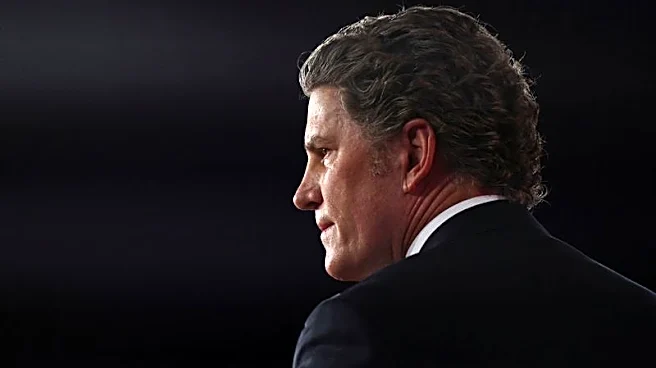

Meet the candidate: Art Fierro, City Council District 6
Age: 64
Occupation: Members of city council receive a salary. Additionally, I continue my work as a government liaison. My primary client is Life Ambulance Inc.
Please describe your personal and professional background.
I was born in El Paso and grew up in the central area of the city. I am married and have 3 children. We own our home and have lived in District 6 since 2000.
Professionally, I have been a small business owner of various types. One of my first businesses was operating the concession contract for the El Paso Diablos. Later, as an experienced small business owner, I was given the opportunity to serve as President/CEO of the El Paso Hispanic Chamber of Commerce and the Austin Hispanic Chamber of Commerce. For the last 20 years, I have worked
as a government liaison and public relations consultant for other small and corporate businesses.
I served on the El Paso Community College Board of Trustees between 2006 and 2019. I was chair of the board for 10 of those years. I also served in the Texas House of Representatives for the 79th district from 2019 to 2023. In 2022, I won the seat for El Paso's City Council Representative for District 6 and took office on January 3, 2023.
Describe your political identity.
I am a Democrat and have been very active with the party both locally and at the state level.
Questions related to El Paso City Council District 6 race
Do you support the proposed Downtown I-10 Deck Plaza project? Why or why not? If elected, would you support using city funds to help finance the project?
While I do personally support the Deck Plaza project and would like to see the amenity in El Paso, I would not take any action to further the project unless there was a financially viable path for the City of El Paso as a partner. The project is engaged heavily now on raising the private funding required to draw down federal funding. The city has not contributed any general fund dollars to the project’s construction.
Property taxes remain a top concern for many El Paso homeowners. What specific actions would you support to slow the growth of property tax bills or reduce services?
While some might suggest that a “no new revenue” tax rate would be the best option, the suggestion is disingenuous rhetoric because council is fully aware of the adverse impact it would have on crucial services. Limiting spending growth moving forward is required at every point of decision making by city council. Certain services such as police, fire, street maintenance and public health are critical and difficult to make subject to reductions. However, each department should engage in their own streamlining to create efficiencies that will reduce their spending. For example, adopting a system of preventative measures to decrease street maintenance costs in the future should be implemented.
Road conditions continue to be a major concern for voters. What steps would you take to ensure adequate and sustainable funding for street maintenance and repairs across El Paso?
The city’s Capital Improvement Department obtains millions in additional funding for street maintenance projects through state and federal grant awards specifically designed to support urban infrastructure. This includes not just roadway maintenance but also transportation routes and future planning.
Prioritization of street maintenance projects should be made by considering factors in safety, impact on traffic and any regulatory deadlines imposed by grants and state law. Matters compromising safety should be first priority. The offices of all city representatives assist by managing citizen expectations and providing information on their complaints. Each city representative’s office has the ability to monitor projects through their completion and provide real-time tracking information of active projects.
What is your assessment of the city's Data Center Policy Framework? Does it strike the right balance between economic development and protecting community resources, or would you propose changes?
The status of the data center framework for this region, not just within the City of El Paso, needs additional measures to protect community resources. And luckily, we are in the position where we can collaborate with the other municipalities. I do feel it is important to engage in sustainability planning now because the AI industry is growing rapidly.
Should the city continue offering tax abatements and other incentives to attract profitable corporations or industries? Under what circumstances, if any, should those incentives be approved?
Yes, Texas law authorizes 380 agreements (city) and 381 agreements (county) which offer tax abatements to incentivize economic development and bring more corporate and industrial citizens into the region. People want property tax relief and until we significantly grow the corporate contribution to the tax base, we will not meet the service and amenity needs of this growing city. The taxes “abated” are taxes we do not have so there is no loss by agreeing to them and no gain by turning these opportunities away. Corporations and industries subject to these agreements pay their own infrastructure such as utility linkage and roads. There is little to no cost to implement these agreements.
Further, these incentives apply only to city and county taxes and are limited by certain negotiated terms. The hospital district, community college district, and school districts will reap the benefits of that tax revenue immediately. Nonetheless, there are eligibility criteria that should be adhered to such as the creation of living or high-wage jobs with benefits, corporate investment in city infrastructure, growth in certain business and targeted industries, and long-term existence in the region. It needs to make business and long-term sense for the city to agree to these contracts.
Public safety remains a core city responsibility. What are your top priorities for police, fire and emergency services, and how would you pay for them?
Police and fire department salaries are controlled by collective bargaining agreements. These agreements have the largest financial impact on human capital expenses. But as the city grows, so does the necessary infrastructure to meet the emergency services. While paying for them can be augmented through grants, most of it is paid for by city general revenue. As previously stated, while I would not support cutting these departments, the departments should continue to engage in policies and systems that improve their efficiency without compromising service and the safety of the first responder and citizens. I would also like to make mental health first aid training and jail diversion a priority for the police department.
What do you see as El Paso's biggest economic challenge, and what specific policies would you pursue to address it?
The biggest challenge is not only the reality that this region relies on property taxes for operational revenue, as opposed to corporate and business taxes. City council needs to work together to responsibly meet the demands of this city’s growth projections, which includes consideration of more aggressive and robust opportunities. We need to build successful strategies in economic development that coordinate with future infrastructure, workforce, business, and residential growth. These factors need to be aligned. We need to build clear incentive policies that are targeted and intentional for long term sustainability. Until we as a public governing body demonstrate this purposeful approach to our constituents, we will continue to foster doubt and thereby miss opportunities.
Have you read the City Charter? What did you learn is the top City Council priority?
City council’s priority is self-governance by utilizing its powers and performing its duties required under the charter and state law. We hire and evaluate the City Manager, City Attorney, and Internal Auditor.
City leaders often face divisive issues. How would you work with colleagues, stakeholders and residents to find common ground and build consensus on major city decisions?
City leaders, including both administrative and elected, are stewards of resources and strategists for current and long-term decision making. We are representatives of the people who elected us. The manner in which we complete this duty may be unpopular, both among our constituents and with each other. First and foremost, we need to establish open and clear communication with each other, done respectfully and professionally to build trust even if the issues are difficult and we may take adverse positions. We need to collaborate with the subject matter experts – our administration and their staff. We need to focus on and highlight the goals and impact we want to make that are shared, and not where we are divided. Building consensus comes with open mindedness, putting down the political persona, and understanding each other’s roles in partnership.
What should be the city's next big civic project?
The city needs to once and for all get on an achievable track to revitalize the Chihuahuita neighborhood. That has taken far too long and now we face the costly consequence. But that area cannot be left dilapidated without any progress in sight.
Learn more about Art Fierro
Do you plan to continue in your current employment if elected?
Members of city council receive a salary. Additionally, I continue my work as a government liaison. My primary client is Life Ambulance Inc.
What experiences in leadership do you have that qualify you for this position?
My experience as a business owner, a property taxpayer, and as a public servant have given me the necessary leadership skills to hold the position of city representative. With this experience, I have established objectives and achievable priorities for my community. I am able to actively search for opportunities that improve the lives of my fellow El Pasoans. Through my experience, I have also fostered necessary and helpful relationships that have given me the ability to successfully bring about positive change.
As a business owner, I understand the importance of adaptability and recognizing changes that affect the journey forward. I have practical and applicable understanding of budgets and their management, financial reports, and making difficult decisions while recognizing limits in money and capacity. As an elected official at both the local level with the city and EPCC, and in the much larger scale with the Texas legislature, I understand the systems of public finance, debt and future planning. All this is extremely critical for a community such as ours that relies mostly on local property tax revenue.
Have you ever been arrested or charged with a crime? Have you ever had a civil judgment against you? Have you ever been in arrears on local, state or federal taxes? If so, please provide an explanation.
I was charged with DWI in 2000. I have had two small claims judgments entered against me, one in 1986 and one in 2015. I have never been in arrears in local, state or federal taxes.
If elected, would you have any potential conflicts of interest that you are aware of that would impair your ability to serve? Please explain what they are and how you would avoid the conflict.
Because of my affiliation with Life Ambulance, a conflict could present itself while on city council. However, as is required by state law and by the City Ethics Code, I would recuse myself from any discussion or vote involving that entity. I do not have any conflict that would impair my ability to serve on city council.
What does transparent government mean to you? Will you be personally accessible to answer questions while in office?
Transparent government is the principle that a government entity should operate openly and that citizens have access to their representatives and information about their government. Texas government entities are governed by the Texas Open Meetings Act and the Public Information Act. But in actual operation, an elected official must be proactive in ensuring that their work is done openly and in a manner that their constituents can be engaged. While this may not mean that all will agree on any given subject, this does ensure that government is accountable to the people it serves and builds trust in the work done. I have always, in every public office I’ve held, been accessible to any citizen that needs my attention. I will continue to do so.
What distinguishes you from the other candidates in this race, and why should voters choose you?
The people of District 6 need a mature individual that understands the requirements of the job, not someone who lacks the necessary awareness of the responsibilities in the political office. My background as a business owner, a community college trustee, a state representative, and a homeowner give me the ability to navigate complex governance, manage our resources, and make thoughtful and sound decisions. Additionally, I understand firsthand what El Pasoans need and the realities of the impact policymaking has on each of us. For example, I have directly worked to ensure that the opportunity for education is affordable through my work at EPCC. By working with the EPCC president, the board together worked to develop strategic direction for the college at all levels of operation. We defined the highest standard of quality in education and prudence in the use of its resources. Every El Pasoan should have the opportunity to grow and succeed in their own community. As a Texas legislator, I authored bills that would keep college campuses safe, that would minimize adverse environmental impact in government procurement practices, that would increase safety measures in the manufactured home industry during times of an emergency declaration, and that would expand access to health care to vulnerable Texans. This is a reality that I understand and I have worked to improve the day-to-day needs of all District 6 constituents.
The candidates' responses are being published largely as they were submitted.
This article originally appeared on El Paso Times: Meet the Candidate: Art Fierro seeks City Council, 6 seat