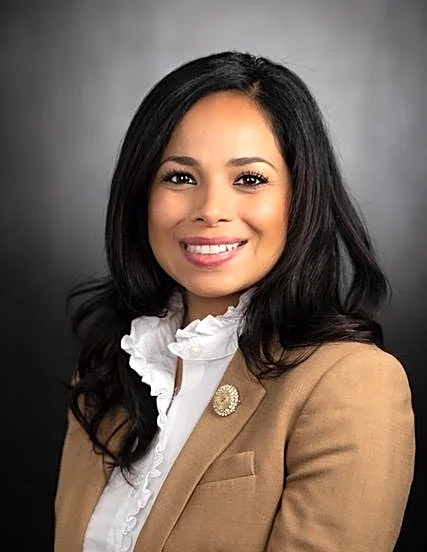






Meet the candidate: Claudia Ordaz, State Rep. 79
Age: 40
Occupation: My current focus is on my legislative responsibilities and family health needs.
Please describe your personal and professional background.
Born and raised on El Paso’s eastside, I am a proud graduate of local public schools. I have spent much of my career in public service working at the local, state and federal levels. Before being elected to the Texas House, I served on City Council and served as Mayor Pro Tempore, where I worked on issues affecting working families, public safety, infrastructure, animal welfare and economic development.
I was first elected to the Texas House in 2020 and currently represent House District 79, which includes much of East and Northeast El Paso, El Paso International Airport and Fort Bliss. In the Legislature,
my work has focused on women’s health care, public education, economic and workforce development, small businesses, environmental issues and animal welfare. I currently serve as vice chair of the House Committee on Environmental Regulation and a member of the Committee on Trade, Workforce & Economic Development.
I have learned that being an effective legislator takes more than having good ideas, it requires understanding how to navigate the legislative process, building relationships, listening to different perspectives and finding ways to bring people together to get things done. I have worked hard to build that experience, and it has helped me turn priorities into legislation. There is always more to learn, but I believe that experience has made me a stronger advocate for El Paso and helped ensure our community has a voice in Austin.
Describe your political identity.
Democrat.
Questions related to State Rep. 79 race
What are the most important challenges facing El Paso and Texas and what would you do about those challenges as state representative?
One of the biggest challenges facing El Paso and Texas is affordability. Families are feeling the pressure from every direction, whether it's housing, property taxes, groceries, utilities, insurance, or childcare. These aren't separate issues for families. It all comes out of the same paycheck. We need to look at what is driving these costs and find practical ways to help families get ahead.
Public education will continue to be one of my biggest priorities. I'm a proud product of El Paso public schools, and my mother was a retired educator, so this issue is especially personal to me. Our school districts are facing declining enrollment, budget challenges, and difficult decisions about closing schools. We need to increase public school funding, support our teachers and school employees, and make sure students with disabilities receive the resources they deserve, and end the unfunded mandates.
I also want to continue improving access to health care, particularly for women and families. That includes maternal health, fertility care, and making sure women can receive timely diagnoses and appropriate care. Childcare is another important part of this conversation. I've worked on legislation to expand affordable childcare because parents shouldn't have to choose between earning a paycheck and finding someone to care for their children.
Finally, we have to be thoughtful about El Paso's economic future. I want to attract new businesses, create good paying jobs, and expand workforce opportunities, but growth also has to benefit the people who already live here. As we see major developments like data centers, we need to protect our water and energy resources and make sure existing residents aren't left paying for the infrastructure these projects require.
I've always believed that El Paso deserves a strong voice in Austin. My goal is to continue working on the issues that affect people's everyday lives while making sure our community receives the resources, opportunities, and attention it deserves.
Public schools in Texas are facing budget cutbacks, teacher layoffs and closures. As state representative, what would you do to help public schools in Texas?
Public education is one of my biggest priorities, and this issue is especially personal to me. I'm a proud graduate of El Paso public schools, and my mother was a retired educator. I grew up understanding just how much our educators give to their students, often going above and beyond with their own time and resources.
Last session, I supported the school finance bill because it made important investments in teacher and school employee pay, including permanent raises for eligible teachers and support staff. But the reality is that we didn't fix the underlying problem.
The basic allotment, which helps districts cover every day operating expenses, increased by only $55 per student. The House had proposed a $395 increase, and school officials were telling us they needed closer to $1,300 just to keep up with rising costs. That tells you how far we still have to go.
We're seeing the consequences right here in El Paso, where our school districts are dealing with declining enrollment, budget deficits, staffing reductions, and school closures. Because Texas largely funds schools based on attendance, declining enrollment means fewer dollars, even though many operating costs remain the same. I want to revisit our school finance formulas to provide greater stability for districts facing these challenges.
I'm also concerned about the state's priorities when it comes to private school vouchers. I understand why parents want options, especially when they feel their child's needs aren't being met. I hear that from parents of children with disabilities, and I don't fault any parent for doing everything they can to find the best education for their child. I would do the same.
But Texas committed $1 billion to the voucher program in its first year, and the Legislative Budget Board projected that costs could grow to $3.3 billion by 2028 and $4.8 billion by 2030. Meanwhile, our public schools are struggling to keep their doors open, retain teachers, and provide adequate special education services. I don't believe we should continue expanding vouchers while the state has yet to properly fund the public education system it has a constitutional responsibility to provide.
We also have to address unfunded mandates. Having served in both local and state government, I've seen firsthand what happens when Austin adds new requirements without providing the resources to carry them out. We cannot continue asking our schools to provide more services, particularly for students with disabilities, without giving them the funding and flexibility to do so.
Next session, I will continue pushing for a meaningful increase in the basic allotment, better teacher and school employee pay, adequate special education funding, and school finance reforms that reflect the challenges facing districts like ours.
We cannot keep asking our schools to do more with less and then act surprised when they're struggling. Our students, teachers, and families deserve better.
Rising prices, inflation and the higher costs of living are among top concerns for voters. As state representative, how would you address these economic concerns?
I don't think families separate affordability into categories the way we sometimes do at the Capitol. Housing, property taxes, groceries, utilities, insurance and childcare all come out of the same paycheck. Lowering one bill only goes so far when everything else continues to increase.
Texas has one of the strongest economies in the country, and we should be proud of that. But a strong economy means very little to a family struggling to afford everyday necessities. We have spent decades creating an environment where businesses can succeed. We need to be just as intentional about making sure working families can succeed too.
As a state representative, I believe addressing affordability requires us to reduce the financial pressures families face today while creating more opportunities for them to get ahead tomorrow.
That means continuing responsible property tax relief, increasing access to attainable housing, addressing rising insurance and utility costs, and ensuring that major new developments pay their fair share of the infrastructure they require rather than passing those costs on to existing residents and small businesses.
But we also have to address the barriers that keep families from improving their economic circumstances. Childcare and workforce development have been two of my legislative priorities because they go hand in hand. As a member of the House Trade, Workforce and Economic Development Committee, I have focused on strengthening our economy, supporting job creation and expanding pathways to better paying careers. But we cannot talk about economic opportunity without recognizing the challenges that prevent people from participating in the workforce.
Childcare is one of those challenges. For many families, it is one of their largest monthly expenses. When affordable, reliable childcare isn't available, parents may have to reduce their work hours, turn down a promotion or put their education on hold. Workforce development is about more than attracting businesses or filling job openings. It is about making sure Texans have the education, training and support they need to earn a good living and build financial security for their families.
Ultimately, affordability is about more than a tax cut or a rebate. It is about whether families can afford a home, keep the lights on, care for their children and still have something left at the end of the month.
Texas has the economic strength to make that possible. Our responsibility is to ensure that the prosperity of our state is reflected in the everyday lives of the people who call it home.
What is your stance on data centers in El Paso?
We know data centers are coming to Texas, and yes they can bring significant investment and economic opportunity, but the question is how we manage that growth responsibly and make sure existing residents and businesses are not left paying the price.
El Paso requires special consideration because we are not part of ERCOT. Much of the state's recent work on large energy users has focused on the ERCOT grid, but the impacts of these developments do not stop there. El Paso is now facing a proposed data center with enormous electricity demands in a desert community where our water supply is one of our most precious resources.
These companies should be responsible for the costs they create. If a data center requires new electric generation, transmission, water infrastructure or other major improvements, those costs should not be passed along to existing ratepayers and taxpayers.
We know a data center regulation bill will be coming before the Legislature next session. I have already been in communication with the main author of the legislation being developed to make sure El Paso's unique circumstances are part of that conversation. Because we operate outside ERCOT, a one size fits all approach written around the ERCOT grid may not adequately protect our community.
I have been so disappointed with the level of public engagement and communication surrounding the proposed development in El Paso. When a project of this magnitude could affect our electricity supply, water resources, air quality and infrastructure for decades, the public deserves clear information about what is being proposed, what resources will be required and what protections are being put in place.
That is why I have been meeting with the City of El Paso, El Paso Water and other stakeholders to better understand the full scope of the project and the potential burden on our community.
Texas can welcome investment without writing a blank check with our electricity, water and other natural resources. The companies creating these extraordinary demands should bear the costs associated with them, local communities should have a meaningful seat at the table, and the state should put safeguards in place that protect our resources, our infrastructure and the people who call our communities home.
Should the property tax reappraisal process be changed in Texas. If so, why and how?
This question drives at a larger conversation than assessing the appraisal process. Texas has no income tax, so the state relies heavily on sales taxes, while cities, counties, and school districts rely on property taxes. One challenge with our system is that the state sets the rules for appraisals, exemptions, and reimbursements, while cities and counties must pay for unfunded mandates.
Last session, the Legislature dedicated $10.3 billion to additional property tax relief, mostly to keep school tax rates down and expand homestead exemptions. The state reimburses school districts for that lost revenue. But it also created a new business property exemption that costs cities and counties revenue, and the state doesn’t reimburse them for it. The City of El Paso alone is losing about $7 million a year. The state presents this as relief, while local governments must raise taxes or cut services to cover the gap.
El Paso County officials estimate that 70% of the county’s budget goes to state-mandated responsibilities. Operation Lone Star, which has cost the state about $11 billion since 2021, adds to that burden: the county has spent millions housing, feeding and providing medical care for state detainees, and lost more than $11 million in a single year when those detainees filled jail beds it would otherwise rent to the federal government.
This isn’t to say our local governments can’t run more efficiently, or that your tax burden isn’t real. Our property tax system needs a holistic overhaul. If the state truly wants to address affordability, it should meaningfully lower school property taxes by paying a bigger share of the cost, while giving our public schools the means to thrive, not barely survive. And it’s hard to justify the state sitting on more than $27 billion in its rainy day fund while everyday Texans struggle with affordability.
Should state and local law enforcement agencies enforce immigration law? Why or why not?
I believe immigration enforcement is fundamentally a federal responsibility. State and local law enforcement agencies should focus their resources on keeping our communities safe, preventing crime, investigating criminal activity and responding to emergencies.
Representing El Paso, I understand that border security, immigration enforcement and public safety are related, but they are not the same thing. We can support the enforcement of our laws and cooperation between agencies when appropriate without turning local police officers into federal immigration agents.
One of my concerns with Texas' approach has been the tremendous amount of taxpayer dollars spent on Operation Lone Star without sufficient transparency or accountability about the results. We should be asking whether these investments are actually improving public safety and whether the resources could be better directed toward addressing crime and supporting local law enforcement.
I am also concerned about the financial burden these policies place on border communities. El Paso County has reported millions of dollars in additional costs and lost revenue associated with the state's border enforcement efforts, including impacts on our courts, detention facilities and criminal justice system. Having served on the El Paso City Council, I know firsthand how difficult it is when the state places additional responsibilities on local governments without providing the resources to carry them out. If the state creates these costs, it should be responsible for funding them rather than passing the bill to local taxpayers.
We also have to recognize that public safety depends on trust between law enforcement and the communities they serve. Residents should feel comfortable reporting crimes, cooperating with investigations and seeking emergency assistance without fearing that every interaction with local police could become an immigration enforcement matter.
Ultimately, I believe we can take public safety seriously, respect the rule of law and recognize that immigration enforcement is primarily a federal responsibility. Our local law enforcement officers should have the resources to do the jobs they were hired to do, and border communities like El Paso deserve to be treated as partners in decisions that directly affect them.
Should the state of Texas forbid tax breaks for economic development projects?
Learn more about Claudia Ordaz
Do you plan to continue in your current employment if elected?
I do not believe Texas should categorically prohibit tax incentives for economic development projects. When used responsibly, these incentives can be important tools for attracting investment, creating good paying jobs and helping communities compete for economic opportunities that might otherwise go elsewhere.
Having served on the El Paso City Council and now as a member of the Texas House Trade, Workforce and Economic Development Committee, I understand the importance of giving communities the tools they need to grow their local economies. This is particularly important for communities like El Paso, where we are working to attract new industries, expand workforce opportunities and create more good paying jobs.
However, I also believe that economic development incentives should never be a blank check. When public resources are being used to benefit a private company, taxpayers deserve to know what they are receiving in return.
That is why I have worked on legislation to strengthen transparency and accountability in Chapter 380 and 381 economic development agreements. These agreements should include clear expectations, measurable commitments and meaningful oversight to ensure companies deliver on their promises, whether that means creating jobs, making capital investments or providing other benefits to the community.
We also need to be more thoughtful about the long term costs associated with major developments. As Texas attracts large industrial projects, including data centers, we must ensure that companies pay their fair share of the electricity, water and infrastructure they require. Existing residents and small businesses should not be left subsidizing the costs of private development through higher utility bills or local taxes.
Ultimately, I support economic development incentives when they serve a legitimate public purpose and provide a measurable return on investment for the community. Our goal should not simply be to attract businesses to Texas, but to ensure that economic growth creates meaningful opportunities and lasting benefits for the Texans who already call our communities home.
What experiences in leadership do you have that qualify you for this position?
I have been fortunate to serve our community in many different ways, from my time on the El Paso City Council and as Mayor Pro Tem to my current leadership roles in the Texas House. I currently serve as Vice Chair of the Environmental Regulation Committee, a member of the Trade, Workforce & Economic Development Committee, and Secretary of the Texas Women's Health Caucus. Outside of the Legislature, I've served as Co-Chair of the Census 2020 Paso Del Norte Complete Count Committee and on the Animal Services Advisory Committee and have been involved with the Junior League of El Paso and my church.
Have you ever been arrested or charged with a crime? Have you ever had a civil judgment against you? Have you ever been in arrears on local, state or federal taxes? If so, please provide an explanation.
No.
If elected, would you have any potential conflicts of interest that you are aware of that would impair your ability to serve? Please explain what they are and how you would avoid the conflict.
No.
What does transparent government mean to you? Will you be personally accessible to answer questions while in office?
I believe the public should always feel comfortable asking questions, sharing concerns, and knowing where their elected officials stand on the issues that matter to them.
Whether someone agrees with me or not, I want them to know they can reach out and have a conversation. Some of the best conversations I've had are with people who see things differently, and I believe listening and learning from one another makes us all better.
What distinguishes you from the other candidates in this race, and why should voters choose you?
Serving the community that raised me is something I never take for granted. I'm running for reelection because there is still so much work to do, especially when it comes to strengthening our public schools, making life more affordable for working families, improving access to health care, and creating economic opportunities for our region.
My experience on the El Paso City Council and now in the Texas Legislature has given me a unique understanding of how decisions made in Austin affect our community. I've learned how important it is to build relationships, work across the aisle, and turn the concerns I hear from El Pasoans into meaningful legislation.
I'm proud of what we've accomplished, but I know there's more work ahead.
Why are you running for office and why do you feel you are the better qualified candidate?
Serving the community that raised me is something I never take for granted. I'm running for reelection because there is still so much work to do, especially when it comes to strengthening our public schools, making life more affordable for working families, improving access to health care, and creating economic opportunities for our region.
My experience on the El Paso City Council and now in the Texas Legislature has given me a unique understanding of how decisions made in Austin affect our community. I've learned how important it is to build relationships, work across the aisle, and turn the concerns I hear from El Pasoans into meaningful legislation.
I'm proud of what we've accomplished, but I know there's more work ahead.
The candidates' responses are being published largely as they were submitted.
This article originally appeared on El Paso Times: Meet the Candidate: Claudia Ordaz seeks State Rep. 79 seat