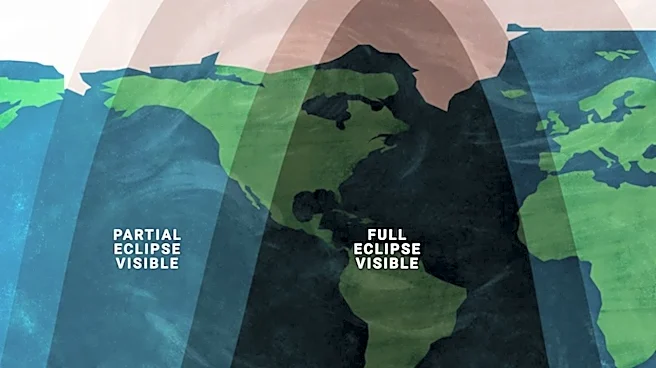







Skywatchers are just one week away from a partial lunar eclipse that will be visible across much of North and South America, as well as parts of Europe and Africa.
The eclipse will happen overnight on Thursday, Aug. 27 into Friday, Aug. 28 as Earth passes between the sun and the full moon, according to NASA. Earth's darkest shadow will cover about 96% of the moon's visible surface, leaving only a thin sliver illuminated by direct sunlight.
 eclipse that will be visible across much of North and South America, as well as parts of Europe and Africa." id="91383223007">
The partial eclipse begins at 8:33 p.m. MT/9:33 p.m. CT on Aug. 27, according to TimeandDate.com.
Earth's umbra — the darkest, innermost portion of its shadow — will gradually move across
the lunar surface before the eclipse reaches its maximum about an hour later. At that time, the moon could take on a reddish or orange tint, creating the effect commonly associated with a "blood moon" during a total lunar eclipse, according to NASA.
Unlike a solar eclipse, no special eye protection is needed to safely watch a lunar eclipse, the event in the sky can be seen with the naked eye.
When is the next 'blood moon'?
The eclipse will happen overnight on Thursday, Aug. 27 into Friday, Aug. 28 as Earth passes between the sun and the full moon, according to NASA. The moon could take on a reddish or orange tint, making it appear like what many call a "blood moon."
When's the next full moon in August?
The next full moon, also called the Sturgeon Moon, will peak on Friday, August 28, marking the traditional full moon of late summer, according to the Old Farmer's Alamanac.
Natassia Paloma may be reached at npaloma@gannett.com, @NatassiaPaloma on X, natassia_paloma on Instagram, and Natassia Paloma on Facebook.
This article originally appeared on El Paso Times: Partial lunar eclipse will create a blood moon effect. Here's when