


Election Day on Nov. 3will decide who represents El Paso on the City Council in Districts 1, 5, 6, and 8.
To help voters learn more about the candidates on the ballot, the El Paso Times asked those seeking office to answer a standard set of questions about their backgrounds, priorities and views on issues affecting the community.
District 8 covers the Downtown, Southside, Westside, and West-Central portions of the city.
All candidates were invited to complete an election questionnaire to introduce themselves, their platform and address important voter topics.
The following is a sampling of candidates' responses in District 8. Click the link on the candidate's name to read the full questionnaire.
Candidate Johnny J. Gonzalez did not respond.

El Paso City Council District 8
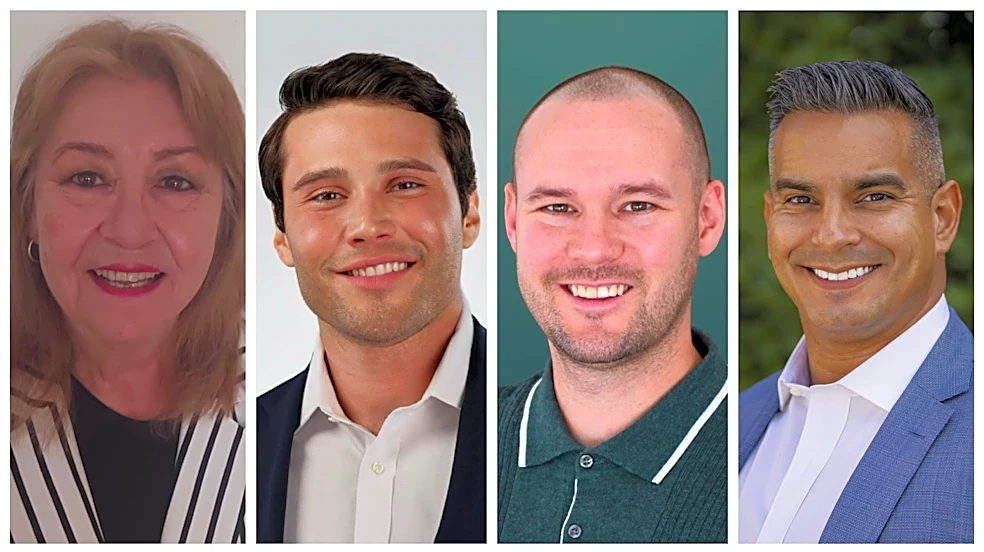
- Chris Canales
- Arturo Alluin
- Laura Ochoa-Todd
- Johnny J. Gonzalez
- Matthew Guzman
Do you
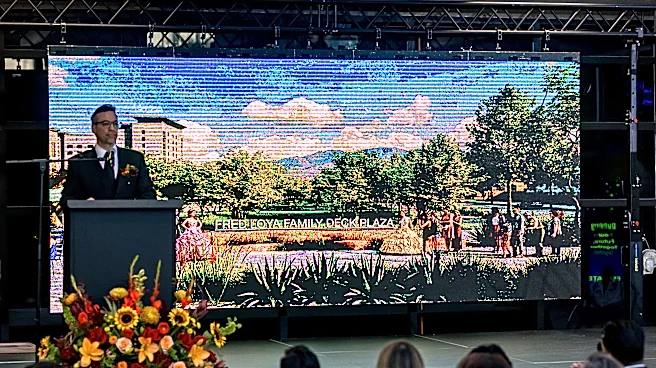
support the proposed Downtown I-10 Deck Plaza project? Why or why not? If elected, would you support using city funds to help finance the project?
Canales: I do not support moving forward with the proposed Downtown Deck Plaza under present circumstances, and I definitely would not support asking El Paso taxpayers to make up the enormous funding gap for the project.
I am also strongly opposed to TxDOT's underlying I-10 widening project. I do not believe spending approximately $1.3 billion to substantially widen the freeway through the center of El Paso is the right transportation investment for our community. Established science shows that building more lanes of highway is not an effective long-term fix for congestion. Building a park over a portion of that expansion does not resolve those underlying concerns.
I understand and fully support the goal of reconnecting Downtown with the neighborhoods that were divided by the construction of I-10. I’m in favor of investments that improve connections between Downtown and surrounding neighborhoods, make it safer and easier to walk and bike, create quality public spaces, and repair some of the damage caused by past transportation decisions. But those goals need to be pursued in ways that are financially realistic and that would not require El Paso taxpayers to assume hundreds of millions of dollars in additional costs. The Deck Plaza doesn’t fit that brief.
Alluin: I do not support using city taxpayer dollars or other public funds to finance the Downtown I-10 Deck Plaza. I support the vision behind the project, and I have personally donated my own money to help advance it.
I believe it has the potential to reconnect neighborhoods, strengthen Downtown, and create new economic activity. However, there is an important difference between choosing to contribute private money and requiring taxpayers to fund a project.
I am willing to invest my own money in the Deck Plaza because I believe private individuals and businesses should support projects they believe in. But I will not ask working families — who are already struggling with rising property taxes and living costs—to pay for it while City Hall continues falling short on basic services.
The Deck Plaza should move forward through private investment and voluntary contributions. Public dollars should be used first to fix the problems taxpayers already expect their city government to address.
Ochoa-Todd: I do not support the I-10 Deck Plaza project because I feel it is a waste of money. With El Paso being in $3.1 billion dollars in debt and approximately 90 active proposed projects pending, we should work on reducing, not adding, more debt and finish pending projects. El Paso is unique. I don’t believe the idea I have heard that the deck plaza will bring communities in El Paso together. I don’t even believe people will ever even visit it except one time just to see it. If elected I would not support using city funds to help finance the project in any way shape or form.
Guzman: I do support the Downtown Deck Plaza. The data shows each community that has capped a portion of their freeway has seen the area around it spring to life. New housing, small businesses, and green spaces have sprouted up in those city centers and urban areas have been revitalized. In El Paso, we are feeling the effects of sprawl: school enrollments are declining, urban neighborhoods are decaying, and we are building more roads, electric lines and water infrastructure to the fringes of the city and out into the county. We are hollowing out the core of our city. And all of that comes at a cost - not just to build, but to maintain. We need a catalyst for housing creation and restoration, and continued economic development near downtown. I believe the Downtown Deck Plaza will be just that. Downtown is for everyone and is worthy of our investment.
Property taxes remain a top concern for many El Paso homeowners. What specific actions would you support to slow the growth of property tax bills or reduce services?
Canales: My goal has been to help put the city on a more sustainable financial path so that raising property taxes doesn't have to be the answer year after year. That requires controlling ongoing expenses, continually examining programs and staffing, eliminating spending that isn't producing enough value, managing vacancies responsibly, improving productivity, aggressively managing our debt, and growing the tax base so that the cost of city government isn't continually falling more heavily on the same taxpayers.
We have reduced the city's property tax rate significantly, from a peak of about 90.7 cents per $100 of valuation in FY2022 to about 79.8 cents in FY2027, including adopting the no-new-revenue rate twice in FY2024 and FY2025. That reduction is significant and will matter tremendously over the long term, but rising property values mean many El Pasoans have still seen their actual tax bills increase in the short term. Of course, people still feel the pinch of a higher bill, and it's disingenuous to pretend otherwise.
At the same time, continually cutting or deferring necessary investments can leave taxpayers with a much larger bill in the long run. We could save money in a given year's budget by resurfacing fewer streets, postponing building repairs, or keeping aging equipment in service longer. But those needs don't disappear. Streets deteriorate from needing regular resurfacing into much more expensive reconstruction projects. Buildings become more expensive to repair as they age even further. Old vehicles and equipment become increasingly costly to maintain and spend more time broken down. Saving a dollar today can easily create several dollars of costs tomorrow.
I have also focused heavily on debt. The city recently went nearly two years without issuing new debt, while we have made early payments, refunded bonds when interest-rate savings were available, and allowed other debt to mature. That has helped reduce the city's outstanding debt by more than $300 million since 2022 and bring down the debt-service portion of the property tax rate. I want the city to continue moving away from using long-term borrowing to solve recurring problems, particularly for things like routine street resurfacing.
Alluin: I will not vote to increase property taxes. El Paso families have been asked to pay more year after year while too many basic services continue falling short. Enough is enough. Taxpayers feel the amount of the bill they actually pay—not the lower tax rate City Hall advertises. When property values rise and the City collects more revenue, families still lose more of their household income. My starting point would be the no-new-revenue tax rate, not automatically collecting more simply because property values increased.
I would support the following specific actions:
- Grow the commercial tax base by supporting local businesses, attracting new employers, simplifying permitting, and creating jobs so homeowners are not continually expected to carry more of the burden.
- Commission an independent outside financial and structural audit of the city’s budget, departments, staffing, contracts, and operations. City Hall should not be responsible for grading itself.
- Establish public performance scorecards for departments, programs, major projects, and contractors. If something does not perform, it should not continue receiving taxpayer money without changes.
- Implement zero-based budgeting so every department must justify every dollar every year instead of automatically receiving last year’s budget plus an increase.
- Review consulting expenses, administrative costs, duplicated functions, vacant positions, and underperforming contracts before considering reductions to essential services.
- Strengthen competitive bidding and contract oversight to control costs, prevent overruns, and ensure taxpayers receive what they were promised.
- Evaluate increasing the city’s homestead exemption and providing targeted relief where legally and financially possible.
- Control long-term debt and prioritize capital spending based on necessity, public benefit, and the city’s ability to maintain what it builds.
Ochoa-Todd: I support reducing only nonessential services. I would support making all tax entities accountable and transparent whenever they go over their budgets. Should they fall short, make them responsible in reducing their department essential services, balance their budgets and not depend on taxpayer monies.
Guzman: To make a real difference in property taxes we have to tackle the problem on multiple fronts: First, we need to ensure our spending is purposeful, strategic, and disciplined. Second, we have to aggressively expand our industrial and commercial tax bases that not only create tax dollars that offset property taxes for our residents but also create jobs. Lastly, we have to fix the housing shortage. Last year we permitted just over 2,000 new units, with the city facing an 18,000-unit shortage and growing. We need to cut the red tape around housing development within city limits so that we can get more people into homes they can afford to further broaden the tax base, allow more El Pasoans to participate in the wealth accumulation associated with homeownership, and stabilize prices by adding much needed supply.
What should be the city's next big civic project?
Canales: I don't think El Paso's next big civic project necessarily needs to be a single enormous building or attraction. I would like our next major undertaking to be reinvesting in the city we already have.
That means finally getting ahead of our street maintenance backlog, repairing aging public facilities and infrastructure, improving sidewalks and accessibility, and investing in parks and public spaces. It also means making it easier to build more housing and redevelop vacant or underused properties in areas where streets, utilities, transit, and other public infrastructure already exist.
Alluin: El Paso’s next big civic project should be fixing the city people use every day.
I would pursue a comprehensive 10-year Infrastructure and Neighborhood Renewal Plan focused on streets, drainage, sidewalks, lighting, parks, transportation connections, and essential police, fire, and city facilities. Instead of concentrating another generational investment in one building or attraction, this plan would improve daily life across every part of El Paso.
Ochoa-Todd: There are too many pending projects right now, so we should hold off on new projects until we have a concise plan on how we are seriously going to move forward to get to a next big civic project.
Guzman: First and foremost, we need to make sure we are hyper-focused on executing the build out of the Advanced Manufacturing District. That project has the potential to be a massive catalyst to job creation, talent retention, and commercial tax growth in El Paso and we have to make sure that we don’t squander that opportunity. Beyond that, I think the Deck Plaza is the closest thing we have to a large, shovel-ready civic project.
Questions submitted to candidates
To view the candidate's answers to all the questions: Visit elpasotimes.com.
This article originally appeared on El Paso Times: Meet 5 candidates running for El Paso City Council District 8