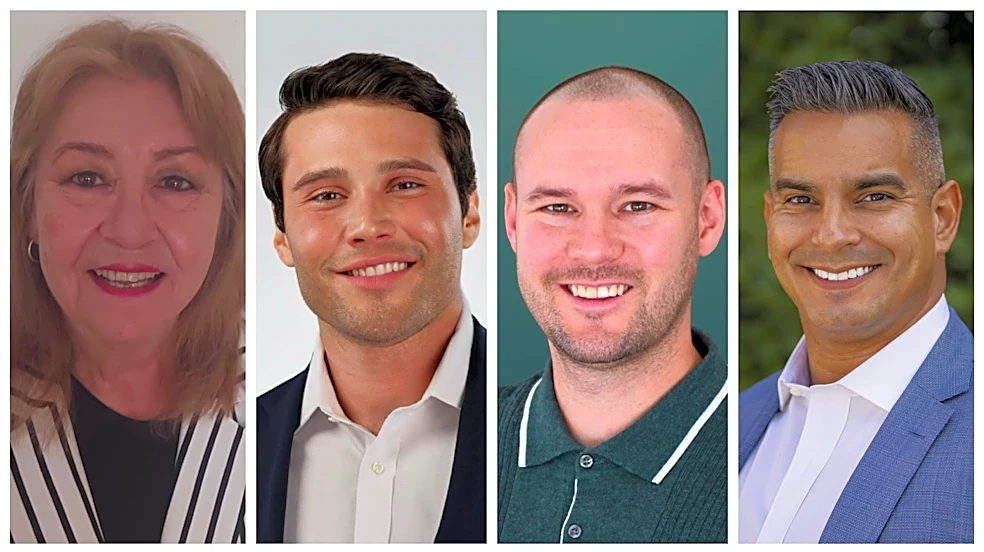


Election Day on Nov. 3will decide who represents El Paso on City Council in Districts 1, 5, 6, and 8.
To help voters learn more about the candidates on the ballot, the El Paso Times asked those seeking office to answer a standard set of questions about their backgrounds, priorities and views on issues affecting the community.
All candidates were invited to complete an election questionnaire to introduce themselves, their platform and address important voter topics.
The following is a sampling of candidates' responses. Click the link on the candidate's name to read the full questionnaire.

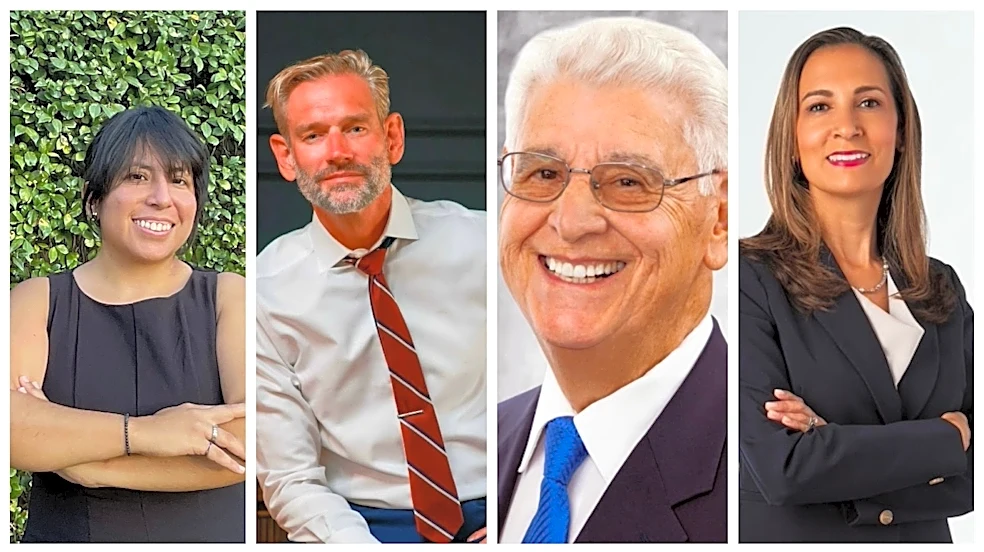
El Paso City Council District 1
- Alejandra “Ale” Chávez
- Sam Armijo
- Matthew James Kozik
- Daniela Garcia
Do you support the proposed Downtown I-10 Deck Plaza project? Why or why not? If elected, would you support using city funds to help finance the project?
Chávez:
I see potential value in the Downtown I-10 Deck Plaza, but affordability and our community’s other priorities must come first. The bigger question is: who’s going to pay for it? I would support pursuing state, federal, philanthropic, private, and other outside funding sources, but I do not support placing the financial burden of this project on local taxpayers. Any city participation should be limited to funding sources that do not compromise essential services, infrastructure, or other priorities facing El Paso.
Armijo: I will oppose the spending of one penny of taxpayers’ money on the proposed Deck Plaza.
I oppose the Deck Plaza because it will be a costly entertainment facility that El Paso doesn’t need, doesn’t want, and can’t afford. Here are my reasons:
• The promoters of the project want to build the Deck Plaza over four of the six Downtown overpasses between Santa Fe and North Kansas Streets. The overpasses on El Paso and North Stanton Streets will be completely blocked, forcing drivers to use the remaining overpasses. Unfortunately for drivers, the traffic over the adjacent overpasses on North Oregon and North Mesa will be impeded by the need to create safe crosswalks to allow visitors to walk from one end of the Deck Plaza to the other. In other words, it will create chronic north/south traffic congestion in Downtown El Paso.
• The widening of I-10 in Downtown El Paso is not necessary. Today traffic in this part of I-10 flows smoothly at all hours of the day in both directions. Widening of I-10 to provide a base for the Deck Plaza will take years and create a traffic nightmare for El Paso drivers.
• I-10 is a federal highway, and its purpose is to provide safe and efficient transportation. Its roadways and overpasses should not be used by local developers to build entertainment facilities. I have written to the Secretary of Transportation to urge the department to deny permission for such use.
• The Deck Plaza will cost far more than the original $207 million touted by promoters and their powerful backers. Thanks to Max Grossman’s use of the Freedom of Information Act, we now know that the city council paid one million dollars for a detailed cost estimate by a reputable engineering and construction company. Their estimate was a whopping $412 million. Like all major city construction projects, it will probably cost a lot more. The promoters aren’t worried because they plan to pass these costs on to El Paso taxpayers.
• The promoters of the Deck Plaza claim that the project will pay for itself because it will attract thousands of tourists who will spend millions of dollars in El Paso and provide a long-term revenue stream. This is nonsense, the claimed financial benefits to the city have no basis other than unsupported assumptions, unsupported claims, and the unrealistic hopes of the project’s visionaries.
• El Paso has the worst combination of low income and the highest property taxes of any large city in Texas. It is unconscionable for city and county officials to ignore these realities and insist on adding hundreds of millions of new city and county debt for a totally discretionary entertainment venue. I intend to stop them.
Kozik: I do not support the deck plaza as in its current state, the residents of El Paso, would be required to pay through property tax increases. Until a time where it is established that no money will go to building or maintenance, I will not support. El Pasoans are paid nearly $500 less a week than the rest of the state, we have much bigger issues on our plate.
Garcia: The proposal for the Deck Plaza, much like the park plaza’s being pushed in other major cities, will at best be a vanity project lacking in all local charm. Because of El Paso’s infrastructure and based on what is happening nationally with projects just like this, the Deck Plaza will be difficult to access, create a bigger traffic and parking nightmare, and consolidate commerce in a single area while hindering surrounding local businesses. It will also probably run long and over budget. Rather than pursue these questionable investments and have another Chihuahua Stadium in our hands, we should invest in our local gems, like completing the amphitheater in the Northeast, investing in Keystone Heritage Park on the West Side, creating a sustainable lake for Ascarate Park in the Lower Valley, or revitalize our Downtown. We should be creating avenues for accessible community investment so that we are no longer dependent on large investors and their sole interests.
Property taxes remain a top concern for many El Paso homeowners. What specific actions would you support to slow the growth of property tax bills or reduce services?
Chávez: Keeping El Paso affordable requires controlling city spending while protecting the essential services residents rely on. During my first budget cycle, I voted to lower the city's property tax rate to its lowest level in a decade, and during the FY2027 budget process, I opposed higher proposed tax rates and pushed for additional spending reductions. I will continue to look for efficiencies and pursue sustainable savings while ensuring we meet the needs of our community and protect essential services.
Armijo: I have been fighting El Paso’s constantly increasing property taxes since I ran for office in 2024. This year I was the only candidate for city council to speak before the city council during their hearings on the tax rate and budget. On August 4 and August 17, I presented the council with a detailed plan to defer and cut $21 million from low-priority activities in the proposed budget and permit the council to adopt a no-new-revenue tax rate. This proposal would not have cut funding for our first responders, city employees or essential services. The city council instead voted on August 18 to set a tax rate slightly below the voter approval rate and again raise our property taxes.
Kozik: On August 18, 2026, Council voted 6–2 to raise the city rate from 75.9649 to 79.8 cents per $100, about $105 a year on the average home. It left $33.5 million in reserve headroom untouched and $4.2 million a year in reinvestment zones council had not re-examined. My pledge: no rate above 79.8 cents through FY 2028.
Fire and police contracts, debt service and inflation add about $32.1 million in pressure in FY 2028. At 3% growth, a flat rate brings in $18.1 million, leaving a $14 million gap. Five tools close it with no election, no new tax and no service cut:
- Reinvestment zone terminations, up to $4.2M. Ordinances must come in October, before values lock January 1, 2027.
- Contract discipline, $1.0–$4.1M. Cap growth on renewals at 5%.
- Operating growth discipline, $2.0–$3.2M. Decline above-inflation growth in the city manager's office.
- Fee cost recovery, $1.0–$1.5M. Development review fees should cover what the reviews cost.
- Debt refunding, up to $3.0M, under a published affordability policy.
Garcia: We need a complete tax reform as well as investment reform. An audit on tax rates across the city and a more scrupulous look into the city budget should be top priority. Just this year, the city saw a tax rate increase. The massive tax incentives the city dispenses to large million/billion-dollar companies needs to stop, those incentives should prioritize single family homeowners, high density housing, and small local businesses. I plan to champion the pursuit of alternate sources of revenue, investing into our community, our tourist economy, and diversifying the industries invited into the city in order to shift our city’s dependence on local property tax revenue.
What should be the city's next big civic project?
Chávez: El Paso already has major civic investments underway, including the police and fire training academy and the potential expansion of our convention center. My priority is making sure we successfully deliver these projects while continuing to invest in the infrastructure, services, and quality-of-life amenities our growing city needs.
Armijo: We don’t need large civic projects like the Deck Plaza that will increase our debt, raise our taxes and fail to raise significant near-term revenues. Instead, we need to spend our money and do a better job of maintaining our parks and infrastructure.
Kozik: The next big civics project is running an ethical and open city council. We must reset our financial foundations, be it our budget, funding roads, addressing the economic disparities we face in El Paso, and growing our population. We must regain the trust of our residents, rebuild our basic foundation of government, showing our residents that we can be trusted again, living within our means, not giving an 80% tax cut to a billion-dollar company while raising taxes on everyone else; then we can focus on outside projects. Regaining the trust of our people is the next big civics project.
Garcia: What the city needs is sustainable systemic change, which is what I propose. Undertaking the nourishment of what we have to see a city that grows and flourishes over time will involve reform and the undertaking of fixing infrastructure, not a single big flashy project that will never be completed or that will hinder the community it’s supposed to serve.
Although, if you are asking for first steps, the first thing I would propose would be to hold city council meetings and public comment times during the evening, so the majority of our population has the opportunity to attend. Small changes that have a large impact.
This article originally appeared on El Paso Times: Meet 4 candidates running for El Paso City Council District 1