





SAN JERÓNIMO, Mexico — A sense of pride permeated the ranchers as they looked down at the first black steers crossing the border from Mexico into the United States.
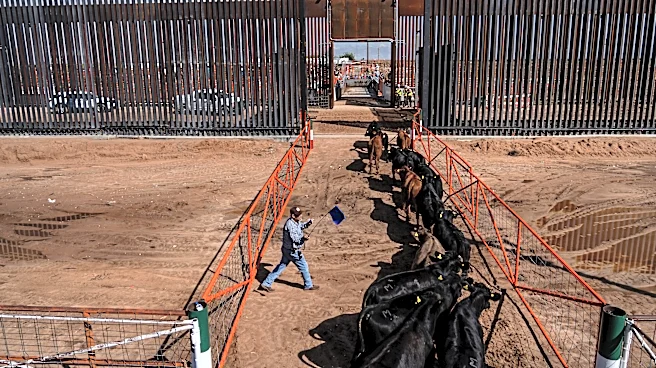
The ranchers, cattlemen and Mexican officials crowded the narrow orange-painted walkway that hangs over the corrals in front of the livestock gate alongside local reporters near the Borderland's Santa Teresa port of entry.
When 101 cattle crossed the border from Mexico to the United States for the first time in 16 months, those in the export business cheered and clapped.

"This is a moment of celebration," Alvaro Bustillos Fuentes, the chairman of Unión Ganadera Regional de Chihuahua, said. "We're very happy to re-establish the opening of the crossing port."
In all, 430 cattle were imported
through the livestock gate on the first day of trade on Sept. 24. The number of cattle increase daily, Bustillos Fuentes told Mexican journalists following the export of the first lot.
The chairman was joined by ranchers from both sides of the border and cattle feeders from Texas to observe the renewal of cattle imports.
The reopening of the border comes as the United States and Mexico have established new protocols to ensure the health of animals before export. The imports were the culmination of efforts to reopen the U.S.'s largest livestock port after the Trump administration shut down all imports because of concerns about the rapid spread of the parasitic New World screwworm fly across Mexico.
The closure heavily affected ranchers on both sides of the border, Bustillos Fuentes said. He pointed out that the import pause was "a bigger cost for U.S. industry" because other parts of the industry, such as ranches, farms, feedlots, and packing plants, were affected.
Before the May 2025 shutdown, Mexico was exporting over 1 million head of cattle annually. Exports plummeted from 1.2 million head of cattle in 2024 to 229,055 in 2025, according to USDA data, following the first detection of screwworm in northern Mexico.
The renewal of exports comes as the Trump administration seeks to ease high beef prices in the U.S. The export also comes as the U.S. cattle herds are at the lowest levels in the last 75 years, according to a USDA report.

Laphe LaRoe, the chairman of the Texas Cattle Feeders Association, knows these impacts all too well. He explained that over the past 16 months, the pause in exports has put "stress" on their "ability to keep the pins full."
LaRoe, who comes from Amarillo, Texas, was one of the cattle industry leaders to join Bustillos Fuentes in renewing exports, thanks to new protocols implemented by Mexico and the United States to control the spread of the screwworm.
"We're extremely happy to be able to start resuming trade," LaRoe said, "and to get things back to normal."
Jeff Abbott covers the border for the El Paso Times and can be reached at:jdabbott@usatodayco.com; @palabrasdeabajo on Twitter or @palabrasdeabajo.bsky.social on Bluesky.

This article originally appeared on El Paso Times: Ranchers cheer as Mexican cattle cross US border after 16-month halt