








The El Paso Chamber is calling on elected leaders to rethink their plan to pull commercial traffic as part of the Bridge of the Americas (BOTA) Modernization Project.
The Chamber recently commissioned an independent study from the Hunt Institute for Global Competitiveness at the University of Texas at El Paso on the effects of removing commercial traffic from the land port of entry. The study found that the move would reduce regional trade, jobs and economic output, according to a Chamber news release.
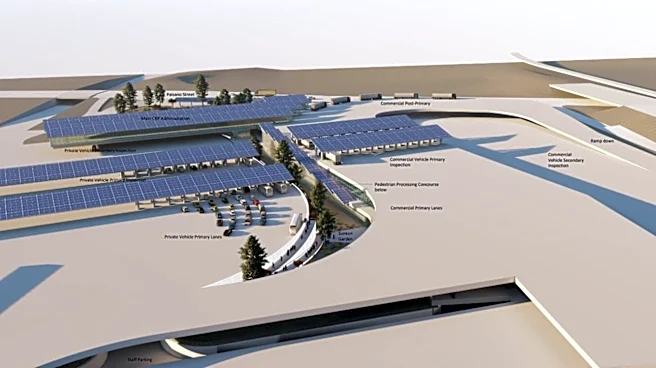
The General Services Administration (GSA) announced in May 2025 that its selection of a design plan for the renovation project, known as Alternative 4, which includes removing commercial traffic from the region's only free port of entry. The project is now in the design-build
phase, with construction set to begin in early 2028.

While the plan to remove commercial traffic already has wide-ranging support from U.S. Rep. Veronica Escobar, the El Paso City Council, the El Paso County Commissioners Court and community members reeling from the air and noise pollution around the port, the El Paso Chamber has been steadfast in its opposition to the plan.
The new study only reinforces that opposition.
"In light of (this study's) findings, the El Paso Chamber is calling on local, state, and federal officials to use this data to reevaluate Alternative 4 and pause its implementation," the Chamber wrote in a news release. "The Chamber urges officials to evaluate alternatives that address BOTA's infrastructure and safety needs while maintaining commercial operations and protecting this investment for our region."
What's in the study?
The Chamber did not provide a link to the full study, but the following is a breakdown of some of its findings:
- A $2.3 billion reduction in economic output, a loss of 9,529 job-years, and $600.7 million in lost labor income in El Paso County between 2028 and 2036;
- A $213.1 million in combined federal, state, and county tax revenue losses between 2028 and 2036;
- 10.9% of commercial trade would leave the Paso del Norte region, with forgone truck trade potentially reaching $36.6 billion in 2036 alone;
- Cross-border wait times and related annual logistics costs would increase by $79.1 million, or 17.8%.
The study also projected that shifting commercial traffic away from the Bridge of the Americas would strain other ports in the region and threaten the continued growth and competitiveness of El Paso's cross-border economy. Further, the study found that removing commercial traffic would increase overall emissions in the Paso del Norte region, including a moderate-to-significant increase at the Ysleta-Zaragoza port of entry.
Escobar: Chamber study 'nearly two years' too late
Escobar was quick to respond to the Chamber's study, not with criticism for the study itself but with a reminder that the wheels are already in motion for the multi-million-dollar project that has been years in the making.
"While I appreciate the time, money and effort the Chamber has put into this study, it comes nearly two years after the robust public engagement period concluded," Escobar said in a statement. "This period included public meetings hosted by the General Services Administration (GSA) and my office with support from the El Paso City Council and the El Paso County Commissioners Court, and participation and input from 12,000 El Pasoans."

Escobar noted that the Department of Homeland Security (DHS) and Customs and Border Protection (CBP) ultimately decided to remove commercial truck traffic from the heavily traveled land port, a decision the agencies made clear to Escobar and the Chamber was "final and would not be reversed."
"At this point, the decision is so far advanced that GSA is well into the bidding process, with the project expected to be awarded in the next several months," Escobar said. "I have repeatedly urged the Chamber to join with those of us working to ensure our other land ports of entry are ready for the shift in traffic, and use their time, resources and support to help create the private-public partnerships necessary to create more innovative, efficient crossings."
"El Paso can and should lead the nation in creating more efficient, safe and advanced cross-border commercial opportunities — clearly our economy depends on that," she continued. "We can also learn from other communities and how they’ve benefited from specializing their land ports of entry, instead of fighting decisions that have already been finalized and made with El Pasoans in mind, especially those living near BOTA. My hope is that this report inspires the Chamber to utilize their leadership to help plan for the future.”
Adam Powell covers government and politics for the El Paso Times and can be reached via email at apowell@elpasotimes.com.
This article originally appeared on El Paso Times: El Paso Chamber urges BOTA plan rethink as study warns of job losses