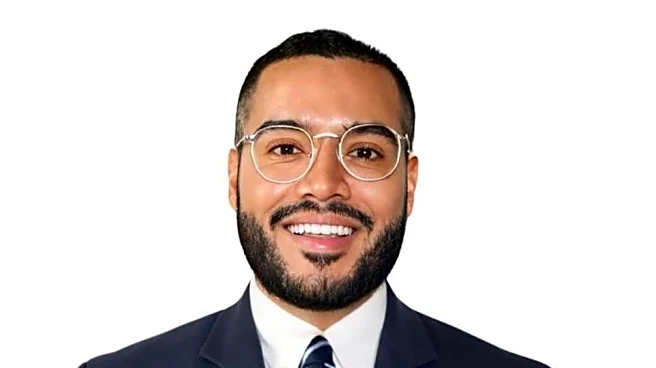




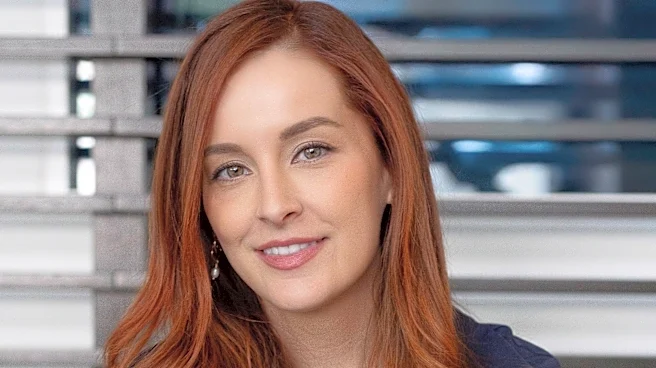


Meet the candidate: Ivan Niño, City Council District 5
Age: 35
Occupation: I currently earn my living serving full-time as the City Representative for District 5.
Please describe your personal and professional background.
My name is Ivan Niño, and I’ve proudly called District 5 home for over 30 years. I was born and raised in El Paso and grew up in a small-business family, with my parents owning a flower shop and jewelry store in Downtown El Paso. Their example taught me the value of hard work, perseverance, service, and giving back to the community. I’m a proud graduate of El Dorado High School and continued my education at El Paso Community College, UTEP, and the University of Arizona.
I have more than 15 years of experience in local and county government, with a career spanning county government, the
state court system, and municipal service. Today, I serve as the elected City Representative for District 5.
Since taking office in January 2025, I have focused delivering on the issues residents talk to me about every day: public safety, affordability, streets and traffic, infrastructure, parks, economic opportunity with better jobs, and making City government more accountable and responsive.
Describe your political identity.
The elected office of City Representative is nonpartisan. I am a public servant-minded individual, focused on solving problems and delivering results.
At City Hall, residents expect us to address the issues affecting their everyday lives: public safety, property taxes, streets, traffic, parks, infrastructure, jobs, and basic city services.
I evaluate issues based on their merits, the available facts and data, their financial impact, and what I believe is in the best interest of the people I represent. I am willing to work with anyone who is willing to work toward a better El Paso and a better District 5.
Questions related to El Paso City Council District 5 race
Do you support the proposed Downtown I-10 Deck Plaza project? Why or why not? If elected, would you support using city funds to help finance the project?
At a time when residents are asking us to address streets, public safety, traffic, parks, and affordability, those core responsibilities must remain our priority.
I believe the proposed Downtown I-10 Deck Plaza has the potential to reconnect parts of Downtown, create additional public space, and support economic development. However, any city investment must be financially responsible and clearly demonstrate a benefit to El Paso taxpayers.
Before supporting a significant city investment, I would need to see a complete funding plan, clearly defined long-term maintenance obligations, substantial participation from state, federal, private, and philanthropic partners, and a clear return for our community.
I would consider exploring limited city investment if it leverages substantially greater outside funding, does not require a property-tax increase, and does not come at the expense of essential city services. I would not support the city or local property taxpayers becoming the primary financial burden for the project.
Property taxes remain a top concern for many El Paso homeowners. What specific actions would you support to slow the growth of property tax bills or reduce services?
Affordability has been one of my priorities since taking office, and I believe city government has a responsibility to recognize the financial pressure facing homeowners and families. Since taking office, I have consistently asked the city to identify cost savings, reduce unnecessary spending, and look for ways to operate more efficiently. That approach continued throughout this year’s budget process.
I voted against the initially introduced voter-approval tax rate and voted against the proposed budget multiple times as we worked toward a better agreement. Ultimately, City Council adopted a lower property tax rate than originally proposed, which I supported. I have also supported property-tax exemptions that provide relief for seniors, veterans, and residents with disabilities. These exemptions are an important part of helping longtime residents remain in their homes, particularly as property values and the overall cost of living continue to rise.
But lowering a proposed tax rate or providing exemptions is only part of the solution. We also must address the growth of city spending. I support continuing line-by-line reviews of major expenditures, scrutinizing outside contracts and professional services, identifying duplication, competitively rebidding contracts where appropriate, reducing unnecessary spending, paying down debt when financially responsible, and requiring measurable results from taxpayer-funded programs.
We must also continue growing El Paso’s commercial and industrial tax base so that homeowners are not asked to carry an increasingly large share of the cost of city government. I would not begin with across-the-board cuts to police, fire, streets, parks, or programs serving seniors and veterans. Our first responsibility should be to make government more efficient, protect core services, prioritize spending, and make difficult decisions about lower-priority expenditures before asking taxpayers for more.
Road conditions continue to be a major concern for voters. What steps would you take to ensure adequate and sustainable funding for street maintenance and repairs across El Paso?
Safe and clean streets with less traffic have been a top priority of mine. Street maintenance has to remain a core responsibility of the city budget, not something we address only after a road has deteriorated to the point that reconstruction becomes necessary and significantly more expensive.
I support pavement preservation and a data-driven pavement-management strategy that prioritizes streets based on condition, traffic volume, safety, and cost. Preventive maintenance, crack sealing, rehabilitation, and resurfacing can extend the life of a roadway and reduce long-term costs.
We must also continue coordinating street projects with utilities so newly resurfaced roads are not unnecessarily cut open shortly afterward, provide residents with clearer multi-year schedules for planned improvements, and reserve long-term debt primarily for major reconstruction and capital projects rather than routine maintenance.
District 5 is currently seeing one of the most significant levels of street investment we have experienced, and that investment is translating into visible improvements across our neighborhoods. More than 70 streets and over 20 miles of roadway have received or are scheduled for resurfacing, rehabilitation, crack sealing, or other improvements. We are delivering that investment now, and I want to build on that progress with a sustainable street-maintenance strategy for the entire city.
What is your assessment of the city's Data Center Policy Framework? Does it strike the right balance between economic development and protecting community resources, or would you propose changes?
I believe the Data Center Policy Framework adopted by City Council strikes a much better balance between economic growth and protecting El Paso’s residents, natural resources, infrastructure, and utility ratepayers.
City Council has already established clear policy direction that the city should not actively recruit, pursue, or incentivize future hyperscale data centers. The framework also calls for greater public review, stronger environmental and infrastructure standards, and protections to ensure that the costs associated with these projects are not simply passed on to existing residents and businesses.
I supported that direction. Our goal should not simply be economic development for the sake of development. It should be economic mobility, creating opportunities that improve wages, expand access to quality jobs, support local businesses, strengthen our workforce, and allow more El Paso families to build long-term financial stability.
The city is also in the process of updating its broader economic-development policies and incentive standards. I believe those policies should establish clearer expectations for public investment and prioritize quality jobs and wages, local hiring and workforce development, small and locally owned businesses, meaningful expansion of our tax base, and projects that provide measurable long-term value to El Pasoans.
As those policies are updated, my priority will be responsible growth that protects our resources while creating greater economic mobility and opportunity for the people who live here.
Should the city continue offering tax abatements and other incentives to attract profitable corporations or industries? Under what circumstances, if any, should those incentives be approved?
Economic incentives should be a tool, not an entitlement. Any use of public resources should provide a clear and measurable benefit to El Paso and its residents.
When considering incentives, we should look at the quality and number of jobs being created, wages, capital investment, expansion of our tax base, local hiring, workforce development, and whether the project creates long-term economic value for our community. Agreements should also include clear performance requirements, transparency, accountability, and protections for taxpayers when commitments are not met.
I also believe our economic development policies should do more to directly help El Pasoans. Economic growth should lead to economic mobility. That means supporting small and locally owned businesses, creating pathways to better-paying jobs, helping families build wealth, and exploring policies that can help more El Pasoans achieve homeownership.
As the city updates its economic development policies and incentive standards, I want us to be more intentional about where public resources are invested and ensure that the benefits of economic growth are reaching the people who live and work here.
Public safety remains a core city responsibility. What are your top priorities for police, fire and emergency services, and how would you pay for them?
Public safety is my top priority.
My priorities include maintaining competitive police and fire staffing, improving recruitment and retention, reducing emergency response times, investing in equipment, strengthening DWI and traffic enforcement, improving emergency communications, expanding behavioral-health crisis response, and ensuring our first responders have safe and modern facilities.
During my term, District 5 has seen the opening of Fire Station 38, strengthening emergency coverage in one of the fastest-growing areas of our city. I have also made DWI prevention, speeding, lighting, and neighborhood safety major priorities.
We pay for public safety by treating it as a core responsibility rather than an optional expenditure. Police and fire should be prioritized within the General Fund while we aggressively pursue federal and state grants for personnel, equipment, and facilities.
Grants can help us expand our capabilities, but essential public-safety services must have sustainable local funding.
What do you see as El Paso's biggest economic challenge, and what specific policies would you pursue to address it?
El Paso's biggest economic challenge is creating enough higher-paying jobs while maintaining an affordable cost of living.
We need to continue diversifying our economy through advanced manufacturing, aerospace and defense, healthcare, technology, logistics, entrepreneurship, and other industries that increase wages and expand our commercial tax base.
That also means investing in the infrastructure those industries need, strengthening workforce partnerships with our schools and higher-education institutions, making permitting easier to navigate, supporting locally owned businesses and entrepreneurs, and connecting El Paso companies to procurement opportunities.
Economic development should ultimately be measured by whether El Pasoans have better jobs, higher wages, more opportunities to start and grow businesses, and a broader tax base that helps reduce pressure on homeowners.
Have you read the City Charter? What did you learn is the top City Council priority?
Yes. I regularly review and refer to the City Charter because it is the foundational governing document for the City of El Paso. In many ways, it serves as our local constitution. It establishes how our municipal government operates, defines the roles and responsibilities of City Council and the City Manager, and provides the foundation for the authority we exercise as a home-rule municipality.
As a home-rule city, El Paso has significant authority to address local issues and make decisions that reflect the needs of our community, within the limits of the Texas Constitution and state law. I believe our top priority as a council should be using that authority responsibly to deliver essential services, protect taxpayers, and improve the quality of life for El Pasoans.
City leaders often face divisive issues. How would you work with colleagues, stakeholders and residents to find common ground and build consensus on major city decisions?
Consensus starts with listening and understanding why people hold different positions. During my time on council, I have worked with colleagues with whom I agree on some issues and disagree on others. I try to separate the issue from the individual, understand the facts and financial consequences, identify areas of agreement, and work toward a solution that can earn broader support.
The same applies to residents and stakeholders. People should have a meaningful opportunity to participate before major decisions are made, not simply be told afterward what government decided.
Consensus does not mean abandoning your principles, and not every vote will be unanimous. It means being willing to listen, compromise where appropriate, explain your decisions, and continue working together after a difficult vote.
What should be the city's next big civic project?
I believe El Paso’s next major civic investment should be a citywide transportation and mobility initiative focused on better streets, better connectivity, and reducing the amount of time El Pasoans spend in traffic.
Residents across El Paso consistently talk about deteriorating streets, congestion, missing roadway connections, unsafe intersections, sidewalks, lighting, and the challenges of getting from one part of the city to another.
I would like to see a long-term citywide effort that combines major street reconstruction, preventive maintenance, new roadway connections, modern traffic signals, safer intersections, sidewalks, lighting, and improved transportation options into one coordinated strategy. We should also look at how we better connect neighborhoods to employment centers, schools, healthcare, and other parts of the city.
The Montwood Drive Extension is a good example of why this matters. It has been discussed for more than two decades, and we have now moved it into construction. Projects like this can improve traffic flow, provide better connectivity, strengthen emergency access, support economic growth, and improve quality of life.
I believe our next major civic investment should focus on making it easier, safer, and more efficient for El Pasoans to move throughout our city.
Learn more about Ivan Niño
Do you plan to continue in your current employment if elected?
If reelected, I plan to continue dedicating full-time and attention to serving the residents of District 5 and the City of El Paso.
What experiences in leadership do you have that qualify you for this position?
My leadership experience comes from more than 15 years of public service and, importantly, from currently doing the job.
I have worked at the county, state, and municipal levels of government. As a State District Court Administrator, I managed the day-to-day operations of a District Court. I have also served in leadership roles involving constituent services, government operations, budgets, policy, and community engagement.
My experience also includes an appointment to the Texas DMV's Motor Vehicle Title and Registration Advisory Committee and participation in local and national leadership programs focused on public service and community development.
As the District 5 City Representative, I now have the responsibility of making difficult budget and policy decisions, overseeing City government, working directly with residents and city departments, and bringing together local, regional, state, and community partners to move our community forward.
That experience has helped us advance major projects such as the Montwood Drive Extension, significant street and traffic improvements, public-safety infrastructure, park improvements – the Beast Urban Park, additional lighting, and initiatives addressing DWI, speeding, and neighborhood safety.
Have you ever been arrested or charged with a crime? Have you ever had a civil judgment against you? Have you ever been in arrears on local, state or federal taxes? If so, please provide an explanation.
No. I have never been arrested or charged with a crime, had a civil judgment against me, or been in arrears on local, state, or federal taxes.
If elected, would you have any potential conflicts of interest that you are aware of that would impair your ability to serve? Please explain what they are and how you would avoid the conflict.
No. I am not aware of any potential conflicts of interest that would impair my ability to serve. If a matter ever presents a conflict requiring disclosure or recusal, I will follow those requirements.
What does transparent government mean to you? Will you be personally accessible to answer questions while in office?
Transparent government means residents should be able to understand how decisions are made, how their tax dollars are being spent, and why their elected representatives vote the way they do.
Transparency also requires accessibility. Since taking office, I have made it a priority to hold community meetings, visit neighborhoods, meet directly with residents and stakeholders, and communicate about projects and decisions affecting District 5.
I believe you cannot effectively represent a community if you are disconnected from it. If reelected, I will continue to be accessible, answer questions, listen to concerns, and be accountable for the decisions I make. District 5 has been and will continue to be my #1 priority.
What distinguishes you from the other candidates in this race, and why should voters choose you?
Two years ago, I asked District 5 voters for the opportunity to serve. Today, I can point to real progress. We moved the long-awaited Montwood Drive Extension toward construction, broke ground on Phase II of The Beast Urban Park, invested in dozens of street and traffic improvements, expanded street and park lighting, opened Fire Station #38, advanced a new citywide Anti-DWI initiative, improved parks and recreational amenities, and continued working to strengthen basic City services.
Affordability has been one of my top priorities since taking office. I have pushed for greater fiscal accountability and have opposed simply asking taxpayers to pay more without first examining where city government can operate more efficiently. I supported increased tax exemptions for seniors, people with disabilities, and veterans, and I have voted against every utility rate increase.
There is still important work ahead. I am asking voters for a full term because I have demonstrated that I will listen, show up, work with people across our community, and continue delivering for District 5.
The candidates' responses are being published largely as they were submitted.
This article originally appeared on El Paso Times: Meet the Candidate: Ivan Niño seeks City Council, 5 seat