




Wasps. Hornets. And yellow jackets. Oh my.
Make that yikes since all three of the stinging insects can be found in Florida.
➤ How to get rid of wasps and keep them from coming back
Make that ouch since one of them — suspecting you yellow jackets — stung me several times over the weekend.
Shop wasp spray on Amazon
How dangerous are they, how can you tell the difference and, maybe most importantly, where are they found in your Florida yard?
Paper wasps, hornets and yellow jackets differ by behavior and nests
Paper wasps, hornets and yellow jackets are all members of the family Vespidae.
Where they differ is the type of nests they build and how they behave.
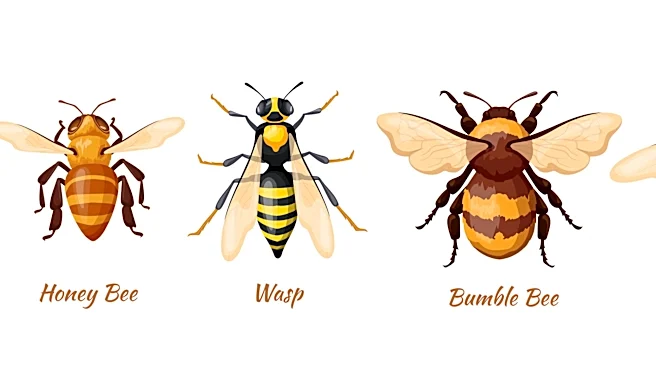
How to tell the difference between yellow jackets, hornets and paper wasps
We understand not wanting to get close enough to spot the physical differences between these flying insects, but here's a guide to key differences between them just
in case you find yourself having a close encounter:
- Paper wasp: Slender body with a narrow waist, brown/red/black/yellow markings, legs may hang down during flight, exposed paper-comb nest, less associated with scavenging, main concern is nests near household activity.
- Hornet: Heavier-bodied, species-dependent markings (brown-yellow or black-white), larger silhouette in flight, enclosed paper nest for aerial species, behavior around food varies by species, main concern is hostility when nests are disturbed.
- Yellow jacket: Shorter, compact build, strong black-and-yellow pattern, compact rapid flight movement, concealed underground or void nest (some species build aerial nests), commonly attracted to discarded food, main concern is concealed nests and conflicts around food areas.

How to tell what stinging insect is in your yard by the nest

Here's a quick guide to determining what you have in your yard if you spot a nest:
- Paper wasps: Build open, umbrella-shaped gray nests made of papery material with open cells visible underneath. Usually found under eaves, porch ceilings or soffits.
- Bald-faced hornets: Build large enclosed football-shaped nests in trees or on walls.
- Yellow jackets: Build nests underground or inside walls.
Yellow jackets build nests underground and are 'aggressively defensive'

While yellow jackets are an important predator of landscape pests in your Florida yard, "it's not enough to endear them to most people," the University of Florida's Institute of Food and Agricultural Sciences said.
"Their ability to sting multiple times, coupled with their aggressively defensive nature makes them one of those insects that people understandably want nowhere near their homes."
There aretwo types of yellow jackets in Florida: the Eastern yellow jacket and the Southern yellow jacket. Both are yellow and black, and both typically build nests underground, making them hard to spot or avoid accidentally disturbing until it's too late.
Why are yellow jackets so dangerous?

"One of the reasons an angry nest of yellow jackets is so dangerous is that, unlike honeybees who die after a single sting, yellow jackets can continue to sting their target," according to IFAS.
"And even if one yellow jacket is hurt, it releases an 'alarm pheromone,' drawing aggressive and defensive behavior from the whole colony."
"Yellow jackets are some of the most troublesome stinging insects in Florida," according to Clements Pest Control.
"The bigger concern is where they nest. Yellow ackets build large, enclosed paper nests that are often hidden underground, inside wall voids, in attic spaces, or tucked into shrubs and rock piles. Because the nest is concealed, homeowners frequently stumble onto one without warning, often while mowing the lawn or doing yard work."
Pair that with how aggressive yellow jackets get if they feel their nest is threatened and you know why they are not a favorite among Florida homeowners.
Yellow jackets attracted to sugar sources
Having a picnic or barbecue? Watch out for uninvited guests in yellow and black.
"These stinging insects are attracted to sugar sources, such as berries and flower nectars, as well as soft drinks, watermelons, and other ripe fruits.
"When drawn to your picnic yellow jackets are not as aggressive; they are in search of their own food, not defending their home," IFAS said.
This type of hornet is actually a yellow jacket with huge nest

"The commonly called baldfaced hornet is actually another species of yellow jacket," according to IFAS.
"It’s distinguishable by its black and white coloring and aerial nests.
"The baldfaced hornet’s common name comes from its hornet-like size and nesting habit. Generally, 'hornet' is used for species with nests above ground while 'yellow jacket' is used for species that create underground nests."
"Its nest is the real giveaway," according to Clements Pest Control.
"Bald-faced hornets build large, gray, football-shaped or teardrop-shaped paper nests that hang from trees, shrubs, eaves, and the sides of buildings. These nests can grow surprisingly large by late summer."
IFAS said nests can be up to 14 inches in diameter and 23 inches long.
"Bald-faced hornets are highly defensive and will aggressively protect their nest, sometimes pursuing a perceived threat for a distance."
Their painful sting can last for hours, according to IFAS.
Are there any true hornets in Florida?
"Hornets are actually a specific type of wasp. All hornets are wasps, but not all wasps are hornets," according to Clements Pest Control.
The only true hornet that lives in Florida is the European hornet.
European hornets arebrown and yellow and can get up to 1.5 inches long and are unusual in that they are active at night, often drawn to lights.
"They build enclosed nests in hollow trees, wall voids, and attics. They are not quick to sting, but like other large stinging insects, they will defend their nest if it is disturbed."
Paper wasps commonly seen around Florida porches

"Paper waspsare probably the species you see most often around Florida porches and eaves," according to Clements Pest Control. "They have slim bodies, long legs that dangle as they fly, and coloring that ranges from reddish-brown to dark brown with yellow markings.
"Their nests are easy to recognize. A paper wasp nest looks like a small gray umbrella made of papery material — from wood tissue and saliva — with open cells visible underneath. You will usually find them hanging from eaves, porch ceilings, door frames, and patio covers.
Paper wasps are "not particularly aggressive and typically stings only when threatened," according to IFAS.
Are mud daubers dangerous?
"Mud daubers are the gentle giants of the group," according to Clements Pest Control.
"These slender, often black or metallic blue wasps have a long, thin 'waist' and build distinctive nests out of mud. You will spot their tube-shaped or lumpy mud nests on walls, under eaves, inside sheds, and in other protected spots.
"The good news is that mud daubers are solitary and rarely sting. They are not defensive the way paper wasps and yellow jackets are, and they actually help control spiders, which they hunt to feed their young. Many homeowners simply scrape off the old mud nests once the wasps have moved on."
Cheryl McCloud is a journalist for the USA TODAY Network-Florida's service journalism Connect team. You can get all of Florida’s best content directly in your inbox each weekday day by signing up for the free newsletter, Florida TODAY, at https://heraldtribune.com/newsletters.
This article originally appeared on Sarasota Herald-Tribune: Florida home to wasps, hornets and yellow jackets. Know the risks
Our editors independently choose our recommendations. Some content is produced with paid support from a third party, however our editorial decisions remain independent. If you buy through our links, the USA TODAY Network may earn a commission. Prices and availability may change.