
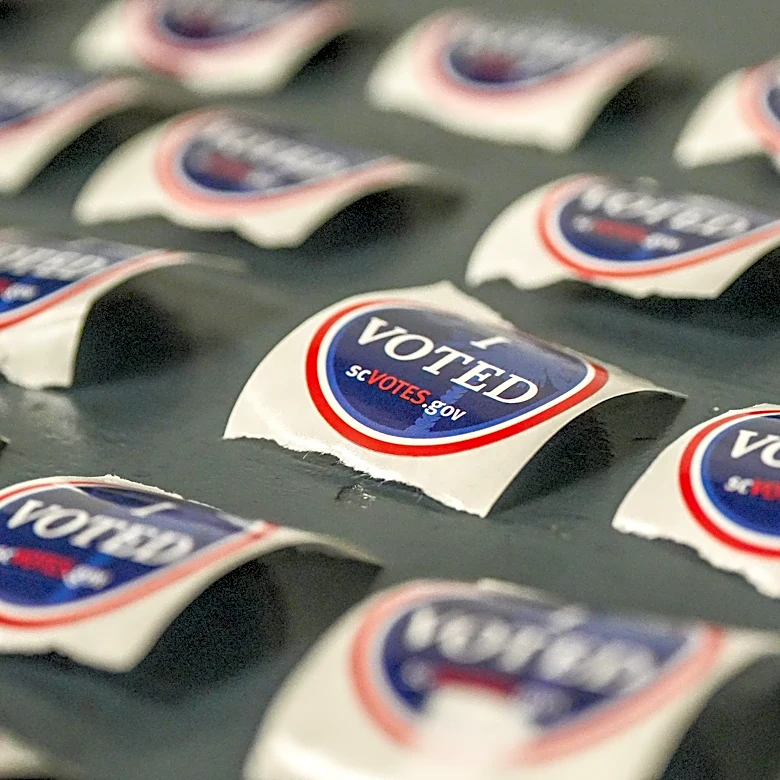


As we approach the Nov. 3 midterm elections, when seemingly everything is politically filtered or turned into a line of attack, it raises the question: is housing political?
Unfortunately, and perhaps unavoidably, the answer is yes, as nearly every factor that shapes housing is touched by government policy, such as zoning and density rules, permitting timelines, building codes, impact fees, property tax structure, insurance regulation, mortgage interest deductibility, government-sponsored enterprise (GSE) guarantees, rent control, eviction procedure, and the rate environment that monetary policy shapes. Strip those away, and you have lumber and land, and even the former is now subject to pricing skewed by tariffs based on politics. Everything
else is a decision someone voted on with possible political influence.
At the heart of the issue are the competing interests of those affected by these decisions. Current owners want appreciation afforded by limited inventory and neighborhood stability. Prospective buyers and renters want greater supply and affordability. Both are admirable outcomes, yet they are diametrically opposed to each other. Neither are clearly aligned with a specific political movement, and views may be shaped more by what is happening locally than by ideology.
Housing policy is political by nature, yet history provides examples of initiatives that have drawn support across party lines, including major zoning reforms, efforts to end redlining, and measures to limit property taxes. Initially driven by one party, such as New Deal initiatives fostered by Democrats to expand access to home loans and the subsequent development of the GSEs, the lines quickly blurred with overwhelming support from Republicans for FHA-insured mortgages. In fact, the 1949 Housing Act was co-sponsored by Robert Taft, considered to be among the most conservative senators.
The most significant national housing policy initiative in years, the 21st Century Road to Housing Act, encompassing over 50 individual provisions intended to boost housing availability in the country, passed with support from both sides of the aisle. At least for the day, politics could be put aside for a greater cause. With that said, I’ve attended housing industry conferences over the last year where I listened to the heads of HUD and the Federal Housing Finance Agency give intensely partisan speeches with little but vitriol for administrations that came before. Regrettably, politics prevailed over civility.
Closer to home in Florida, the most sensitive policy question at present is to support or oppose Amendment 3 and the proposed increase in homestead exemptions. For homesteaded properties, the amendment would raise the exemption from non-school property taxes to $150,000 in 2027 and $250,000 in 2028 and lower the annual assessment cap for non-homestead properties from 10% to 5%. That means homeowners could be taxed on a smaller share of their home’s assessed value, while owners of non-homestead properties could see their assessed values rise more slowly. The compromise is that counties and cities could have less property tax revenue available for services.
A recent St. Pete Polls for Florida Politics conducted this month has Republicans supporting it 63 to 17 with 20% undecided, independents favoring it 40 to 32 with 28% undecided, and Democrats opposing it 48 to 24 with 29% undecided. Not exactly a significant swing by party, and perspectives appear moveable based on information.
The James Madison Institute, which leans free market and limited government, found that without tradeoffs, the measure drew 74% of registered voters, crossing party lines at 89% of Republicans, 64% of Independents, and 59% of Democrats. However, when respondents were told cities and counties might have to cut services or find new revenue, Republican support fell to 70%, no-party voters to 50%, and Democrats to 36%. According to the Florida Legislature’s nonpartisan Office of Economic and Demographic Research, a University of North Florida poll found the same pattern, with support dropping sharply once voters heard of the roughly $11.86 billion annual reduction in local government revenue projected once the measure is in full effect beyond 2030.
Bias appears less aligned with party affiliation than constituent advocacy. While the Florida Realtor Association supports Amendment 3, the Florida Sheriffs Association, the Florida State Fraternal Order of Police, and the Florida Professional Firefighters all oppose it. Many of the counties that will be hardest hit in terms of revenue reductions have established Republican local leadership. Estimated impacts include St. Lucie at 35% and Clay, Baker, Citrus and Hernando counties each above 30%. Across Florida, the counties that have the tightest budgets based on a limited tax base will be the losers. In the end, most everyone wants to pay less in taxes yet is concerned about longer-term implications for their respective communities. That is economic, not political.
Despite this, there is a political angle that is not commonly discussed: control. Local governments may elect to increase the property tax rate to help offset gaps in income, though it is believed that Florida could elect to raise the state’s 6% sales tax to generate additional revenue and then assist counties feeling the most pain. Local governments would then be put in a position begging the state for money, which could be doled out based on alignment or not, with the ideology of a current administration or party in control. Most local leaders, regardless of affiliation, have no desire to go hat in hand to Tallahassee.
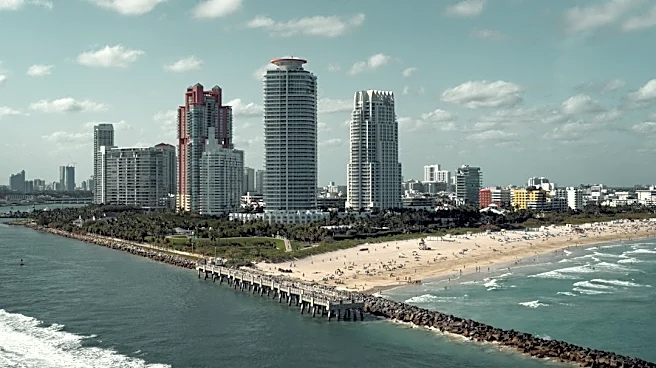
So perhaps policy may be political, but housing is most certainly not. Decisions on entitlements and access will shape the housing landscape on the Gulf Coast in the coming decades. Yet buyer and seller behavior is not based on beliefs, and general market dynamics are determined by forces far more powerful than decisions in a room by a few.
Whether Republican, Democrat or Independent, one thing we may all agree upon is the dream of a place we may call our own in a community we love.
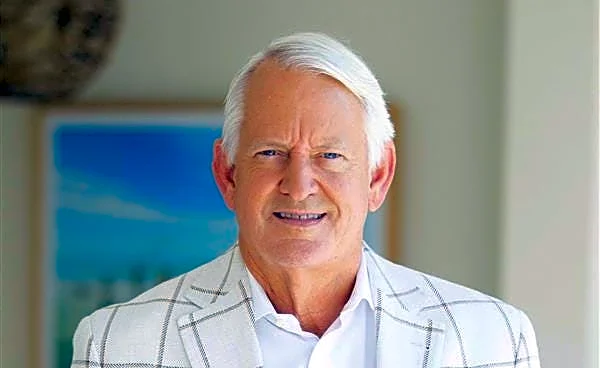
Budge Huskey is chief executive officer of Premier Sotheby’s International Realty.
This article originally appeared on Sarasota Herald-Tribune: What Amendment 3 reveals about housing and politics | Home Front