






Florida reported 57 new locally acquired cases of dengue fever in one week, according to the latest update from the Florida Department of Health. The disease is also called breakbone fever, due to the pain it causes.
That brings the statewide total to 425for the year as of Oct. 17, which makes it the largest outbreak in the United States in decades. The previous highest number of Florida cases in recent memory was 199 in 2023. In 2025, Florida reported 62 cases for the year.
➤ Prevent dengue at home in Florida with this 10-minute mosquito inspection
The bulk of the cases continues to be in Hillsborough County on Florida's west coast, which has 346 confirmed cases. Locally acquired cases have been reported in 11 counties.
One death was confirmed
in Hillsborough County, identified as 80-year-old Gay Small, who died of “dengue infection” along with septic shock and multi-organ failure, according to a death certificate.
The previous largest outbreak was in Hawaii's Big Island, where264 local cases were reported in the six months between September 2015 and March 2016. Florida's surge began three months ago.
President Trump in September issued an order for a "campaign" to reduce the mosquito and tick population in Washington, D.C. That model could then be "applied as targeted, innovative, non-chemical pest control for the whole nation."
Cases of other locally acquired mosquito-transmitted diseases have also been reported in Florida this year, although in far fewer numbers than dengue: West Nile Virus, Chikungunya and Eastern Equine Encephalitis.
Here's what you should know about mosquito-borne illnesses in Florida, symptoms to watch for, and how best to prevent mosquito bites, including advice from the Florida Department of Health.
18 counties under mosquito-borne illness advisories, alerts
A mosquito-borne illness advisory has been issued for the following counties:
- Bay
- Brevard
- Broward
- Holmes
- Leon
- Manatee
- Martin
- Palm Beach
- Polk
- Walton
A mosquito-borne illness alert has been issued for the following counties:
- Alachua
- Citrus
- Duval
- Hillsborough
- Miami-Dade
- Orange
- Pasco
- Pinellas
"A mosquito-borne illness advisory means the public should take precautions to reduce mosquito bites due to factors indicating local disease such as positive sentinels, very few presumptive or positive human cases, or other justifications," according to Sarasota County.
"A mosquito-borne illness alert means that there has been heightened disease activity, a significant increase in vector (disease capable) mosquito populations, or an increase in locally-transmitted human cases.
"Residents should continue to take precautions, but exercise additional caution in preventing mosquito bites."
Dengue cases increasing in Florida, with more counties reporting mosquito-transmitted disease

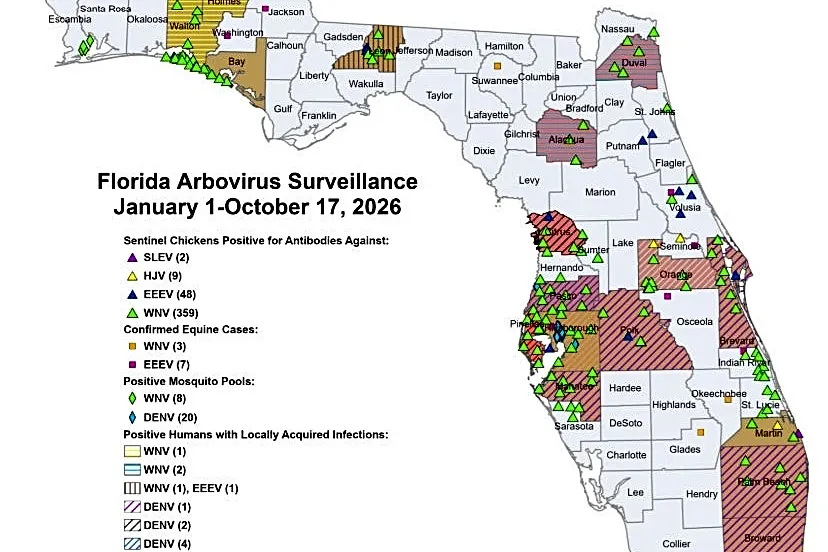
According to the Florida Department of Health, as of Oct. 17, there have been 425 cases of locally acquired cases of dengue reported in 11 counties, which is up from 368 reported Oct. 10.
There have also been five positive samples of locally acquired of West Nile virus and one case of chikungunya.
- Dengue: 425 cases
- 346 in Hillsborough County
- 51 in Pinellas County
- 9 in Miami-Dade County
- 8 in Orange County
- 4 in Pasco County
- 2 in Citrus County
- 1 in Broward County
- 1 in Palm Beach County
- 1 in Polk County
- 1 in Brevard County
- 1 in Manatee County
- West Nile: five cases
- 1 in Alachua County
- 1 in Duval County (asymptomatic blood donors)
- 1 in Holmes County
- 1 in Leon (asymptomatic blood donor)
- 1 in Walton County
- Chikungunya: 1 case
- 1 in Miami-Dade County
- Eastern Equine Encephalitis: 1 case
- 1 in Leon County
Trump goes to battle against mosquitoes, ticks
On Sept. 29, Trump signed an executive order to eliminate ticks and mosquitoes in Washington, D.C.
The order directs the Secretary of the Interior, the Secretary of Agriculture, the Administrator of the Environmental Protection Agency, and the Administrator of General Services, along with the Secretary of Health and Human Services, to "develop and implement a campaign across Washington, D.C., to reduce invasive mosquito populations by 90 percent and the tick population by 50 percent by 2028 using safe and effective, non-chemical, and innovative technology-enabled methods.
"This new model, localized to Washington, D.C., can later beapplied nationwide as targeted, innovative, non-chemical pest control for the whole nation."
Florida residents should take precautions to avoid mosquito-borne illnesses
"Residents throughout the state should continue to take precautions from mosquito-borne illnesses by appropriately applying bug spray, avoiding areas with high mosquito populations, and wearing long pants and shirts when possible — especially during sunrise and sunset when mosquitos are most active," said Isabella White, FDOH press secretary via email Sept. 23.
White said FDOH "continues to coordinate with local mosquito control partners to support surveillance and targeted response efforts in affected areas. These efforts help reduce mosquito populations, limit the risk of disease transmission, and protect residents across Florida."
What are symptoms of dengue, breakbone fever?
"Dengue fever can be a painful, debilitating disease but is rarely fatal," the Florida Department of Health said. Symptomsappear three to 14 days after the bite of an infected mosquito and include:
- sudden onset of fever
- severe headache
- eye pain
- muscle and joint pain (giving the disease the nickname “breakbone fever”)
- bleeding
- Gastrointestinal symptoms like vomiting and diarrhea may also be present in some cases.
"Dengue fever symptoms usually last four to seven days. The disease is often diagnosed incorrectly because the symptoms are similar to influenza and other viruses," the CDC said.
"Around one out of every 20 people infected by a dengue virus develops severe dengue, a life-threatening medical emergency that requires immediate medical attention," according to YaleMedicine.
Why is dengue called 'breakbone fever?'
Dengue is sometimes called “breakbone fever” because, in addition to fever, "it can cause severe aches and pains, especially in the legs, joints, and back," according to YaleMedicine.
Dengue does not actually cause bones to break, according to YaleMedicine.
Is dengue contagious?
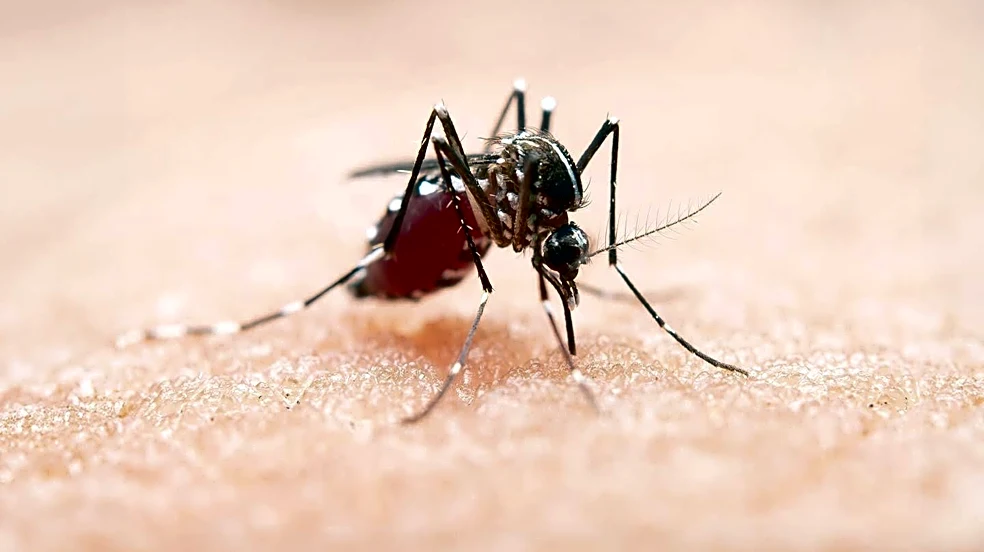
Dengue is spread by mosquitoes. Mosquitoes become infected with dengue after biting a person with the virus. Those infected mosquitoes then spread the virus to other people through bites.
The Centers for Disease Control said a woman infected with the dengue virus during pregnancy could pass the virus to her fetus, causing death to the fetus, low birth weight, or premature birth.
Can dengue be treated?
"While there is no cure for dengue and there are no specific medications for the condition, getting adequate hydration and plenty of rest, and taking acetaminophen for pain and fever can help alleviate symptoms while the body’s immune system fights the virus," according to YaleMedicine.
"In most cases, people recover from dengue within a week. For those with severe dengue, treatment by health care professionals can significantly lower the risk of death."
What are the best mosquito repellents to use?
According to the Florida Department of Health, repellentswith the following active ingredients provide the best protection:
- DEET
- Picaridin
- IR3535
- Oil of lemon eucalyptus
- Para-menthane-diol
- 2-undecanone, a plant-derived ingredient
'Drain and cover' helps keep mosquitoes away
The FDOH offered this advice to help keep mosquitoes away from your Florida home:
Drain
- Drain water from garbage cans, old tires, pool covers, or any other containers where water collects.
- Empty and clean birdbaths and pet water bowls at least once or twice a week.
- Protect boats and vehicles from rain with tarps that don’t accumulate water.
- Maintain swimming pools in good condition and ensure they are appropriately chlorinated.
- Empty plastic swimming pools when not in use.
Cover
- If you must be outside when mosquitoes are active, cover up.
- Apply mosquito repellent to exposed skin and clothing.
- Use mosquito netting to protect children younger than 2 months old.
Cheryl McCloud is a journalist for the USA TODAY Network-Florida's service journalism Connect team. You can get all of Florida’s best content directly in your inbox each weekday day by signing up for the free newsletter, Florida TODAY, at https://heraldtribune.com/newsletters.
This article originally appeared on Sarasota Herald-Tribune: Dengue cases continue to increase, spread across Florida. What can you do?