








You are what you eat, the centuries-old saying goes, and Americans’ diet is getting a lot of the blame for what’s ailing the country.
The Florida Department of Health pegs just about a third of us at a healthy weight and calls unhealthy weight the No. 1 threat to public health. So, if you’re part of the majority who say they want to lose weight and feel better, prepare to partake of one contradiction after another if you’re watching the results that Dr. Google or your social media feed serves up.
This summer, chocolate might seem a lot healthier than lettuce, given widespread “explosive” events that have many Floridians terrified of the green stuff.
The country’s top health official, U.S. Secretary of Health and Human Services Robert F. Kennedy
Jr., says cooking with beef tallow is better than using the seed oils that were widely adopted decades ago to be kinder to arterial blood flow.
And the federal Food Pyramid has been turned upside down in its mission to break down the latest food science into a symbol. What you once were advised to eat most — falling along the broadest part of the pyramid — is now at the pyramid’s pointiest part. That peak has been broadly viewed as “eat sparingly.”
But that’s not even the most confusing thing about the federal government’s new, 2026 food graphic, billed as “the most significant reset of federal nutrition policy in decades.”
“The (food pyramid) graphic that they came out with looks like meat is the superstar,” said Rosanne Rust, Rosanne Rust, a Venice-based registered dietitian and coauthor of DASH Diet For Dummies®. “But then the fine print still says that beans are important, whole grains are important. It's just very poorly communicated.”
What is the most successful diet for losing weight?
It’s a knotty question. And some of the trendiest diets would seem to contradict the most longstanding go-to plans.
A Gallup poll reported in December 2025 found four in 10 Americans — more women than men — consider themselves overweight and more than half of the U.S. population say they want to lose weight. How to do it has increasingly become more complicated to answer, according to Dr. Rahul Aggarwal, a cardiologist with Jupiter Medical Center Physician Group.
“If you look at it, we have basically come up with every permutation of diet out there: high fat, low fat, high carb, low carb, high protein,” Aggarwal said. “We’ve basically gone through the whole gamut.”
Some diets are formulated with an eye toward addressing the broader population, but that advice might not work for everyone, Aggarwal explained.
“It kind of depends on your focus,” Aggarwal said.
Here are some of the diets that show the range from general health to focus on healing specific conditions:
What’s the best way to eat for longevity? Check out the ‘Blue Zones.’
Bestselling author Dan Buettner teamed up with National Geographic to identify five zones with the world’s highest proportion of centenarians, called "Blue Zones." Their commonalities were distilled down into diet and lifestyle factors that transcended their cultural diversity. The findings started being disseminated in the early 2000s.
Boston-based dietitian Liz Weiss, who's written several cookbooks including "The Moms' Guide to Meal Makeovers" says she finds a lot of wisdom in what these five metropolitan places — in Costa Rica, Greece, Italy, Japan and Loma Linda, California — have in common about what we should be eating and how it should be done.
Each zones diets all emphasize moderate portions, no snacks, little meat and dairy, and an emphasis on plant-based foods. Across the board, all the diets prescribe half a cup of traditional legumes each day, such as black, pinto, kidney and soybeans.
“Rather than getting caught up in all these trendy diets, I say, ‘Take a step back. Eat more fruits and veggies,’” Weiss said. “Eat more beans. You can get more fiber that way. Eat with community. Eat with people you love and new acquaintances.”
What is the best diet for lowering blood pressure?
Nearly half of U.S. adults have high blood pressure — a condition associated with the most common causes of death like heart attack and stroke — so Dietary Approaches to Stop Hypertension, also known as the DASH diet — has endured since its introduction in the 1990s as one that doctors often recommend.
Lean meats — chicken and turkey without the skin, salmon, tuna, lean cuts of beef, pork and lamb — are in it and recommended for three to four servings or less a day. Grains top the menu, with selections such as oatmeal, grits, brown rice and whole wheat bread, recommended for five to six servings a day.
Rust, who published the guide to the diet for “Dummies,” says the DASH diet has been helpful in addressing more than just high blood pressure.
“The initial research was looking at dietary approaches to stop hypertension, but the follow-up research found many other positive implications,” Rust said. “It's helpful for weight control. It's helpful for diabetes management. It's generally just a well-balanced diet. It's not extreme. It can be applied to any culture.”
What is the No. 1 food to eat for heart health?
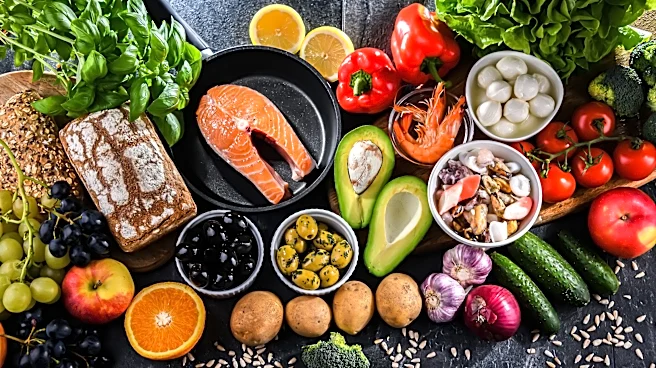
Fatty fish, like salmon, is widely considered the best food for heart health and it’s prominent in the Mediterranean diet, which has a lot in common with the DASH diet. The Mediterranean diet came to wider notice in the 1970s, when the area’s remarkably lower rate of heart disease drew scientists’ attention.
Generally, adherents to the Mediterranean diet don’t eat as much meat as those on the DASH diet. It calls for red meat to be eaten sparingly; three servings of fish per week and chicken shouldn’t be on your plate more than once a day — baked, broiled or grilled.
“The Mediterranean diet is more specific with the kind of foods and the style of cooking,” Rust said. “But not everyone wants to eat those foods necessarily.”
Is there a diet to slow dementia?
A number of diets make that claim, and the MIND diet, even mentions that goal in its name. The National Institute on Aging says the research shows "it's possible" what you eat can stave off dementia. But more research needs to be done.
The MIND diet, which stands for Mediterranean-DASH Intervention for Neurodegenerative Delay, is a mash-up of both the DASH diet and the Mediterranean diet, aimed at addressing brain health. It’s a little more specific about recommended foods: leafy greens should be part of vegetable consumption and blueberries for fruit. Butter and margarine get special mention for a specific limit (one tablespoon a day) along with cheese, which should be limited to one ounce or less per week, for brain protection.
How to calm your irritable bowel syndrome
The words that are part of the low "FODMAP" diet, are likely to strain your brain as it aims at easing your digestive symptoms.
It stands for Fermentable Oligosaccharides, Disaccharides, Monosaccharides, and Polyols. Those are carbohydrates and sugar alcohols that some patients’ small intestine may have a hard time processing.
The low FODMAP plan hails from Australia and it’s not considered a long-term eating plan but a method for discovering what foods might have you rushing to the toilet, finding it hard to go or suffering from bloating, pain and gas.
“It’s not a healthy lifestyle diet as much as a medical intervention that can really help because you find what your triggers are,” explained Dr. Camille Thelin, program director at the University of South Florida’s Women’s Digestive Health Program Director.
The low FODMAP diet works by removing a specific category of foods from one’s diet to see if the removal stops triggering symptoms. One would discover, for example, a sensitivity to wheat, barley and rye — which belong to the oligosaccharides group — if the symptoms disappeared once you stopped eating them. The low FODMAP plan would then have you switching to oats, quinoa and sourdough in their place.
Should you be ‘protein-maxxing’? Why is protein suddenly so popular?
Grains would appear to be losing out in the new federal guidelines published in 2026 that urge "prioritizing protein at every meal."
The new protein guidelines just about double the older, baseline recommendation for daily intake academic literature shows. It would mean that someone weighing 150 pounds should eat 82 to 109 grams of protein per day.
Protein supports muscle maintenance, controls blood sugar levels and makes people feel more satisfied after eating, the thinking is. And two trendy diets serve it up.
The Paleo diet, named after the Paleolithic Era, emphasizes protein consumption, sticking to foods that modern human ancestors hunted and gathered, rather than farmed. Those foods would be grass-fed lean meats, fish, fruits, vegetables and seeds.
The idea behind it is that humanity’s digestive apparatus is not well adjusted for foods that grew out of modern farming such as grains, legumes and dairy. This mismatch is causing chronic diseases such as diabetes and heart disease, the diet’s promulgators contend.
Another protein-heavy diet, the keto diet, has dairy — the full fat kind — but, like the Paleo diet, avoids bread, rice, pasta and starchy vegetables. This diet is designed to push the body into a state of ketosis, which burns stored fat instead of glucose because of how few carbs the diet has.
What are the pros and cons of the keto diet?
Today’s keto diet is a reboot of the Atkins Diet that was introduced in the 1970s.
RFK Jr. this year credited the high-fat, low-carb diet with curing schizophrenia, which vastly overstates preliminary research, according to New York Times reporting.
USF’s Thelin, who is also an associate professor of medicine at USF’s Morsani’s College of Medicine, sees the weight loss benefits of a keto diet, but also some risks.
Diabetic ketoacidosis, which can be a life-threatening, medical emergency, has been documented among non-diabetic keto diet followers.
“It can provide good short-term weight loss and it’s helpful for selected diabetic patients,” Thelin said. “But evidence is weak for cancer prevention, dementia prevention and longevity.”
She’s watching for results from the active research on keto, but she’s more likely to recommend the more tried and true for the general population.
“If I hang my hat on one thing … the Mediterranean diet,” she said.
For Jupiter Medical Center’s Aggarwal, he’s glad to see artificial intelligence platforms like ChatGPT digesting individual factors, such as age, weight goals and medical condition, and then spitting out ideal diets for those factors.
“It’s hard to come up with general rules for the population when there are so many moving parts,” said the cardiologist.
Anne Geggis is statewide reporter for the USA TODAY NETWORK FLORIDA, reporting on health and senior issues. If you have news tips, please send them to ageggis@usatodayco.com. You can get all of Florida’s best content directly in your inbox each weekday by signing up for the free newsletter, Florida TODAY, athttps://palmbeachpost.com/newsletters
This article originally appeared on Sarasota Herald-Tribune: Most Floridians have 'unhealthy' weight. What diets will eliminate it?