



When a SpaceX Falcon 9 rocket lifts off from Cape Canaveral on the East Coast of Florida, it's often seen far beyond the launch pad − sometimes from the West Coast of the state.
When the SpaceX Falcon Heavy rocket − the company's bigger, badder and far, far more powerful spacecraft − lifts off from NASA's Kennedy Space Center, it's often seen far beyond Florida.
Expected to generate more than 5 million pounds of thrust at liftoff, the upcoming SpaceX Falcon Heavy rocket launch (pending weather and clouds) should be quite a show.
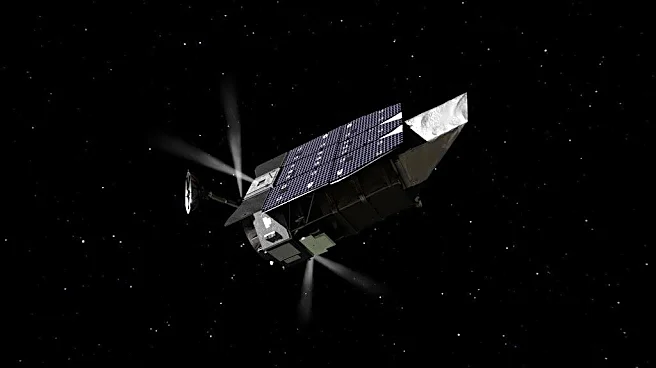
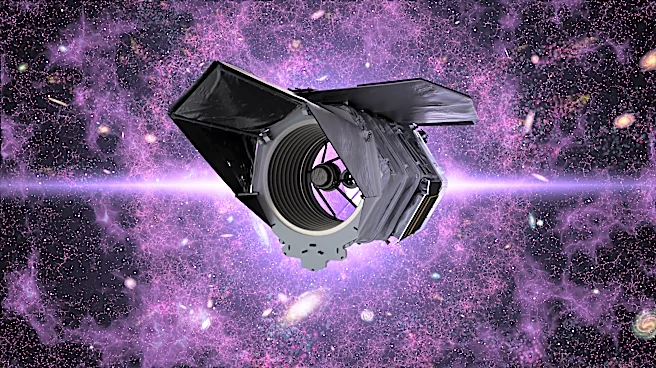
If all goes according to plan, on Sunday, Aug. 30, 2026, the SpaceX Falcon Heavy rocket will help launch NASA's next great cosmic observatory, the Nancy Grace Roman Space Telescope, into space, where it will join the likes
of the Hubble and James Webb space telescopes.
Watch NASA+ content with Amazon Prime Video
Will it be visible in Fort Myers, Cape Coral, Naples and other parts of Southwest Florida? It's happened before (see photos below).
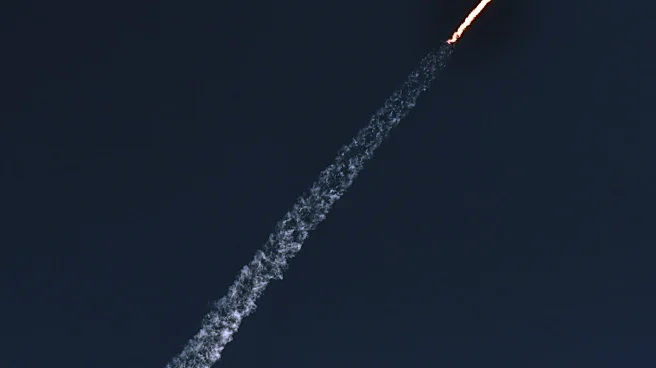
Some readers reported seeing the "space jellyfish effect" in the sky after a 5:21 a.m. Thursday, July 9, 2026, SpaceX Falcon 9 rocket launch from Cape Canaveral Space Force Station. Visibility depends on weather and cloud cover, and the bubble shapes or "space jellyfish" depend on timing and how the sun hits the rocket's exhaust (or contrail) after liftoff. It typically happens during a sunrise or sunset rocket launch, and in that case, it was seen all the way in Tallahassee, St. Augustine and Naples, Florida.
NASA's Artemis II rocket launch was visible from Fort Myers, Florida, in April 2026.
Below is more information on the Spacex Falcon Heavy rocket launch from Florida, suggestions on where to watch it and how to watch some launches with NASA+ on Prime Video.
For questions or comments, email USA TODAY Network Space Reporters Rick Neale at rneale@floridatoday.com, Brooke Edwards at bedwards@floridatoday.com or Eric Lagatta at elagatta@usatoday.com. For more space news from the USA TODAY Network, visit floridatoday.com/space.
Sunday, Aug. 30, 2026: SpaceX Falcon Heavy for NASA's Nancy Grace Roman Space Telescope
- Mission: Generating 5 million pounds of thrust at liftoff, the SpaceX Falcon Heavy rocket will launch NASA's Nancy Grace Roman Space Telescope, which will have a field of view at least 100 times larger than the Hubble Space Telescope.
- Launch window: 7:26 a.m. ET Sunday, Aug. 30, 2026
- Launch trajectory: TBD
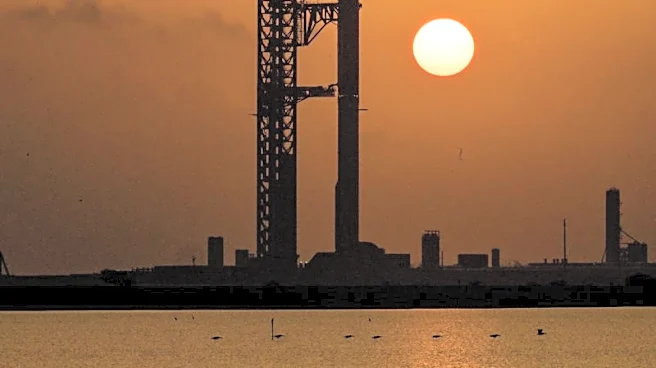
- Launch location: Launch Pad 39A at NASA's Kennedy Space Center near Cape Canaveral and Merritt Island, Florida
- Sonic booms for the Space Coast (Melbourne, Cocoa Beach area) of Florida: Yes
- Live coverage starts two hours before liftoff at floridatoday.com/space: You can watch live rocket launch coverage from USA TODAY Network’s Space Team, which consists of FLORIDA TODAY space reporters Rick Neale and Brooke Edwards and visuals journalists Craig Bailey, Malcolm Denemark and Tim Shortt. Our Space Team will provide up-to-the-minute updates in a mobile-friendly live blog, complete with a countdown clock, at floridatoday.com/space, starting two hours before liftoff. You can download the free FLORIDA TODAY app, which is available in the App Store or Google Play, or type floridatoday.com/space into your browser.
Where can I watch a rocket launch in Florida?
A rocket launch with a northeast trajectory can be visible as far north as Jacksonville Beach, Florida, which is about 160 miles north of Cape Canaveral (about a two-hour and 30-minute car ride, depending on which route you take).
Rocket launches with a southeast trajectory can be seen as far south as West Palm Beach, Florida, which is about 150 miles south of Cape Canaveral (about a two-hour-and-20-minute car ride).
Rocket launches are most visible from the Space Coast, where they launch from, and are often visible from the Treasure Coast and Volusia County as well.
Watch some rocket launches with NASA+ on Prime Video
NASA content, including some rocket launches, is available to watch through NASA+ on desktop, both from its official site and YouTube. The platform is also available to download as a mobile app on smartphones.
All NASA+ content is also available to those who have Prime Video downloaded on any of their devices – whether it be a smartphone or smart TV.
Watch NASA+ content with Amazon Prime Video
The content, which does not require a Prime subscription to view, is one of Prime Video's FAST channels (free ad-supported television). Viewers can find it under Prime's Live TV section at the top of the screen when they open the app.
Lianna Norman and Jennifer Sangalang.are trending reporters for the USA TODAY NETWORK-Florida, covering pop culture, lotteries, rocket launches, Florida wildlife, breaking news and more. You can get all of Florida’s best content directly in your inbox each weekday by signing up for the free newsletter, Florida TODAY, at floridatoday.com/newsletters.
This article originally appeared on Sarasota Herald-Tribune: SpaceX launch at Kennedy Space Center: Will Falcon Heavy be seen in Sarasota?
Our editors independently choose our recommendations. Some content is produced with paid support from a third party, however our editorial decisions remain independent. If you buy through our links, the USA TODAY Network may earn a commission. Prices and availability may change.