

There is no question that Florida has an affordability problem.
Homeowners are feeling it in their property taxes and insurance premiums. Renters are feeling it in monthly housing costs. Businesses are feeling it through higher insurance, labor, housing and operating expenses.
So, when our state leaders ask whether Florida's property tax system needs reform, I believe they are asking the right question.
Unfortunately, Amendment 3 is the wrong solution.
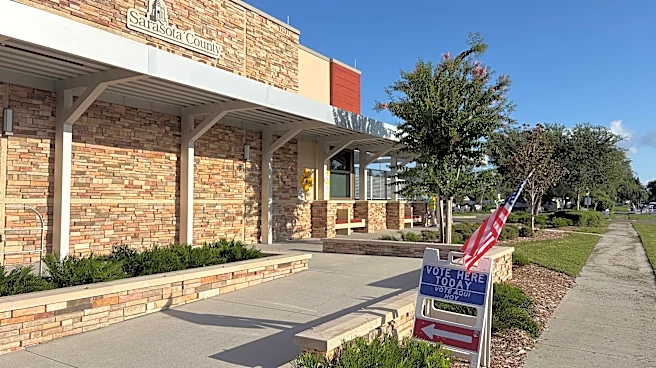
This November, Florida voters will consider Amendment 3, a sweeping change to our state's property tax system. The Greater Sarasota Chamber of Commerce opposes Amendment 3 because we believe the proposal creates too many unanswered questions, could shift costs to businesses and renters, and puts important
community services at risk.
This is not a partisan issue. It is a fiscal issue, a business issue and, ultimately, a community issue.
Let's start by acknowledging something important: property tax reform is needed. Florida TaxWatch reports that property taxes have increased nearly 40% in just three years and have more than doubled over the past decade. Florida's property taxes now total approximately $59.2 billion annually. TaxWatch has concluded that meaningful relief is warranted.
We agree.
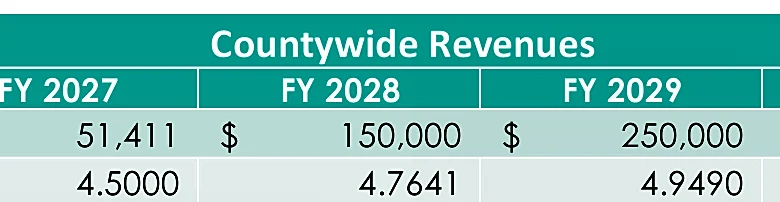
But tax relief should actually solve a problem – not simply move the bill from one taxpayer to another. Amendment 3 would increase the homestead exemption for non-school property taxes to $150,000 in 2027 and $250,000 in 2028. It would also reduce the annual assessment-growth cap on non-homestead properties, including commercial and rental properties, from 10% to 5%.
According to the state's Revenue Estimating Conference, Amendment 3 is projected to reduce local government property tax revenue by approximately $5 billion in its first year, growing to $10.7 billion by FY2030-31.
Here in Sarasota County, the numbers bring the issue much closer to home. County projections estimate approximately $46.9 million less in property tax revenue in FY2028 and $87.1 million less the following year. Those figures do not mean those exact amounts will automatically be cut from specific services. Local elected officials would determine how to respond. But the revenue reduction itself is very real.
Who ultimately pays?
And that leads to the question we believe every voter should be asking:
If billions of dollars are removed from local government revenues, who ultimately pays for the services our communities still need?
Roads and infrastructure. Parks. Stormwater systems. Natural resources. These aren't abstract line items. They are part of what makes Sarasota a safe, attractive and economically competitive place to live, work, visit and build a business. Property taxes are a major source of funding for many of these services.
The effects could reach another defining part of Sarasota: our arts and cultural institutions. Local government funding decisions help support the broader ecosystem that makes Sarasota's quality of life so distinctive. When local budgets face significant pressure, discretionary investments across a community can face greater competition for limited dollars.
Then there is the potential tax shift. Florida TaxWatch has been particularly clear on this concern. It notes that Florida's current property tax system already shifts billions of dollars from homesteaded properties to non-homestead properties. Without meaningful spending guardrails, TaxWatch says reductions in homestead property tax revenue could be passed to non-homestead owners or replaced through other taxes, fees and special assessments with renters and businesses among those potentially affected.
That matters enormously to the business community. A small business cannot simply absorb one increased cost after another. Neither can a renter whose landlord faces higher operating expenses. Costs have a way of moving through an economy, eventually showing up somewhere else.
We are far from alone in raising concerns.
Organizations representing Florida's counties, cities, fire chiefs, firefighters, sheriffs, engineers, parks and others have opposed Amendment 3 or raised significant concerns about it. Florida TaxWatch's newly released voter guide recommends voting no and argues that a fiscal change of this magnitude deserved considerably more study and stakeholder input.
A better opportunity for Florida
There is a better opportunity right around the corner. Florida's constitutionally established Taxation and Budget Reform Commission convenes in 2027 – something that happens only once every 20 years. This commission provides an opportunity to comprehensively examine property taxes, government spending, efficiency and tax fairness together rather than changing one piece of an extraordinarily complicated system in isolation. That is the kind of thoughtful approach a decision this consequential deserves.
At the Sarasota Chamber, we believe in fiscal responsibility. We believe homeowners need relief. We believe government must continually examine spending and find efficiencies. And we believe Florida's tax structure should support – not undermine – a competitive business climate.
Those principles are not mutually exclusive. This November, Floridians are being asked an important question about property tax relief.
It is the right question. Amendment 3 is the wrong solution.
For these reasons, the Sarasota Chamber respectfully opposes Amendment 3 and urges voters to consider its long-term impacts on our business community and local government services.
And before casting your ballot, I encourage you to understand not only the tax relief Amendment 3 promises, but also to ask the equally important question of who ultimately pays the bill.
Heather Kasten has been president/CEO of the Greater Sarasota Chamber of Commerce since 2019. She holds a bachelor’s degree from the University of Iowa in Business Administration and an MBA from Webster University. For more information about joining the Sarasota Chamber of Commerce or learning about the significance of being a member, visit sarasotachamber.com.
This article originally appeared on Sarasota Herald-Tribune: Here's why Amendment 3 is the wrong tax fix for Florida | Indicators