








Florida health data released Oct. 15 shows another reported case of Vibrio vulnificus, bringing the state's total this year to 30 cases and five deaths. Florida reported 33 cases and five deaths in 2025.
The latest case is a 75-79-year-old person in Charlotte County, data shows.
The rare infection is caused by bacteria nicknamed “flesh-eating bacteria” because they can rapidly damage tissue, sometimes requiring emergency amputation to prevent the infection from spreading.
Vibrio vulnificus, which can be caught in brackish water where seawater and freshwater mix or by eating undercooked seafood, has been surging in southern coastal states this year.
At least 41 cases have been reported this year in Louisiana, Alabama, Mississippi, South Carolina,
and Texas. Louisiana has reported seven deaths as of Oct. 7, while South Carolina health officials told WMBF News last month they were aware of one related death.
About 1 in 5 people who develop the infection die, according to the Centers for Disease Control and Prevention (CDC)
How do you get Vibrio vulnificus?
Vibrio vulnificus is contracted by exposing cuts, scrapes, or wounds to brackish water or by eating raw or undercooked seafood (especially oysters) harvested in those waters. It can become life-threatening within hours and may require emergency surgery and even rapid amputation to prevent spreading.
Vibrio vulnificus cases in Florida
According to Florida Department of Health data through Oct. 10, cases have been reported in:
- Cases:
- Bay County: 2
- Brevard County: 1
- Broward County: 2
- Charlotte County: 1 (+1)
- Citrus County: 1
- Clay County: 2
- Dixie County: 1
- Duval County: 1
- Franklin County: 1
- Hillsborough County: 1
- Lee County: 2
- Marion County: 2
- Miami-Dade County: 2
- Okaloosa County: 2
- Palm Beach County: 2
- Pinellas County: 1
- Polk County: 2
- Santa Rosa County: 3
- St. Johns County: 1
- Deaths:
- Bay County: 1
- Broward County: 1
- Marion County: 1
- Palm Beach County: 1
- Pinellas County: 1
How to avoid getting infected with Vibrio vulnificus
Vibrio vulnificus enters the body through open cuts, scrapes, or wounds, or by consuming contaminated seafood that is undercooked or raw.
Health experts say if you have open wounds, which can include small cuts and abrasions, fresh tattoos and piercings, and healing surgical incisions, you should stay out of brackish water found in bays, estuaries, river mouths, and flood-prone areas.
If you must be exposed to the water, cover the area with waterproof bandages and wash exposed skin with soap and running water immediately afterward.
Seafood, particularly oysters, should be cooked thoroughly before eating. Anyone handling raw seafood should wash their hands and clean any surfaces the seafood touches. People at higher risk of infection should consider wearing gloves.
Vibrio vulnificus is called the "flesh-eating bacteria" because it can cause necrotizing fasciitis, a severe infection that rapidly destroys skin and muscle tissue, according to the CDC. Without prompt treatment, the infection can lead to tissue damage, blistering, low blood pressure, fever, organ failure, sepsis, and death.
Infections are most common from May through October, when water temperatures are at their warmest.
Who is at risk for Vibrio vulnificus infections?
Anyone can become infected, but most people with healthy immune systems fight it off without ever noticing it.
People at the highest risk of severe illness include those with liver disease, cancer, diabetes, HIV, or thalassemia, as well as people taking immune-suppressing medications, people who use acid-reducing drugs, people who recently underwent stomach surgery, and older adults with multiple underlying health issues.
What are the symptoms of Vibrio vulnificus or 'flesh-eating bacteria'?
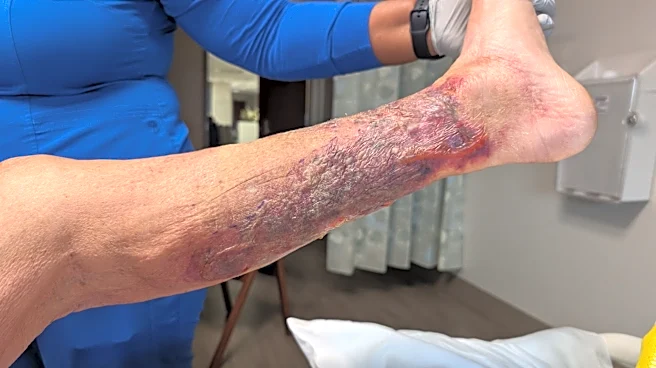
(WARNING, AN IMAGE BELOW MAY BE TOO GRAPHIC FOR SOME AUDIENCES)
Common symptoms of Vibrio infection may include:
- Watery diarrhea, often accompanied by stomach cramping, nausea, vomiting, and fever.
- Bloodstream infection: fever, chills, dangerously low blood pressure, and blistering skin lesions.
- Wound infection, which may spread to the rest of the body: fever, redness, pain, swelling, warmth, discoloration, and discharge (leaking fluids).
If you experience these symptoms after being exposed to floodwaters, seek medical attention immediately. Healthcare professionals can treat the infection with antibiotics, but in extreme cases arms and legs may need to be amputated to remove dead or infected tissue.
"Many people with Vibrio vulnificus infection require intensive care or limb amputations," the CDC said on their site, "and about 1 in 5 people with this infection die, sometimes within a day or two of becoming ill."
C. A. Bridges is a journalist for the USA TODAY Network-Florida's service journalism Connect team. You can get all of Florida’s best content directly in your inbox each weekday day by signing up for the free newsletter, Florida TODAY..
This article originally appeared on Sarasota Herald-Tribune: Florida Vibrio vulnificus cases rise to 30, with 5 deaths reported