





Progress has a funny way of scaring us at first. Every time humanity invents a tool that makes life easier – or thinking faster – we panic a little. We assume the tool will make us lazy, replace discipline with dependence, and turn skill into shortcut.
When handheld calculators began showing up in classrooms in the 1970s, they caused a full-blown educational identity crisis. Teachers feared students would lose their ability to add, subtract, or multiply without the reassuring scratch of a pencil. Some schools even banned calculators outright, warning they’d “destroy the art of arithmetic.”
In 1975, the National Council of Teachers of Mathematics (NCTM) formally advised that calculators not be used in elementary education because they might “impair”
the development of basic skills. To many teachers, the calculator wasn’t progress; it was plagiarism against effor–t itself.
Fast forward 50 years, and the same argument is back – this time about artificial intelligence.
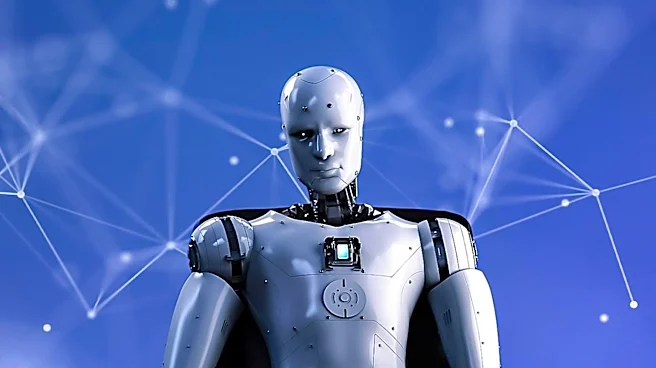
AI tools like ChatGPT and Copilot are being called the new calculator for the written and analytical world. They summarize, they solve, they compose. And, just like those early calculators, they’ve sparked anxiety that students and even professionals will stop thinking for themselves.
But if history has taught us anything, it’s that new tools don’t erase human skill. They redefine what that skill looks like.
The Cliff Notes Generation
Before calculators or ChatGPT there were CliffNotes.
Those yellow-and-black booklets were the shortcut of the 1960s and ’70s, boiling down Shakespeare, Steinbeck, and Dickens into a few digestible pages. Teachers hated them. They said they robbed students of the struggle, the mystery, and the satisfaction of discovering meaning on their own.
And yet, for countless students, CliffNotes didn’t replace literature. They rescued it. They made complex language understandable, plots clearer, and themes accessible. They didn’t kill curiosity; they often sparked it.
If calculators freed students from mechanical math, CliffNotes freed them from linguistic paralysis. Both were bridges, not crutches.
It’s funny how time reframes the story. The same people who once hid CliffNotes in their backpacks now ask Siri for summaries, watch video explainers on YouTube, or rely on ChatGPT to clarify dense topics. Every generation finds its shortcut, then realizes it’s actually a tool.
Once calculators were accepted, something amazing happened: math didn’t get easier; it got deeper.
Freed from long division, students could finally explore concepts, not just computation. They could ask “why” instead of being stuck on “how.” Engineers began solving real-world problems rather than re-deriving formulas they already understood. The calculator didn’t make math irrelevant; it made more advanced math possible.
Of course, resistance lingered. In 1986, The New York Times quoted a teacher worrying, “If students can’t do math without calculators, what will happen when the batteries die?”
The answer: we recharged them, and we kept learning.
AI is today’s version of that same battery-powered leap. It’s not replacing thinking; it’s reallocating it. Instead of wasting energy retyping, reformatting, or researching in the dark, we can focus on reasoning, analysis, and creativity. AI is the calculator for cognition.
AI as New Cognitive Partner
Think about what calculators did for math fluency; AI is now doing for idea fluency.
A calculator could handle your computation but not your concept. Similarly, AI can draft your outline but not your insight. The tool accelerates the process, but the human still drives the meaning.
Used well, AI becomes a cognitive amplifier. It turns blank pages into starting points and transforms hesitation into exploration. The danger isn’t that students will rely too much on AI; it’s that they’ll stop learning how to use it well.
The educators who adapted to calculators didn’t ask students to stop computing. They asked them to compute better questions. That’s what AI demands, too. The quality of the question now determines the quality of the learning.
Every era produces a new shortcut that’s really a new skill in disguise.
The calculator taught accuracy.
CliffNotes taught synthesis.
AI is teaching us curiosity, discernment, and the humility to ask better questions.
But no tool, then or now, can replace the human qualities that make learning meaningful: perseverance, resilience, and resourcefulness.
The key for students today isn’t memorizing every formula or fearing every new piece of technology. It’s knowing how to find the right tools, how to question the answers they get, and how to push through uncertainty with a combination of grit and grace.
A calculator won’t make you a mathematician, and AI won’t make you a writer. But both can make you a better thinker if you approach them with persistence rather than passivity.
As one veteran math teacher once said, “It’s not about banning the calculator. It’s about teaching the mind behind the machine.” The same now holds true for AI. The students who learn to use it as an ally, not a replacement, will outpace those who fear it or misuse it.
From Prohibition to Partnership
History tends to follow a familiar pattern: first rejection, then resistance, then reluctant adoption and finally, total integration. Eventually, “AI-assisted” will sound as normal as “calculator required.”
And maybe a few decades from now, when some future tool appears to challenge AI, teachers will look back on this era and smile. They’ll remember how we argued about whether machines would make us lazy before realizing they could actually make us limitless.
The real lesson isn’t about calculators or CliffNotes or ChatGPT. It’s about the human spirit that adapts, evolves, and keeps finding ways to learn.
Because progress isn’t about replacing effort. It’s about rewarding those who keep showing up, keep learning, and keep finding the tools that turn hard problems into possible ones.
Evan R. Guido is founder of Aksala Wealth Advisors LLC, a 2026 Forbes Best in State Wealth Advisor, and heads a team of financial strategists for clients who consider themselves the “Millionaire Next Door.” He can be reached at 941-500-5122, Aksala.com, eguido@aksalawealth.com; 6260 Lake Osprey Drive, Lakewood Ranch, FL 34240. Read more at finance.heraldtribune.com/category/ask-guido. Securities offered through Cetera Wealth Services LLC, a member FINRA/SIPC. Advisory services offered through Cetera Investment Advisers LLC, a registered investment adviser. The views and opinions in this article are those of Evan R. Guido and not of Cetera or its subsidiaries. These opinions are not intended to predict or depict performance of any investment and are subject to change. These views should not be construed as a recommendation to buy or sell any securities and are purely for education and entertainment.
This article originally appeared on Sarasota Herald-Tribune: Why AI is the new CliffNotes for modern thinking | Retire on Track