








Florida is experiencing a surge in dengue fever, a mosquito-borne illness that causes aches, pains, nausea, vomiting, and rash, according to state health data. The state reported 41 new locally acquired cases — meaning that people caught it in Florida, not while traveling abroad — in just the last week, bring the state total to 152 as of Sept. 12.
Last year, 62 people tested positive.
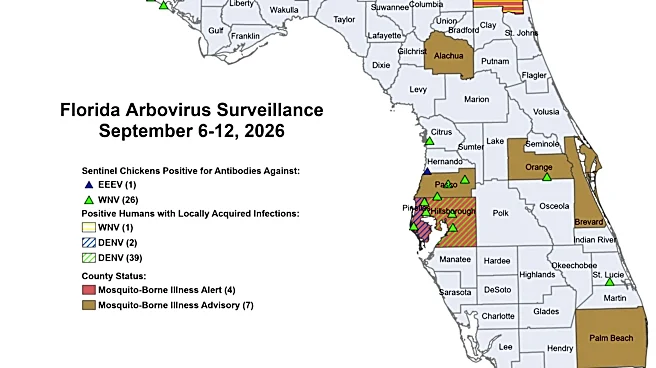
Nearly all of the cases have been reported in one area: Hillsborough County, home of Tampa, which has reported 134 confirmed locally acquired cases. The other 18 cases have been reported in Miami-Dade, Pinellas, Pasco, Orange, and Palm Beach counties. There have also been 186 dengue cases acquired this year from international travel.
Shop mosquito repellent at Amazon
Currently, 11 counties are under either a mosquito-borne illness advisory or mosquito-borne illness alert. Here's what you should know about mosquito-borne illnesses in Florida, symptoms to watch for, and how best to prevent mosquito bites.
Other mosquito-borne illnesses in Florida
Health officials track several different endemic mosquito-borne viruses such as West Nile virus, Eastern equine encephalitis virus (EEEV), St. Louis encephalitis virus, chikungunya virus, Zika virus (ZIKV), malaria, and California encephalitis group viruses.
As of Sept. 12, five cases of West Nile virus have been reported in Florida, two of them asymptomatic, although the illness has been rapidly rising on the U.S. West Coast. One case of locally acquired and 66 cases of travel-based chikungunya fever also have been reported.
Where has dengue been reported in Florida?

According to the Florida Department of Health, as of Sept. 17, there have been 152 cases of locally acquired cases of dengue reported, which is up from 111 reported on Sept. 5.
- Hillsborough County: 134 (which jumped from 95 the week before)
- Miami-Dade County: 7
- Pinellas County: 7
- Pasco County: 2
- Orange County: 1
- Palm Beach County: 1
What is dengue fever? What are the symptoms?
"Dengue fever can be a painful, debilitating disease but is rarely fatal," the Florida Department of Health said. Symptoms appear three to 14 days after the bite of an infected mosquito and include a sudden onset of fever, severe headaches, eye pain, muscle and joint pain (giving the disease the nickname “breakbone fever”), bleeding, and in some cases, gastrointestinal symptoms like vomiting and diarrhea.
Dengue is spread by mosquitoes that bite people who have the virus and spread it to others.
"Dengue fever symptoms usually last four to seven days. The disease is often diagnosed incorrectly because the symptoms are similar to influenza and other viruses," the CDC said.
"Around one out of every 20 people infected by a dengue virus develops severe dengue, a life-threatening medical emergency that requires immediate medical attention," according to YaleMedicine.
Dengue can be caused by one of four related viruses: dengue virus 1, 2, 3, and 4. The bulk of the detected cases in Florida have been DENV-2.
What is Florida doing to prevent dengue infections?
The Florida Department Health has advised residents to take precautions against mosquito bites.
“Use insect repellent, cover up when possible, and remove standing water around your home. Individual prevention helps protect you and your community,” State Surgeon General Dr. Joseph A. Ladapo said in a release.
Affected counties have increased mosquito spraying and tested for dengue in mosquito pools to track the spread. So far, 16 DENV-2-infected mosquito pools have been found in Hillsborough County, according to health department data.
How to avoid dengue fever
The best way is to avoid getting bitten by mosquitos, especially if you live in an area under a mosquito alert or advisory.
According to the Florida Department of Health, repellentswith the following active ingredients provide the best protection:
- DEET
- Picaridin
- IR3535
- Oil of lemon eucalyptus
- Para-menthane-diol
- 2-undecanone, a plant-derived ingredient
'Drain and cover' helps keep mosquitoes away
The FDOH offered this advice to help keep mosquitoes away from your home:
Drain
- Drain water from garbage cans, old tires, pool covers or any other containers where water collects.
- Empty and clean birdbaths and pet water bowls at least once or twice a week.
- Protect boats and vehicles from rain with tarps that don’t accumulate water.
- Maintain swimming pools in good condition and ensure they are appropriately chlorinated.
- Empty plastic swimming pools when not in use.
Cover
- If you must be outside when mosquitoes are active, cover up.
- Apply mosquito repellent to exposed skin and clothing.
- Use mosquito netting to protect children younger than 2 months old.
C. A. Bridges and Cheryl McCloud are journalists for the USA TODAY Network-Florida's service journalism Connect team. You can get all of Florida’s best content directly in your inbox each weekday by signing up for the free newsletter, Florida TODAY.
This article originally appeared on Sarasota Herald-Tribune: Florida dengue hotspot map, where other mosquito-borne infections are
Our editors independently choose our recommendations. Some content is produced with paid support from a third party, however our editorial decisions remain independent. If you buy through our links, the USA TODAY Network may earn a commission. Prices and availability may change.