



Back in the long-ago day when the city manager was not only permitted to make the "hard call" but expected to, Sarasota was fortunate to have at the helm Ken Thompson, an intellectual gentleman who was hired in 1950 by a city commission in need of a true professional to guide Sarasota as it was experiencing a post-World War II resurgence.
It was their intent to not repeat the shenanigans that characterized some of the goings-on during the free-wheeling land boom of the Roaring '20s.
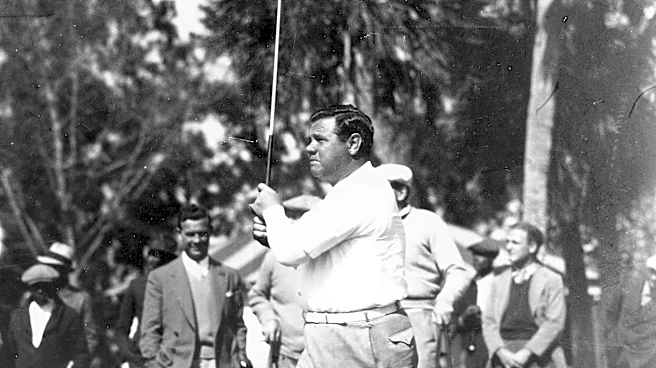
This was a time when the commissioners were unpaid and shared office space at the old city hall in the Hover Arcade. It was also a time when Sarasota was still segregated, and a relatively minor but noteworthy event occurred in February 1959, when four Black golfers
showed up to play at Bobby Jones Golf Club. All had been caddies at the club and one of the players, Robert Thomas, had contacted Thompson about playing the course.
As reported in the Herald, Thompson advised Thomas that the city did not have the right to deny them their right to play. Thompson picked up the phone and notified the club manager, Harry Schaefer, that the foursome was coming. There were no incidents.
Karl Bickel, the former head of United Press and a Sarasota civic leader, wrote to Thompson that his "Statesmanlike and far vision handling of the recent situation at the municipal golf club was so sound and so constructive that I'm moved to get to my typewriter and express my personal admiration and thanks."
Bickel felt that Thompson had forestalled what "could very easily have (become) an ugly situation on our hands ... and be involved in one of those hopelessly stupid and dull tangles that are taking up so much of the municipal thinking about the South right now."
Recalling that day in a Herald-Tribune article 25 years later, Thomas said that Blacks from as far away as Tampa would come to Sarasota to play as it was the only course in the area where they were allowed. He thought it might have been the only course in the Southeast open to them.

In the same article, Thompson indicated that many municipalities sold their golf courses to private investors rather than integrate them, a decision they would later come to regret.
Former Commissioner Jack Gurney indicated that Thompson helped keep race relations, "Emotionally cooler here when other towns were going through turmoil. In his quiet, cerebral way, he helped Sarasota get through difficult times."
Gurney also noted that Thompson sought federal money to help put curbs, gutters and sidewalks in Newtown.
Former Mayor Kerry Kirschner agreed.
"The same thing wasn't happening in Bradenton," he said. He called Thompson a progressive in the area of race relations.
Barbara Thompson remembered how proud her husband was of the work being done in the Newtown area. He used to drive her around the area when they were putting the sidewalks down, pleased with the progress.
Some years later, Ed James, a Sarasota civil rights leader and journalist who passed in 2018, was quoted in a Bob Ardren article in the Pelican Press, "Ken Thompson and I had a real history – and it was a positive one. The community, especially the Black community, will miss him because he was in office when big changes were happening across the country. He had the foresight and willingness to make the changes in Sarasota that benefitted us all, changes without all the turmoil that happened in other communities. I consider him a friend and will miss him."
Sarasota historian Jeff LaHurd is the author of 17 books. His latest – “The People and Places That Made Sarasota a Paradise” – is available on Amazonand at Bookstore1Sarasota.
This article originally appeared on Sarasota Herald-Tribune: How legendary city manager quietly changed Sarasota history