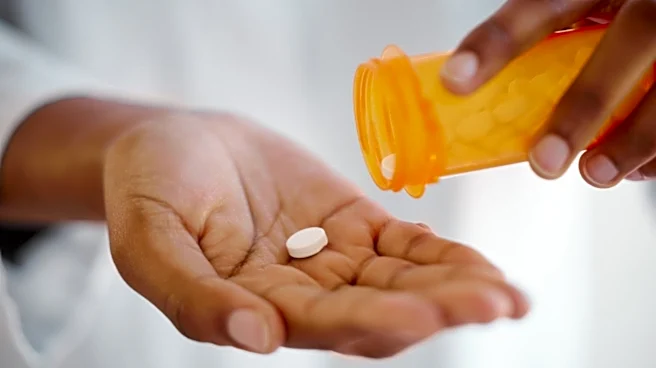








The state’s top health official wants to put the brakes on psychotropic medications for children— recommending against their use unless certain conditions are met.
State Surgeon General Joseph Ladapo, who garnered national headlines for his unsuccessful push for Florida to become the first state to end all childhood vaccine mandates, issued a two-page “guidance statement” July 24 on prescriptions for children, ages 5 to 17, which alter brain chemistry in ways that affect mood, thoughts, perceptions and behavior.
“The State Surgeon General recommends against the use of psychotropic drugs in children for treatment of mental health conditions such as depression, anxiety, or attention-deficit related disorders,” the guidance reads.
'Make American Healthy Again' agenda discourages psychiatric medications
The guidance paper
echoes some of the viewpoints of the U.S. Health and Human Services (HHS) Secretary Robert F. Kennedy’s campaign against psychiatric medications. Kennedy in February made the unfounded claim that the keto diet, a high-fat, low-carbohydrate diet, could cure schizophrenia, according to the New York Times. In May, Kennedy’s department launched a “Make America Healthy Again” (MAHA) action plan to curb “psychiatric overprescribing” and recommending therapy, exercise, diet and nutrition as alternatives to the medications an estimated 16.6% of U.S. adults are taking, according to a 2026 survey.
“The United States does not just face a mental health crisis, it faces a dependency crisis driven by over-medicalization,” Kennedy said at a Mental Health and Overmedicalization Summit at the MAHA Institute.
The American Psychiatric Association strongly objected to the HHS secretary’s claims, but Ladapo’s guidance cites an American Academy of Child and Adolescent Psychiatry paper with “concerns” about psychotropic prescribing practices for children and adolescents.
Behavior management, psychotherapy recommended instead
The guidance, issued under the Florida Department of Health, lists strategies to decrease psychotropic drug administration. They are:
∎ A comprehensive evaluation that includes a full, physical examination and tests for nutritional disorders, hormonal issues, heavy metals, mold exposure and blood disorders.
∎ Beginning psychotherapy.
∎ Offering parents training in evidence-based behavior management that includes regular physical activity, dietary interventions, reducing screen time, and eliminating processed foods.
What do pediatricians think of giving psychotropic meds to kids?
Running a pediatric practice for 40 years, Dr. Lawrence Bergman of Wellington has seen mental health issues ballooning among children.
“These kids have a lot more to deal with — the state of our world, the pressures of social media, cyberbullying,” said Bergman, who practices at Bergman Pediatrics in Wellington. “There’s a tremendous pressure to be something that they are not.”
The state Department of Health guidance on this notes that most of the prescribing of these psychotropic drugs is being done by general practitioners, like Bergman. But that’s a result of how few child psychiatrists are available to treat children and do the prescribing, Bergman said.
Still, medication shouldn’t be the first step in addressing mental health problems among children and, if there is a prescription, shouldn’t be the only strategy used to address mental health, Bergman said.
RFK Jr. has taken aim primarily at the selective serotonin reuptake inhibitor (SSRI) drugs that treat depression, anxiety, and other mood disorders. A Dec. 18, 2025 article in the Journal of the American Academy of Child and Adolescent Psychiatry, however, found that psychotropic medications for kids are most often stimulants, which treat attention deficit disorders.
Bergman said there should be interventions that don’t involve a trip to the pharmacy when trying to solve milder cases of mental health issues in children.
Moderate to severe problems, however, do warrant psychotropic prescriptions for children, Bergman said.
“If a child truly has ADHD (attention deficit hyperactive disorder), honestly without medication, the treatments don’t work,” he said.
To outright say that pediatric patients shouldn’t get these prescriptions for mental health treatment, “would be setting pediatric mental health back years,” Bergman said.
Anne Geggis is statewide reporter for the USA TODAY NETWORK FLORIDA, reporting on health and senior issues. If you have news tips, please send them to ageggis@usatodayco.com. You can get all of Florida’s best content directly in your inbox each weekday by signing up for the free newsletter, Florida TODAY, at https://palmbeachpost.com/newsletters.
This article originally appeared on Sarasota Herald-Tribune: Florida's top doctor warns about anxiety, depression meds for kids