








Why should you still care about AB 32, two decades after Gov. Arnold Schwarzenegger signed it into law?
Not just because the Global Warming Solutions Act of 2006 remains the foundation for California’s climate regulation regime has reduced per-capita greenhouse gas emissions by 29%. Nor because it is the closest thing the U.S. has to a national climate law, with the Trump administration denying climate change.
You should care about AB 32 because no law better demonstrates our progress and failures in confronting global warming.
AB 32 was the first law anywhere to set legally enforceable, economy-wide standards for reducing greenhouse gas emissions. For climate, it’s like the Magna Carta (establishing that the climate, like a British monarch, was not
above the law) and Declaration of Independence (enacted in defiance of the George W. Bush administration), rolled into one.
AB 32-style laws were adopted by four states, and related regulations were enacted in dozens of states. But its great impact may be as inspiration.
In 2026, it can feel like all is lost. Global warming is accelerating. Glacial ice and ocean currents are collapsing. Many governments are unresponsive. But in 2006, everything felt lost in California. Climate change was accelerating then, too. The Golden State was fighting another warmongering federal government hostile to the environment. A disastrous 2005 special election fueled bitter political divides.
This toxic environment nonetheless produced a breakthrough in AB 32. The story of how that happened is worth remembering.
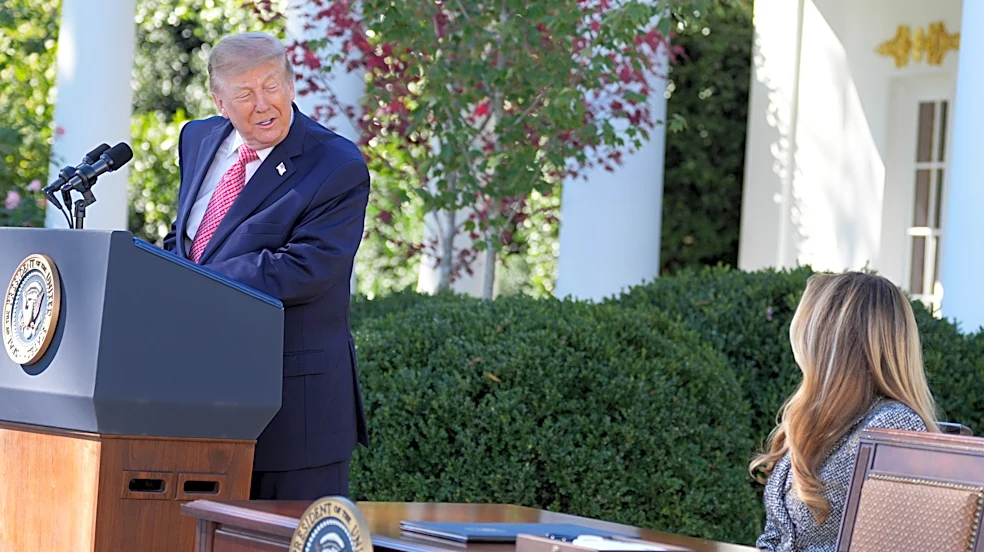
Today, we tell ourselves that politics offers no room for bipartisanship and friendship. But AB 32 was built on friendship between political antagonists, the Democratic Assembly Speaker Fabian Nuñez and Schwarzenegger, the Republican governor. And AB 32 was negotiated and implemented by Schwarzenegger’s bipartisan administration, a mix of Democrats and Republicans that was the closest thing in this country’s history to a coalition government. Despite Republican anger, Schwarzenegger relied heavily on advisors who had worked for Gov. Gray Davis, whom he had replaced in the 2003 recall.
Today, we often think scientists and experts must invent complicated things. But Nuñez and Schwarzenegger both lacked scientific training. AB 32 concepts emerged from unusual places. A sailboat captain came up with a precursor bill regulating car exhaust. A crucial rule was drafted in a Buenos Aires bar. AB 32’s original author, Fran Pavley, was a middle-school teacher.
AB 32’s backers weren’t sure it would pass until the very end of the legislative session. The federal government said it was an illegal preemption of U.S. law. Schwarzenegger’s own party mostly opposed it, and the governor considered vetoing it.
AB 32’s victory delivered on its promise in some ways. The state hit its 2020 target for greenhouse gas reductions in 2016. AB 32 sparked new businesses like electric cars, produced more than 550,000 clean energy jobs, and generated $36 billion through its cap-and-trade program. according to Next 10, which tracks California’s climate policy. Globally, California has built partnerships with dozens of nations, provinces, and cities, including several in China.
Yet, for all its success, AB 32 is also a human story of mistakes and limitations. Political momentum for countering climate change has slowed. The state’s 2030 targets for greenhouse gas reductions are unlikely to be met. And global climate change is worsening as earthlings decarbonize too slowly. Even though AB 32 has been renewed since 2045, it’s clearly not enough to win the climate fight.
What should we do in addition? The most compelling answer I can find comes from UC San Diego scholar David Victor, who argues that we must embrace “experimental governance,” in which experts, government officials, and everyday people engage in relentless trial-and-error of solutions.
Does such collaboration seem impossible? It shouldn’t. Because AB 32 proved that, even when the future looks bleak, collaborative governance can change the world.
Joe Mathews writes the Connecting California column for Zócalo Public Square.
This article originally appeared on Ventura County Star: Why AB 32 still matters in California | Mathews