



Ojai City Council members largely agreed with a report criticizing the city's failure to use a fair and competitive process for its proposed homeless housing project, but they pushed back on some of its findings.
In response to Ventura County's civil grand jury report, Council member Rachel Lang said approval of the project did not go through the city's regular process during an "unprecedented time."
"We couldn't just say to our unhoused, 'Go to Ventura.' There was nothing available," Lang said. "While we're going to do this better next time and we're definitely going to learn from these mistakes, we were doing the best we could with a very real problem."

At an Aug. 11 City Council meeting, council members reviewed the grand jury’s findings and drafted
responses. The item is scheduled to return to the City Council Aug. 25, said City Manager Ben Harvey.
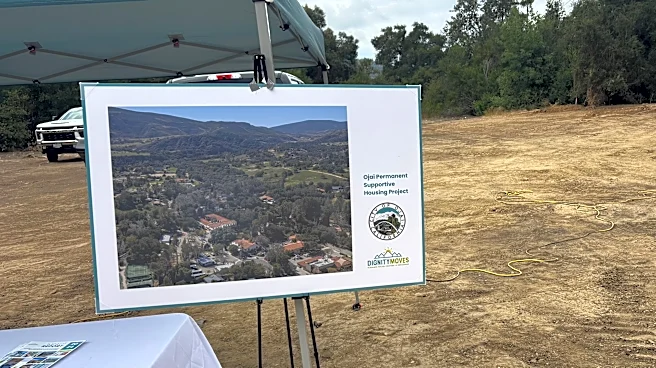
The 30-unit permanent supportive housing project at 611 S. Montgomery St., adjacent to the city’s public works yard, is intended to house people experiencing homelessness.
What was in the report?
Released June 25, the grand jury report found the City Council authorized the city manager to negotiate a roughly $10 million contract to build the development without soliciting competitive bids, which are generally required for public construction projects of that size.
The 20-page report found the city was required to use a “fair and competitive selection process” but didn't. The report concludes the nonprofit DignityMoves was selected as development manager for the city's January 2024 grant application based on a recommendation from the County of Ventura Community Development Division.
The grand jury issued 18 findings in the report, including six recommendations, and council members reviewed them to draft a response.
Among the report's specific findings:
- The city could not support its claims that DignityMoves was uniquely qualified and that no other development managers could have been identified.
- The city could not support its claim that it was obligated to award a contract to DignityMoves because the nonprofit was listed in its grant application.
- There was a lack of alignment within the Ojai City Council and between the city and residents, resulting in delays that hindered the project's progress.
What was the council's response to the report?
Council members debated the term "uniquely qualified," but ultimately agreed with the finding.
"This isn’t really about philosophy in your approach to things; it's about who has the institutional wherewithal to take a project from beginning to end," said Councilmember Andrew Whitman. "I don’t think we could say that they were unique in their ability to do that. I would say agree and give all the explanations of where we were."
The City Council disagreed with the report’s findings that the city could not support its claim that it was obligated to award a contract to DignityMoves. Bethany Burgess, co-city attorney for Ojai, had stated that a grant agreement between the city and the state required the project to be delivered in accordance with the application.
She added city leaders didn't know what the state Department of Housing and Community Development would have said to a potential change.
Whitman noted the city could have lost the ability to receive the grant, and Mayor Andy Gilman said the city "didn't understand the scope or flexibility to come back with changes later."
Council members also disagreed with the report's statement of a lack of alignment and delays hindering the project's progress.
"What this finding sounds like is that it's all the disagreements that have led to delays and it's all the contention and that's not true," Lang said.
During the Aug. 11 meeting, no members of the public spoke.
What is the project's history?
In April 2024, the city received a $12.7 million state grant to construct permanent housing for people experiencing homelessness., specifically those living in the Ojai Tent Town encampment near City Hall.
On May 27, 2025, Whitman and Councilmember Kim Mang voted against the development and a negotiated $9.5 million agreement with DignityMoves, saying they lacked detailed cost information.
At a July project event, David Grunwald of DignityMoves said construction was expected to begin within weeks and be completed by early 2027. Whitman and Mang did not attend.
Wes Woods II covers West County for the Ventura County Star. Reach him at wesley.woodsii@vcstar.com, 805-437-0262 or @JournoWes.
This article originally appeared on Ventura County Star: Ojai council concedes flaws in homeless housing project process