



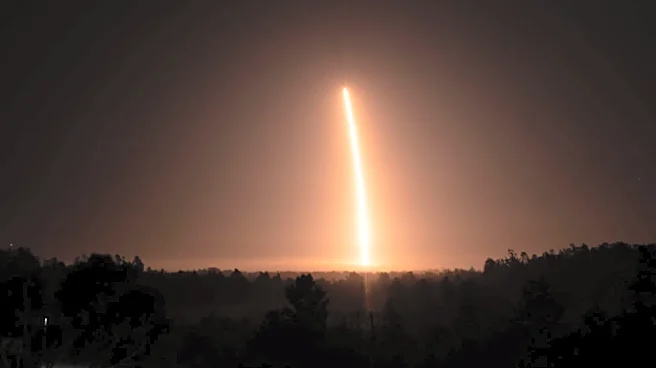
The surge in rocket launches in California and across the U.S. has left officials with one burning question: How can the growing demand for coveted pads to get the vehicles off the ground be met?
To find an answer, the Trump administration is seeking the public's help for ideas to not only make better use of existing spaceports, but potentially build new ones.
That means you can make your voice heard amid moves by President Donald Trump and his Republican administration to strip away regulations on the commercial aerospace industry and usher in an unprecedented era of spaceflight. In California, the Vandenberg Space Force Base has rapidly been expanding along the Pacific coast, while across the U.S., NASA is preparing to send humans to both the moon
and Mars with a variety of crewed and uncrewed missions.
“America’s commercial space industry is driving innovation, strengthening our national security, creating high-paying jobs and expanding economic opportunity across the country,” U.S. Transportation Secretary Sean Duffy said in an Aug. 21 statement. “We will ensure the next era of space transportation is powered by American workers, American companies and American ingenuity.”
Here's everything to know about how California centers in Trump's plan for rocket launches to surge in the U.S., and how the public can submit comments on the plans.
Trump wants to see 1,000 rocket launches per year by 2030
A new policy Trump signed Aug. 20 calls for the U.S. to support more than 1,000 launches and reentries per year by 2030.
Meeting the ambitious benchmark would mean that launches would more than quadruple from today, when about 200 rockets get off the ground per year.
Trump's goal is also significantly higher than what the Federal Aviation Administration has already predicted is on the horizon in the next decade. In a 10-year forecast released in July, the FAA – which licenses commercial rocket launches – predicted nearly 4,300 launches were likely in the U.S. between 2026-2036, with spaceflights increasing annually to more than 500.
Policy calls for more launch locations in US, upgrades to spaceports
To accomplish the lofty objective, the Trump administration calls for the development of more launch sites across the U.S., as well as upgrades to existing spaceports where rockets already lift off.
In the memorandum, the Trump administration orders the Pentagon and NASA to ensure launch schedules balance the needs of both commercial providers and government missions.
The policy also directs the military and NASA to “regularly publish range schedules" in the name of transparency. As of now, schedules for most rocket launches can be hard to come by, with specific missions and target windows often not made public very far in advance.
California on pace for record year for rocket launches
Today, orbital rocket launches in the U.S. take place in Florida, Texas and California – all coastal states where rockets can fly over open water rather than populated cities.
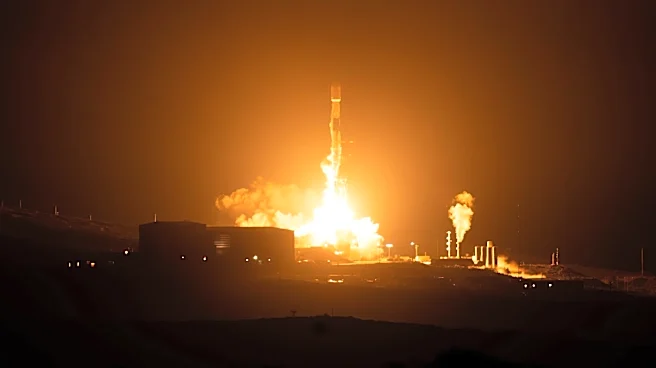
A record 71 rocket launches were conducted in 2025 at the Vandenberg Space Force Base in Santa Barbara County, driven by SpaceX and its workhorse Falcon 9 rocket.
After Vandenberg reached its milestone 50th launch July 21 – about two months earlier than in 2025 – Space Force officials indicated to the USA TODAY Network that an estimated 80 or more rockets are expected to get off the ground before the end of 2026.
That base's most recent rocket launch Sept. 2 marked the 60th of the year.
FAA seeks public input on new rocket launch sites
Now, you can make your voice heard on the objectives Trump and his administration have established for U.S. spaceflight.
The FAA is asking the public and the aerospace industry for ideas on two areas: where the U.S. should build new spaceports, and how it should set aside priority airspace for critical space-launch routes. Officials will consider factors like safety, geography, access to roads and the ability to launch over open water when deciding viable sites.
The agency issued a request for information – an opportunity for the public to comment on the ideas – that closes Oct. 26.
Vandenberg adds launch complexes in California
The move comes as even more rocket launches are on the horizon in Southern California, where Vandenberg – managed by Space Launch Delta 30, a unit of Space Force – plans to add even more launch complexes.
SpaceX, which leases Space Launch Complex 4-East for a regular diet of Falcon 9 launches, willsoon be taking over management of the refurbished Space Launch Complex-6 – a historic facility first used in 1966. The site is outfitted to accommodate SpaceX's larger Falcon Heavy rocket that has never launched from California.
Companies like Jeff Bezos' Blue Origin and the United Launch Alliance, a joint venture between Boeing and Lockheed Martin, will also be moving into Vandenberg in the years ahead.
Blue Origin has plans to launch its towering 320-foot New Glenn rocket at the new Space Launch-14 at the southernmost point tip of the base. The ULA, meanwhile, is planning for the West Coast debut of its Vulcan rocket at Space Launch Complex-3 East, which – with four solid rocket boosters mounted to the side – puts on quite a show when it lifts off.
The Space Force also recently announced it is seeking applications from aerospace companies interested in leasing a new launch site, Space Launch Complex-9, located in the northern region of the base for small- and medium-class rockets.
Virginia-based Northrrop Grumman and Texas-based Firefly Aersopace, which announced Aug. 11 that it reached a deal with Lockheed Martin to continue launching its small-lift Alpha rocket through 2031, also have operations at Vandenberg.
Eric Lagatta is the Space Connect reporter for the USA TODAY Network. Reach him at elagatta@usatodayco.com
This article originally appeared on Ventura County Star: California rocket launches are booming. How you can shape what's next