


A group of Thousand Oaks residents has asked a Ventura County Superior Court judge for more time to file a petition against the downtown project.
After the City Council unanimously approved the project in June, Citizens for Responsible Development in Thousand Oaks failed to gather the required number of signatures to place the development on a ballot. Now, the volunteers are requesting an extension, arguing the city’s conduct inhibited their ability to collect signatures.

City spokesperson Alexandra South said the city denies the allegations in the legal proceedings.
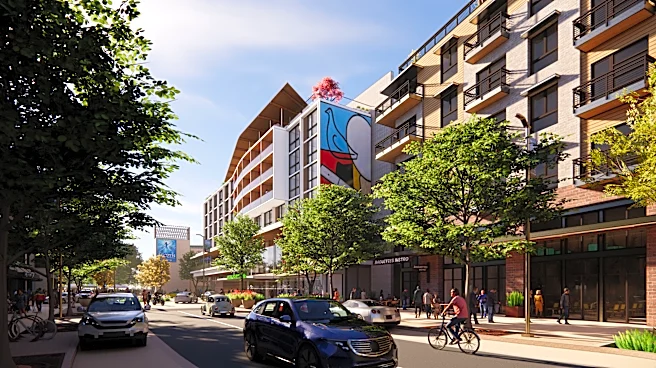
Covering the existing Civic Arts Plaza and the vacant westside property, the downtown plan is set to integrate housing, a hotel, retail and restaurants and arts and recreation spaces
into a walkable destination aimed at revitalizing the city.
“I’m not against progress, but when a project of this massive scale is pushed through without giving the public a say, we, as residents, have to stand up,” said Jeannette Welling, the organization's cofounder. “This is a David versus Goliath battle to make sure citizens get a say.”
Group believes residents should vote on project
Welling, a longtime advocate for open space, has called Thousand Oaks home since 1956, and she has enjoyed watching the city evolve while maintaining its character.
She said that she had seen the downtown concept mentioned in city surveys over the past year or two but never heard of any opportunities to provide input despite living within roughly 500 feet of the area.
When she finally saw the renderings in the spring, she was shocked by the scale of the project, including the proposed six-story hotel.
In late April, she created a change.org petition to oppose the endeavor, and it garnered roughly 2,500 signatures. She formed the grassroots CRDTO group shortly before the June 23 meeting.
In addition to concerns around building height and density, the roughly 35 volunteers are upset with the removal of protected trees, the impact on air quality, increased traffic, potential evacuation issues and the modern aesthetic.
“There’s no reflection of the heritage of our community,” said cofounder Phil Gatch Jr., whose father was the city’s first planning director. “It’s totally antithetical to the culture of Thousand Oaks.”
The group’s greatest critique of the plan, Welling said, is the lack of meaningful opportunities for residents to provide input, including through a vote.
Welling and Gatch both believe that with the use of taxpayer money, the downtown project should have been subject to Measure E, the city’s slow-growth initiative passed in 1996.
South, the city spokesperson, said that the initiative was shaped by nearly a decade of community engagement, including workshops, stakeholder meetings, public hearings and input from hundreds of residents.
“That input resulted in meaningful changes to the project ultimately approved unanimously by the City Council,” she wrote in an email. “Claims that the public did not have meaningful opportunities to participate simply do not square with the facts.”
City staff have also asserted that the item is in line with all local and state laws. They have said it is exempt from the voting requirement because it is necessary for a viable use of publicly owned, surplus land.
“They're the city, and they should be following the rules,” Welling said. “They shouldn’t be looking for loopholes.”
Group requests extension for petition
After council members voted 5-0 to approve the downtown project June 23 and the city adopted the ordinance July 7, Citizens for Responsible Development in Thousand Oaks decided to proceed with a referendum petition.
The group had 30 days from the adoption of the ordinance to gather signatures from at least 10% of the registered voters of Thousand Oaks in order to place the item on a ballot.
Welling said navigating the unfamiliar, complex legal process was challenging, especially because city staff didn’t provide much guidance.
She submitted a records request seeking the number of registered voters in the city but said that on July 30, staff told her the city does not maintain that information and instead directed her to Ventura County Registrar of Voters or the California Secretary of State.
Then, on Aug. 6, she said city staff informed volunteers gathering signatures that their signs violated regulations and that they would be confiscated unless removed. The volunteers complied, though they noticed that other groups’ signs were left up and felt targeted, Welling said.
When CRDTO submitted their signatures to the city on the Aug. 12 deadline, they had gathered just over 7,100 of the roughly 8,700 signatures required, Welling said.
That same day, Welling and CRDTO also filed a petition for a writ of mandate in Ventura County Superior Court accusing the city of chilling their protected petition activity.
“We’ve got a lot of hurdles, but we’re persevering until the end,” Welling said. “This is our only recourse, so we have to do whatever we can.”
According to court documents, CRDTO argued that the city’s withholding of the public records and the enforcement action with the signs deprived the group of approximately four essential days of signature collection.
The group is asking that the judge order the city to disclose the requested public records and prohibit the city from enforcing sign restrictions against the group.
Finally, the volunteers requested that the judge grant them a four-day extension so that they can gather the signatures they feel the city’s conduct caused them to lose, court records indicate.

The city has not yet filed any documents, but South said the city categorically rejects the allegations.
She said staff’s enforcement regarding the signs was consistent with its longstanding public right-of-way regulations and that the public record requests were handled in accordance with the law
“Neither changes the fact that the proponents failed to submit the number of signatures required by state law,” she wrote in her email.
South said the city has since issued the group a formal certificate of insufficiency of petition and considers the referendum process concluded.
The first hearing in the legal case is scheduled for Sept. 14.
Welling said she is hopeful that with an extension, CRDTO will be successful in its efforts.
“Everywhere I go, everyone is shocked and startled by the project,” she said. “The response from the neighbors has been overwhelmingly against it.”
The process to create a vibrant, walkable 100 acres began in June 2018, when the council adopted the Downtown Core Master Plan. The estimate for the city’s investment has increased to roughly $150 million, staff said.
The city has already set aside nearly $45 million in reserves for the downtown, according to staff reports. Remaining construction costs could be paid for through additional reserve allocations, surplus land sales, one-time grants, leases from the new city hall tenants, a lease revenue bond and tax revenue from private developments.
Makena Huey is an investigative and watchdog reporter for the Ventura County Star. Reach her at makena.huey@vcstar.com. This story was made possible by a grant from the Ventura County Community Foundation's Fund to Support Local Journalism.
This article originally appeared on Ventura County Star: Group against downtown Thousand Oaks plan seeks extension for petition