






September has been National Suicide Prevention Month. A time when we are reminded, often through statistics, of just how urgent this mental health crisis is among young people.
Nationally, suicide is the second-leading cause of death for ages 15 to 24. One in five teens will experience depression before adulthood, and 17% report self-harm. Here in Ventura County, we lost 216 people to overdose in 2025 alone.
But knowing the numbers doesn’t save lives. Connection does.
Connection matters; it is the sole reason Nate's Place exists.
My son Nate Rhoades struggled with substance abuse and his mental health in his early teens. His father and I surrounded him with support, and connected Nate with a peer recovery coach. This was someone who lived through
a similar experience who understood Nate in a way others could not. That relationship helped change the course of his life.
Nate spent nearly five years in recovery. Tragically, he died in a traffic collision when he was just 21 years old. In the months that followed, we heard story after story from young people whose lives Nate had touched, people he had encouraged, supported and helped along the way.
Our family and this community; built Nate's Place so that other young people wouldn't fall through the cracks; we took the formula that worked for Nate’s recovery and built a community for emotional healing.
Today, Nate’s Place serves young people ages 13-26 who are navigating mental health challenges, trauma and substance use. Increasingly, we have learned that one of the biggest barriers is not whether young people are willing to accept help. It’s how that help is offered.
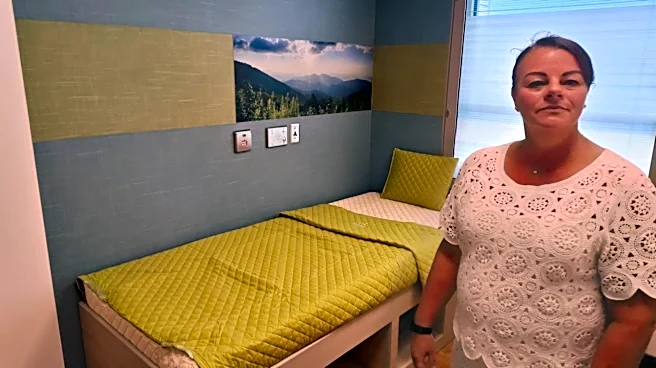
A waiting room with fluorescent lights and clipboards can feel like one more place a young person is being evaluated. Nate's Place is intentionally different: a clubhouse, not a clinic. Free services. Free transportation. Couches, music, art instead of sterile rooms.
At the heart of our recovery model are our Peer Support Recovery Coaches. These are state-certified staff who bring their lived experience with mental health or substance use challenges and recovery to their work with young people.
Peer support works because it is built on relationships, trust and shared understanding.
Our coaches meet young people where they are. They share experiences appropriately, honor individual choices and self-direction, and help young people build what is often called “recovery capital.” This includes supportive relationships, resources, purpose, confidence and a sense of belonging.
Research from the Substance Abuse Mental Health Services Administration (SAMHSA) backs up what we see every day that peer support is an important part of recovery because shared understanding, respect and mutual empowerment supports people and keeps them engaged in the recovery process.
And we see the impact every day.
Young people connected with our peer coaches have reported better grades, fewer fights and suspensions, improved relationships, reduced substance use, significantly improved mental health, getting off the streets, finding jobs and enrolling in college.
As we talk about suicide prevention, I hope we widen the conversation beyond what happens during a crisis because prevention begins much earlier.
As a practitioner, this means creating relationships and safe places where young people feel known before they reach a breaking point. It means giving a teenager somewhere to go after school rather than being alone. It means having someone notice when they stop showing up. It means helping a young person discover that they have something to contribute, something to look forward to and people who would notice if they were gone.
And sometimes, it means having one person sitting across from them who can say, in one form or another: “I understand. I’ve been there. And I’m here with you.”
This kind of connection can change the trajectory of a young person’s life.
Nate didn’t get to see the place built in his honor. But every young person who walks through our doors today is part of the legacy he left behind.
To learn more or connect with Nate’s Place, visit www.natesplacewellnesscenter.org or call 805-628-2552.
For immediate help during a mental health or suicide crisis, call or text 988 to reach the Suicide & Crisis Lifeline.
Nate’s Place will celebrate the grand opening of its new Oxnard campus and the groundbreaking for its future Youth Peer Respite on Friday, Nov. 13, at 5:30 p.m. The community is invited to join us for tours, food, music and a celebration of this next chapter. We hope to see you there.

Heidi Allison, LCSW, is the Co-Founder & Executive Director of Nate's Place Wellness and Recovery Center.
This article originally appeared on Ventura County Star: Connection is the key in suicide prevention | Your Turn