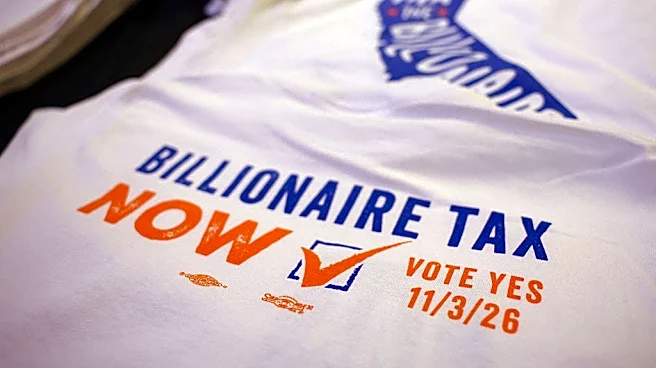




In his July 19 guest column (“Capital gains vs. working pains — making the case for a billionaire tax
”) advocating the wealth tax proposition, my fellow local professor Jamshid Damooei wrote that the “concentration of wealth is lethal to our democracy. Billionaires can buy elections and use their financial support to defeat any political actions that might lead to decisions against their interests.”While his other claims about billionaires and the effects of the wealth tax are not my expertise, the political economy of elections just so happens to be. And it just so happens that “billionaires buying elections” just … isn’t how it happens.
Political scientists and some economists have researched how campaign spending by candidates, parties, and political
action committees translates into votes for more than fifty years. Unsurprisingly, there is definitely a positive effect of spending on the vote share of the spender. But what may surprise you is how small that effect is. A typical finding is that holding an opponent’s budget constant, a candidate doubling their own spending would gain only a few percentage points — or less.
Of course, not all campaign spending is equal; candidates can buy advertising and hold events — or, illegally, as disgraced Rep. George Santos did, spend campaign funds on Botox and Hermès bags. Fortunately, researchers have also measured the persuasive effects of specific campaign activities, from door-to-door canvassing to television advertising. Political scientists Joshua Kalla and David Broockman pulled together the results from dozens of field experiments used to measure the persuasive impact of door-to-door canvassing, phone calls, and direct mail, and found that the best estimate of the persuasive effect of campaigning is approximately zero. Yes, you read that correctly: all that effort appears to persuade nearly no one.
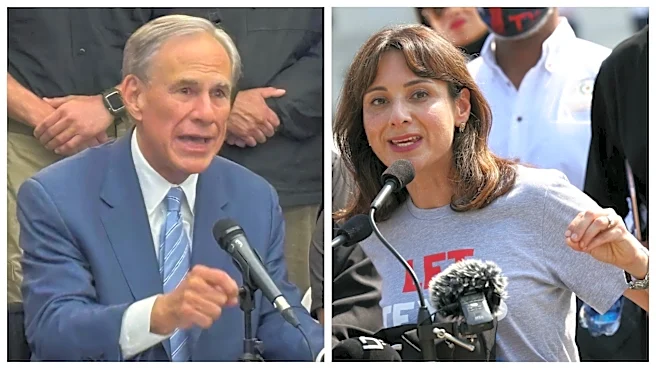
A larger group of political scientists led by Alan Gerber tested the persuasive effects of television advertising on voters’ support for a candidate in the 2006 Texas gubernatorial race. They convinced a campaign to vary the amount of television advertising across media markets from week to week, and measured voters’ preferences each week as well. What they found was striking: during the week the campaign ran ads, “their” candidate experienced a measurable bump in the polls, but by a month later, voter preferences had reverted to their pre-ad positions. The ads didn't appear to durably change voters' minds; they temporarily reminded people what they already liked about one candidate—or disliked about the other.
Now what is undeniable is that the preferences of the well-off, which includes more than billionaires, are more reflected in public policy than voters with less means. According to research by political scientist Martin Gilens, high income Americans are more likely to get their way on policy than everyone else when the former disagrees with the latter.
And yes: at least part of that influence is due to money: in other research, Kalla and Broockman found that Congressional offices were much more likely to get back to a lobbying organization to schedule a meeting with one of the organization’s members when the lobbying group indicated that the meeting would be with a donor to the Congressperson’s campaign.
But notice what that buys: access, not results.
This access, combined with the fact that high income voters often possess more policy-specific expertise and information than most people, is the most likely culprit for the influence of the affluent.
In short, campaign spending has surprisingly small effects on voters to begin with, and those effects are subject to diminishing returns. Even if one side gave up — which, to date, they never have — the impact of the other side’s campaigning is less and less effective. And given that there are billionaires, plus the rest of us, on both sides of the aisle, I don’t think any one person will be buying any election any time soon.
Jared Barton is a professor of economics at the Martin V. Smith School of Business & Economics at California State University Channel Islands. The views here are his own.
This article originally appeared on Ventura County Star: Billionaires do not buy elections — nobody does | Your Turn