




In April, the world watched in awe as four intrepid astronauts were launched into space toward the moon atop NASA's most powerful rocket ever.
That mission, known as Artemis II, captivated the public for 10 days as three Americans and one Canadian made a trip around the moon and back to Earth. To many observers, Artemis II signified the dawn of a new era of space exploration as NASA aims to return Americans to the lunar surface for the first time in more than 50 years.
But while the mission has without a doubt been the most high-profile launch of 2026 – reigniting public interest in human spaceflight in a way not seen since the Apollo era – it hardly stands alone.
By now, rockets are launching almost every day from U.S. soil – most without people
aboard. In fact, just one other mission so far in 2026 – a joint NASA and SpaceX mission launched Feb. 13 to the International Space Station known as Crew-12 – sent astronauts to space.
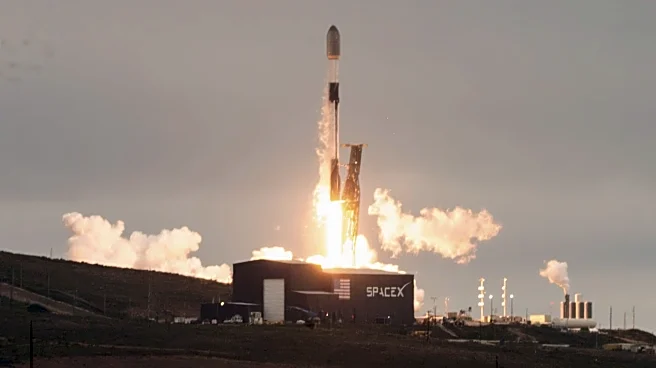
In California and beyond, rocket launches have become so routine that most barely bat an eye when SpaceX, for instance, launches its Falcon 9 multiple times a week – a feat followed by a maneuver that even more impressively has somehow become mundane: the rocket's first-stage booster returning for a bullseye landing on a ship in the middle of the ocean.
And while both the east and west coasts have ushered in record year after record year for launches, rockets are only due to fly more and more frequently in the years ahead.
Here's why rocket launches are predicted to dramatically increase in California and across the United States, and what that means for Americans and the spaceflight industry.
FAA predicts commercial rocket launches to spike in next decade
As NASA increasingly cedes spaceflight missions to commercial companies that were once the realm of government space agencies, those sorts of missions have steadily been increasing year after year.
For instance, SpaceX, the commercial spaceflight company founded by tech mogul Elon Musk, has launched its Falcon 9 rocket hundreds of times from California and Florida – making it by far the most active rocket in the world. The two-stage 230-foot rocket is not only used to deliver SpaceX's only Starlink internet satellites to Earth orbit, but is also used to propel astronauts to the space station and is contracted for a variety of commercial, civil and military payload deployments.
Now, the Federal Aviation Administration – which licenses commercial rocket launches – is predicting that the rate of rocket launches across the United States is only expected to grow in the next decade.
The FAA is predicting nearly 4,300 launches between fiscal 2026-2036, with spaceflights increasing annually from more than 200 a year to more than 500, according to the agency's 10-year forecast released in July.
What's driving the rise of rocket launches?
The projection should be no surprise to even casual observers of the spaceflight industry in the United States.
SpaceX's pioneering method to recover and reuse rocket boosters has not only made manufacturing spacecraft cheaper, but has also led to faster turnaround times between missions. For years, SpaceX has taken advantage of the breakthrough in reusability to launch its Falcon 9 rocket from both Florida and California to build up a massive constellation of more than 10,000 Starlink satellites in a region nearer the atmosphere known as low-Earth orbit.
President Donald Trump and his Republican administration, meanwhile, have long sought to strip away regulations on the commercial spaceflight industry.
The FAA itself cited the demand for launch service providers to send satellites to space and the space tourism industry that Virgin Galactic could now corner in New Mexico as big drivers of the predicted increase.
California has record year in 2025 for rocket launches
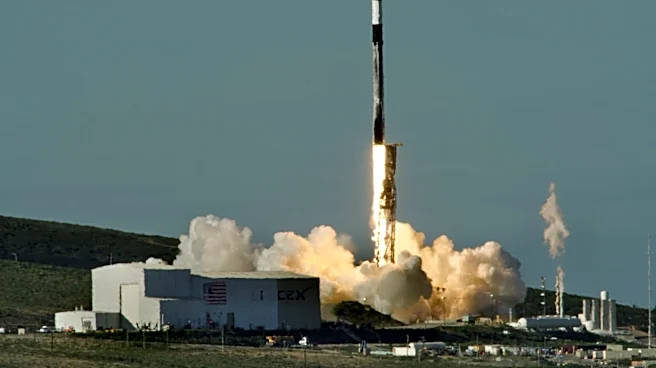
The result is prominently being seen in California, an increasingly prominent hub for U.S. spaceflight where a record 71 rocket launches were conducted in 2025 at the Vandenberg Space Force Base in Santa Barbara County. Driven by SpaceX and its workhorse Falcon 9 rocket, that record is almost assuredly due to be surpassed in 2026.
After Vandenberg reached its milestone 50th launch July 21 – about two months earlier than in 2025 – Space Force officials indicated to the USA TODAY Network that an estimated 80 or more rockets are expected to get off the ground before the year ends.
That base's most recent rocket launch Aug. 18 marked the 57th of the year.
Vandenberg adds launch complexes for Blue Origin, SpaceX, more
And in the years ahead, even more rocket launches are on the horizon in Southern California.
Plans are in the works for the rapidly-growing Vandenberg Space Force Base – managed by Space Launch Delta 30, a unit of Space Force – to add even more launch complexes for commercial spaceflight companies to lease for launch services.
SpaceX, which leases Space Launch Complex 4-East for a regular diet of Falcon 9 launches, willsoon be taking over management of the refurbished Space Launch Complex-6 – a historic facility first used in 1966. The site is outfitted to accommodate SpaceX's larger Falcon Heavy rocket that has never launched from California.
Companies like Jeff Bezos' Blue Origin and the United Launch Alliance, a joint venture between Boeing and Lockheed Martin, will also be moving into Vandenberg in the years ahead.
Blue Origin has plans to launch its towering 320-foot New Glenn rocket at the new Space Launch-14 at the southernmost point tip of the base. The ULA, meanwhile, is planning for the West Coast debut of its Vulcan rocket at Space Launch Complex-3 East, which – with four solid rocket boosters mounted to the side – puts on quite a show when it lifts off.
The Space Force also recently announced it is seeking applications from aerospace companies interested in leasing a new launch site, Space Launch Complex-9, located in the northern region of the base for small- and medium-class rockets.
Virginia-based Northrrop Grumman and Texas-based Firefly Aersopace, which announced Aug. 11 that it reached a deal with Lockheed Martin to continue launching its small-lift Alpha rocket through 2031, also have operations at Vandenberg.
NASA's Artemis moon missions also expected to drive surge
Across the U.S., the upcoming surge in rocket launches is due to a variety of circumstances that have increased the demand for launch providers to up their cadence.
Most prominently, NASA is racing against China to return Americans to the moon under its Artemis campaign.
The next mission under the complex program, Artemis III, would set the stage for a crewed moon landing as early as 2028 known as Artemis IV. From there, NASA looks to use a series of crewed and uncrewed missions to build a $20 billion moon base by 2032 close to the south pole where rotating crews of astronauts can live and work longterm.
While NASA uses its 322-foot Space Launch System (SLS) rocket to propel astronauts toward the moon, the Artemis program also will rely on commercial rockets like Blue Origin's New Glenn and SpaceX's Starship – each of which will be responsible to sending lunar landers to space.
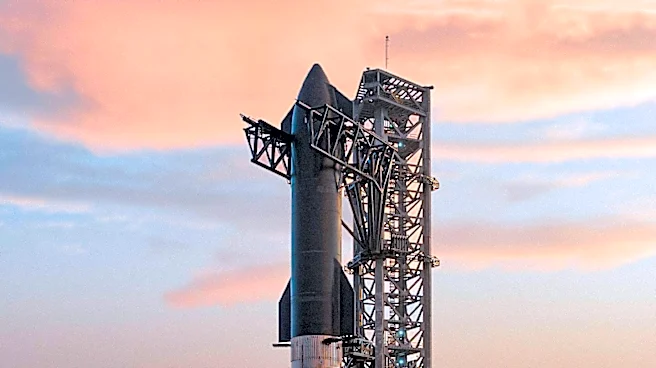
Starship, the world's largest rocket, is also central to Musk's vision of colonizing Mars.
What does this mean for Californians? More rocket launches to watch
If you want to experience a rocket getting off the ground and thundering overhead, you'll have plenty of opportunities.
California is home to plenty of beaches and other spots that have become popular among spectators, while livestreams are almost always readily available for most rocket launches across the United States.
So, sit back, relax and enjoy the rise of what NASA often refers to as "the golden age of innovation and exploration."
Eric Lagatta is the Space Connect reporter for the USA TODAY Network. Reach him at elagatta@usatodayco.com
This article originally appeared on Ventura County Star: California rocket launches have soared. Here's why even more are ahead