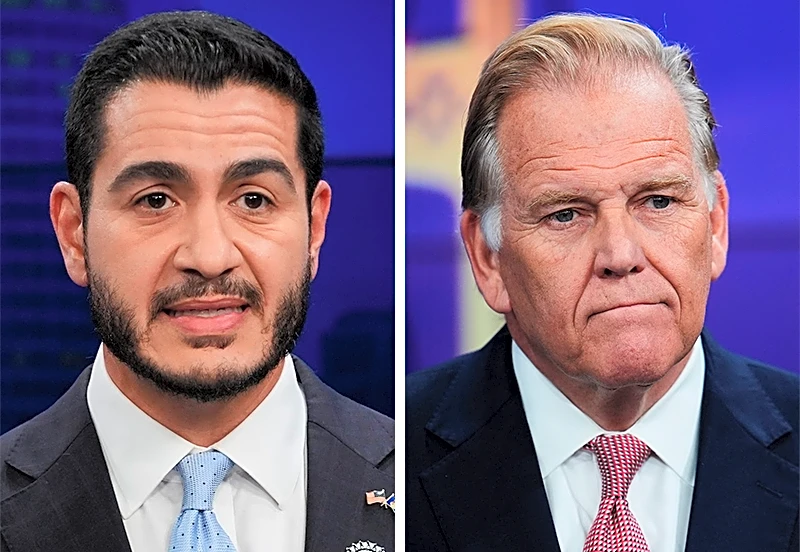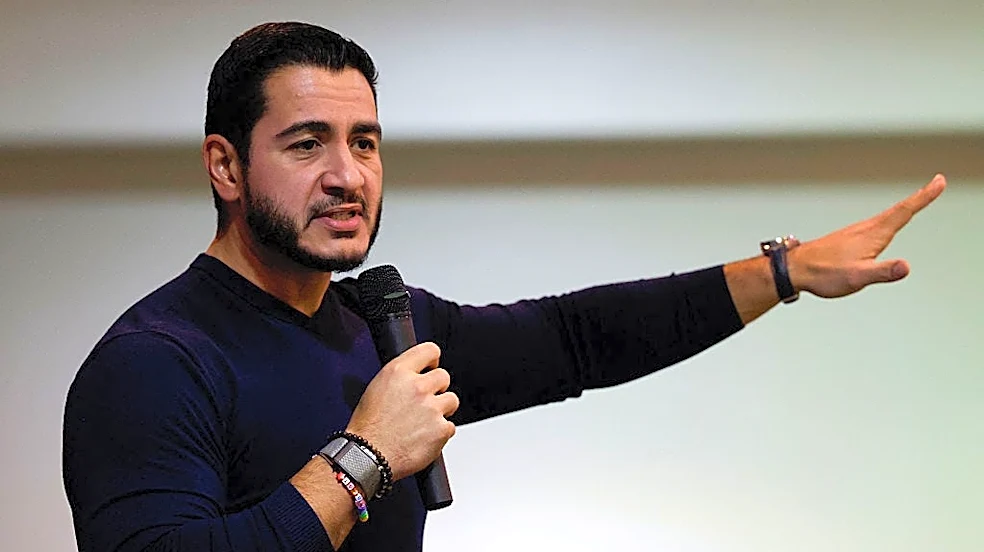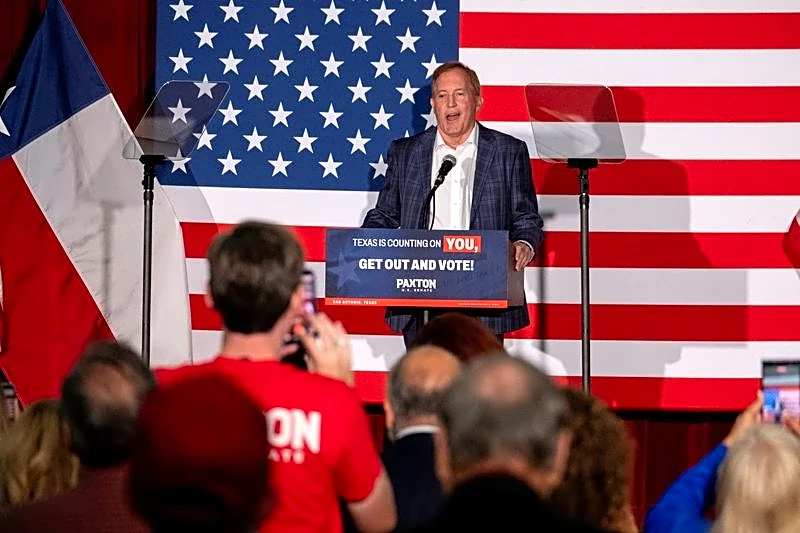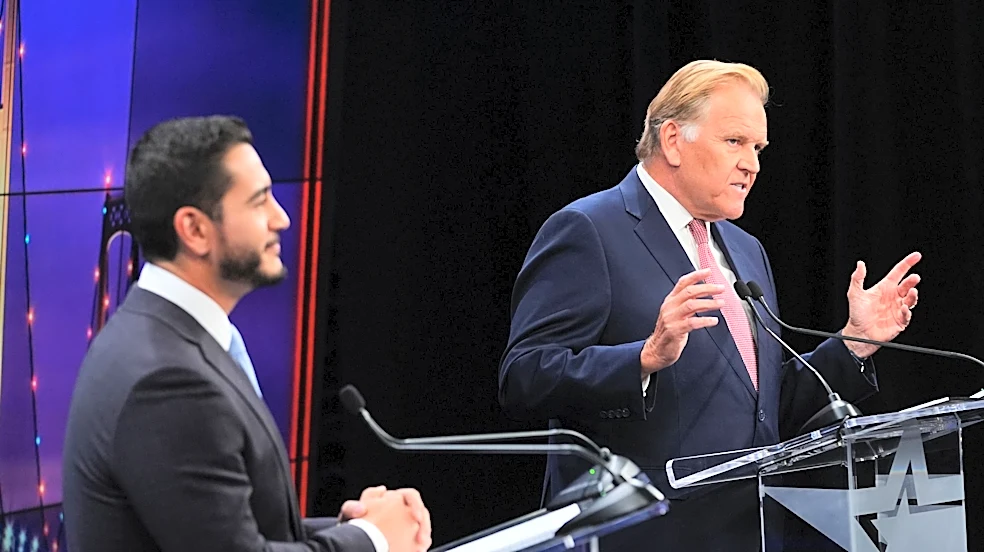

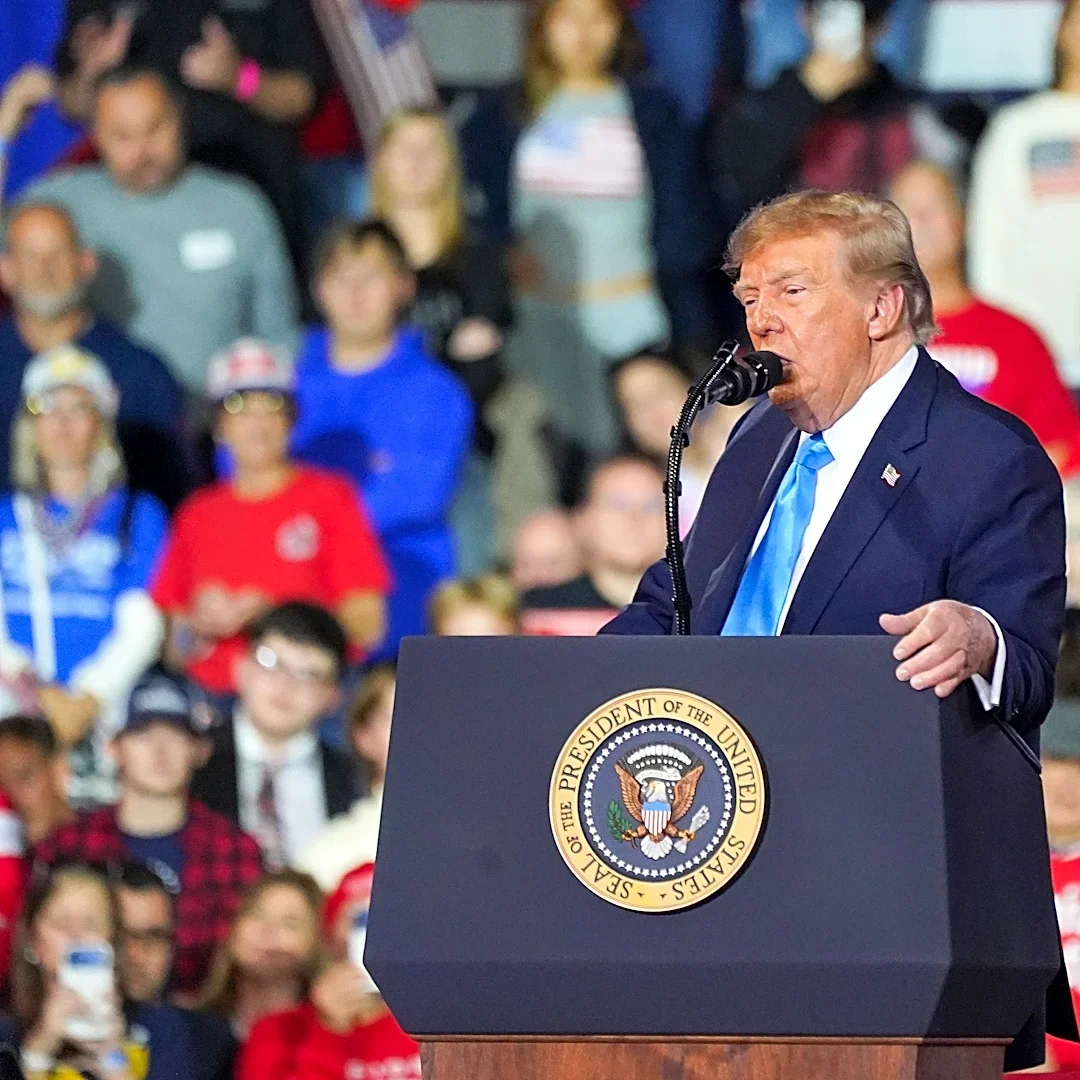


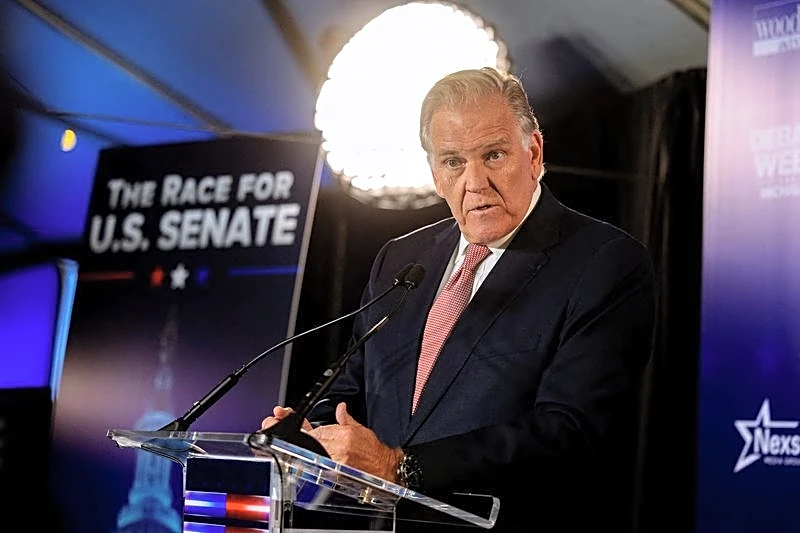
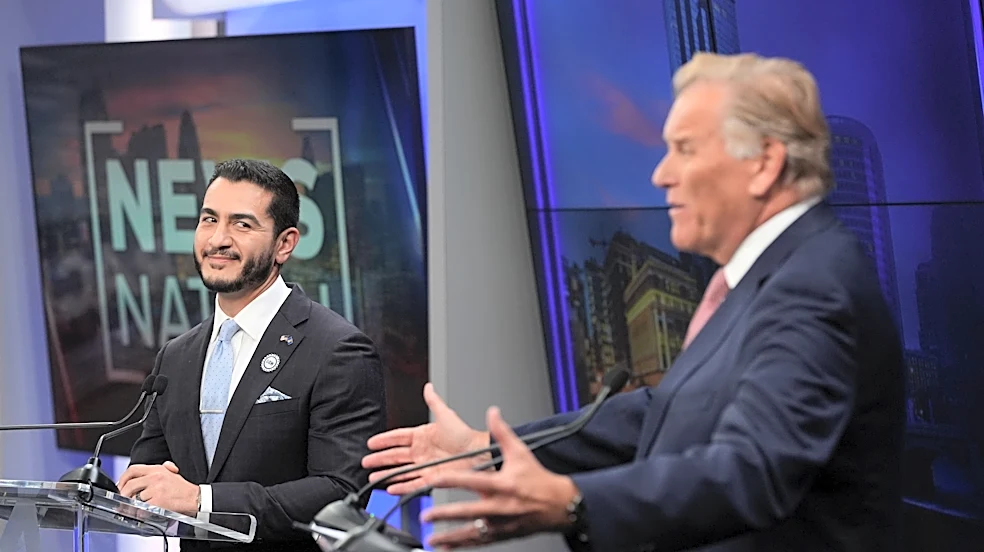

GOP U.S. Senate candidate Mike Rogers is working a narrative about his opponent: Abdul El-Sayed's coalition is crumbling, Rogers says, as evidenced by Democrats' widespread, grassroots movement to Rogers' cause ‒ or, at least away from El-Sayed.
Rogers has touted the political action committee "Democrats for Rogers," which he called “our fastest-growing coalition” at a Detroit Economic Club forum on Oct. 20, and his endorsement by a few low-profile Democratic elected officials.
And in another apparent blow to El-Sayed, former Michigan Democratic Party Chair Lon Johnson and Democratic donor and Oakland County attorney David Kramer penned an Oct. 18 guest column in The Detroit News, urging Democrats to skip the U.S. Senate race in the Nov. 3 election:
“Leaving the ballot blank is an act of dignity.”
But there are a few problems with the narrative Rogers is pushing.
Democrats for Rogers' latest Federal Election Commission filings reveal that the largest donors to the group are conservative PACs, the center-right publication The Bulwark reported.
And Johnson acknowledged this week that he consulted a longtime Republican strategist and former executive director of the state GOP ‒ an unabashed supporter of Rogers ‒ in writing the "leave it blank" guest column.
There are, without a doubt, Democrats who simply can't bring themselves to support El-Sayed. But for an effort positioned as a grassroots Democratic defection ‒ in a race that may determine which party wins control of the U.S. Senate ‒ the anti-El-Sayed push is remarkably intertwined with Republican operatives, donors and political interests.
'Democrats for Rogers' runs on Republican money
Democrats for Rogers' largest donations come from GLFC Inc. (Great Lakes Conservative Fund), a super PAC that supports conservatives and has funded a seven-figure pro-Rogers ‒ and anti-El-Sayed ‒ ad campaign, The Bulwark reported, and from the American Unity PAC, which backs GOP candidates who "who support freedom for all Americans, including people of faith and the LGBT community."
Democrats for Rogers, now re-named Together for Michigan, is helmed by state Rep. Karen Whitsett, FEC filings show, a former Democrat who stymied her party's ability to advance its agenda during its 2023-2025 trifecta, and who left the party earlier this year, opting not to seek re-election.
The Bulwark wrote:
"TFM has spent nearly $5 million in either support for Rogers or opposition to El-Sayed, according to their annual expenditure totals. The group has also paid $30,000 to former Pontiac, Michigan council member Melanie Rutherford for 'Grassroots Consulting' services. Two weeks after receiving those payments, Rutherford appeared on Fox News, touting Rogers and attacking El-Sayed — a clip that was amplified by numerous MAGA accounts. During the segment, it was never disclosed that she had received those payments.
"On X, the Democrats for Mike Rogers account regularly bashes Democratic Senate candidate Abdul El-Sayed, posting that he is 'endorsed by the enemies of America,' that El-Sayed 'would be Senator for U.S.-designated terrorist groups,' and that he 'hates Black Michiganders.'
"If those sound eerily familiar to the Republican attack lines against El-Sayed, well, now you have a good idea why."
About that guest column ...
Johnson, who led the Michigan Democratic Party from 2013 to 2015, says his opposition to El-Sayed is a matter of conscience, propelled by El-Sayed's position on Israel, and that he doesn't want to see Mike Rogers elected to the U.S. Senate ‒ even as he openly encourages Democrats to take an action that makes a Rogers victory more likely.
Johnson said that he shared the piece before publication with "literally a dozen other people," whom he declined to name, and that he consulted the Republican strategist and former GOP state director, Jason Cabel Roe, as a friend; Roe says that as a Republican critic of Trump, he's familiar with taking heat from his own party. Johnson said that he and Roe "debated" some points of the column, but said he couldn't remember exactly what was discussed: "That was like a week ago."
In separate phone calls Oct. 21, Roe and Johnson ‒ who suggested at one point that Roe could be conferenced in ‒ shared different assessments of the degree of influence Roe had over the piece, and whether he contributed to Johnson and Kramer's ultimate conclusion that Democrats could leave the Senate race blank.
Let's go to the tape.
Johnson: "I called (Roe) and discussed, as a friend, what I was doing. I shared with him the article, and we discussed it, and we had a very strong debate on it."
Roe: "I never saw a draft of it, I never edited it."
Johnson: "I sent him the article and he said, 'It's too long,' I said, 'I understand that.' He had no bearing on the tone, the tenor, other than that we had a few discussion points and debate. ... But it was never I was going to support Rogers, never, I made that extremely clear. ... No, he had no bearing on 'leave it blank.'"
Roe: "They were trying to write something that didn't go so far as to say vote for Mike Rogers, and settled on the language encouraging not voting in that race. ... We discussed the language and how to word it."
Roe said he advised Johnson that if he urged Democrats to vote for Rogers, he'd likely pay a price within his own party, but that "it is certainly defensible for anyone of any party to skip that race if they're uncomfortable with either choice." In this race, that doesn't apply to Republicans, Roe said: "I think Mike Rogers is a great choice."
Both Johnson and Roe say they're not connected to or paid by Rogers’ campaign.
“I’m not for Rogers, I’m not a Democrats for Rogers. If I were, I’d say so,” Johnson said in an earlier phone call. “I don’t want Rogers to be in the Senate. I’m trying to show that I have real concerns around El-Sayed, and that I’m not going to vote for him.”
Transparency matters
Democrats, of course, are free to vote however they like in the Nov. 3 election ‒ for El-Sayed, for Rogers, or for no one at all. That's how democracy works.
And Democrats are the proverbial big tent, an often-fractious lot who rarely march in lockstep. That's the party's gift and its curse. El-Sayed's success has always depended on holding a coalition with fault lines that predate his candidacy. But Republican influence in a supposed grassroots movement risks inflating Democrats' division, and in politics, narratives matter.
Does that make their criticisms of El-Sayed less credible? That's something Democrats must decide for themselves.
But voters ought to understand who is advancing this narrative, and who, on Election Day, stands to gain as a consequence.
Nancy Kaffer is the editorial page editor of the Detroit Free Press. Contact: nkaffer@freepress.com. Submit a letter to the editor at freep.com/letters, and we may publish it in print or online.
This article originally appeared on Detroit Free Press: In U.S. Senate race, who's funding efforts against Abdul El-Sayed? | Opinion