




Shortly after the United States launched strikes against Iran in late February, President Donald Trump acknowledged gasoline and oil prices would go "up a little bit" for "a little while." Now, more than six months later, both are still much higher than they were before the attacks.
And diesel — the fuel America relies on to truck goods everywhere — just hit a new, all-time national record on Monday, Sept. 14, at $6.23 a gallon and could go even higher. That's significant because, even more than gasoline, you're likely paying for diesel whether you pump it into your vehicle's tank or not.
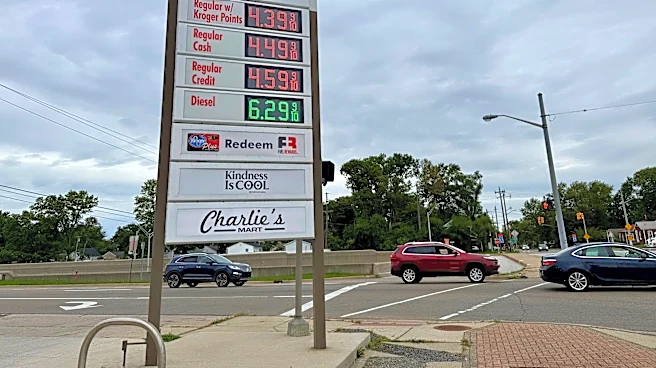
In Michigan, the average price for gasoline was $4.32 a gallon, up 29 cents from a week ago. That works out to more than $4 to fill up a 15-gallon tank. And
compared to a year ago, it's $1.27 more a gallon, or more than $19 a tank. For those with diesel vehicles, the increase is even more.

In Michigan, diesel is now $6.15 a gallon, up from $3.66 a gallon a year ago, or more than $37 a tank.
"Michigan drivers are seeing a significant increase at the pump," said Adrienne Woodland, spokeswoman for AAA Auto Club, Monday. "This sharp increase underscores the ongoing volatility in global oil markets and serves as a reminder of how quickly fuel prices can shift."
Mostly, though, prices since the war have gone up and stayed up.
The increased fuel price is affecting the economy and adding to household expense burdens.
It also — as you might expect — has been increasingly a topic of discussion on Sunday political shows and an issue that midterm candidates, especially Democrats, are raising, as Michigan motorists are now paying an average of $65 for a full 15-gallon tank of gasoline.
Political candidates are increasingly worried about the high fuel prices, which some — who are running on platforms seeking to capitalize on the president’s unfulfilled promises and low approval ratings — are seizing as a central campaign issue.
Sunday political talk shows chatter
Last Friday, MS NOW declared in an online headline that "Gas prices are surging at the worst possible time for Republicans," with some even privately acknowledging to the outlet that "gas prices are becoming a huge issue in the midterms."
The report mentioned that Trump — who had promised lower gas prices when he ran for office and then earlier this year as they went up — is now acknowledging that they are unlikely to get better anytime soon, which is different from what he had been suggesting.
MS NOW’s analysis: The GOP concern is that "high gas prices are here to stay, and that prices could actually climb higher as voting begins." Politicians in both parties have said, "the balance of power in the House and Senate could very likely hinge on gas prices."
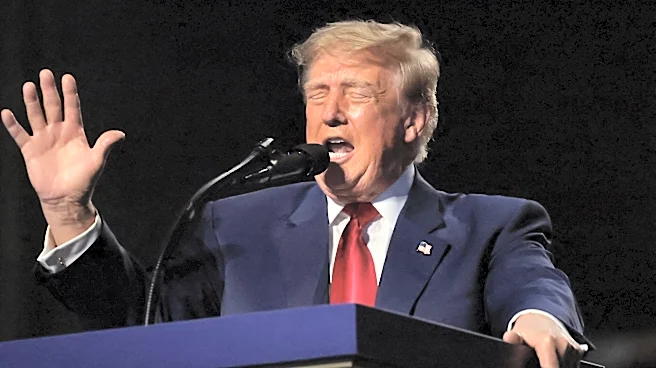
Trump, however, after hyping the low cost of gas early in his second term, has downplayed the fuel price increase, calling it a "small price to pay" for "safety and peace" and "not bad, " promising it would be "over with pretty soon" and "not very high, relatively speaking."
And on Sunday, when Michigan’s Democratic U.S. Senate candidate Abdul El-Sayed appeared on CBS’s "Face the Nation," he kept pivoting to high gas prices, even as answers to questions on unrelated topics.
Show host Weijia Jiang asked, for instance, what he made of Republicans "focusing so much attention" on him at the party’s national convention in Texas; he instead went on the offensive, noting high gas prices as a concern for voters.
"You know, it was not a subject at all of the RNC?" he replied to her, focusing instead on the economy. "The gas prices, grocery prices, these ridiculous tariffs, and this war with Canada that's raising our prices an average $5,600 a year for the average Michigan family."
Two wars, no end in sight
Normally, prices fall after Labor Day, the end of the summer travel season — but not this year.
Gas prices have remained high. Throughout Michigan, the most expensive average gas prices on Sunday were in Ann Arbor, $4.35 a gallon; Jackson, $4.35; and Lansing, $4.34; with the least in Traverse City, $4.22; Flint, $4.27; and metro Detroit, $4.30.
This year, what’s driving the price of gas is a shortage of supply, particularly the flow of crude oil and increasingly limited worldwide refining capacity that has been caused by two wars: the U.S. war with Iran and the war between Russia and Ukraine.
On Sunday, oil prices jumped again on new worries that energy supplies from the Middle East would be further diminished by a drone attack, after the Houthi militia seized a Red Sea island, restricting the flow of crude even more. The price of Brent crude rose on Sunday to about $108 a barrel and West Texas Intermediate more than $100.
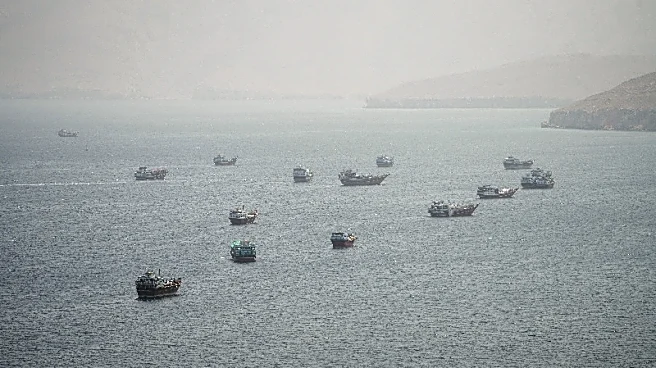
That’s on top of the Strait of Hormuz — the waterway between Iran and Oman — having been mostly closed for months, with Iran now seeking to escalate tensions and widen the scope of the war by firing drones at targets throughout the Middle East.
And Saudi Arabia, the world’s largest oil producer, shut down its pipeline across the Arabian Peninsula to the Red Sea, an alternative route for its oil, as a precaution, pinching the world’s supply of oil even more.
Meanwhile, in Europe, Ukraine’s ongoing attacks on Russian petroleum refining infrastructure are affecting the global refining supply. The damage adds to the rising diesel prices, which petroleum analyst Patrick De Haan said "could climb even faster."
Meanwhile, on Sunday, Trump — while in Ireland — blamed the higher fuel prices on Ukrainian attacks, calling on the country to "stop knocking out diesel fuel in Russia" and urging the nation, which is defending itself from a Russian invasion, not to "hit diesel fuel because that’s hurting the world."
Contact Frank Witsil: 313-222-5022 or fwitsil@freepress.com
This article originally appeared on Detroit Free Press: Filling up with gas in Michigan is nearly $20 more than a year ago