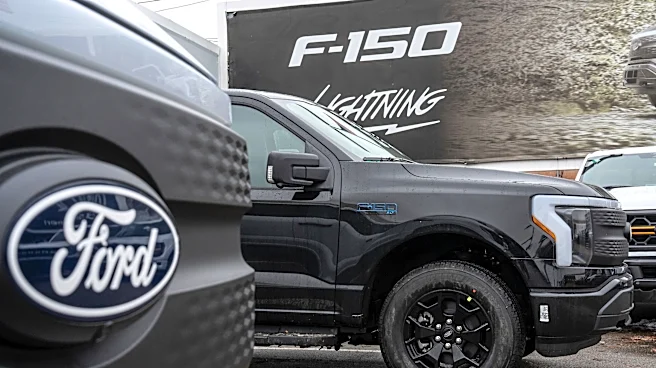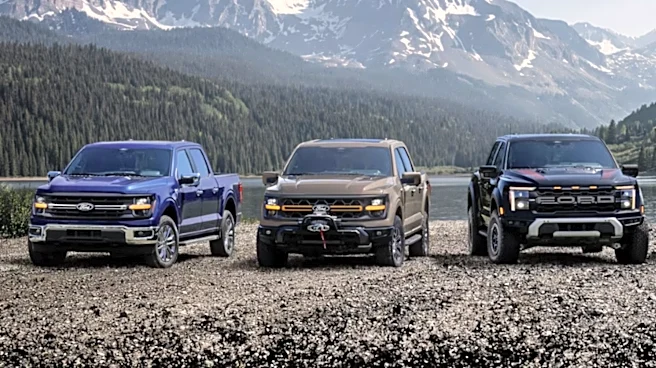







Ford Motor Co. is seeing demand from dealers for more inventory of its F-Series pickups and its Mach-E electric vehicles as it enters the fourth quarter, its executives said as the company looks to make up some F-150 production hiccups last month.
The insight on demand came as Ford reported that its U.S. new car sales were down 6.6% from the year-ago third quarter.
“We had a dealer this morning who had two customers looking for a specific Mach-E," Rob Kaffl, Ford's director of U.S. sales and dealer relations, said on Oct. 2. "We are seeing good flow on that and seeing a lot of returning Mach-E customers wanting to get into another Mach-E. Although the sales are down year-over-year, the demand remains strong.”
For the quarter, Ford sold a total
of 509,764 vehicles. Adjusting for the company's move to end production of the Ford Escape and Lincoln Corsair small SUVs, Ford’s total vehicle sales volume in the third-quarter was essentially unchanged compared with an industry decline of about 1%, Ford said. Unadjusted, the sales drop is more noticeable.
- Ford brand sales dropped 6% to 490,276 vehicles sold.
- Ford's luxury brand, Lincoln, saw sales plummet 18% to 19,488 vehicles sold.
Through the end of September, Ford has sold 1,516,279 vehicles, down 8.6% compared with the same time a year ago.
Still, Ford's struggles to rebuild its F-150 production this year — after two fires at its aluminum supplier, Novelis, disrupted Ford's truck production late last year and into this year — had an impact. Ford uses aluminum in the bodies of many of its trucks and SUVs. To compound the problem, Ford had to pause F-150 production in the last week of September at Dearborn Truck Plant along with intermittently pausing production of the truck at Kansas City Assembly plant in Claycomo, Missouri throughout September.
In its third quarter sales release, Ford wrote: "At the end of September, production of F-150 trucks was affected by a short-term supplier issue unrelated to aluminum. The expected financial impact is containable within the full-year 2026 adjusted-earnings before interest and taxes guidance of $10 billion to $11 billion Ford provided on July 28."

What customers appear to want: Pickups
Despite the high gasoline and diesel prices and economic uncertainty, Ford leaders say dealers have not indicated demand for full-sized or heavy-duty pickups is faltering.
“Trucks are kind of the tool," said Erich Merkle, Ford's head of U.S. sales analysis, in call with reporters when Q3 results were reported. "If you need a Super Duty diesel, a Toyota Highlander isn’t going to work for you. They’re purpose-built trucks and people using them, use them to move equipment … use them to do work or for recreation. You are probably well-heeled if you’re towing a truck or trailer. So they are probably not as price sensitive as other parts of the market are."
Still, Kaffl said, “We watch all the macro economics and so we’re keeping an eye on diesel."
He said F-Series demand continues and production is quickening to keep up so Ford is not seeing an impact from high diesel prices yet, "but that’s not to say that something can’t change. We’re keeping an eye on it. We have a really strong fourth quarter planned. So we don’t have any real concern about it, but we’re certainly watching it.”
Merkle said Ford is introducing new EVs early next year to address high fuel costs, kicking it off with the Fathom midsize pickup starting at about $29,000.
"The Maverick hybrid is in demand too, we’ve sold over 70,000 of them this year," Merkle said. He added that there is also increased demand of the hybrid powertrain in the F-150.
Where pickup production stands
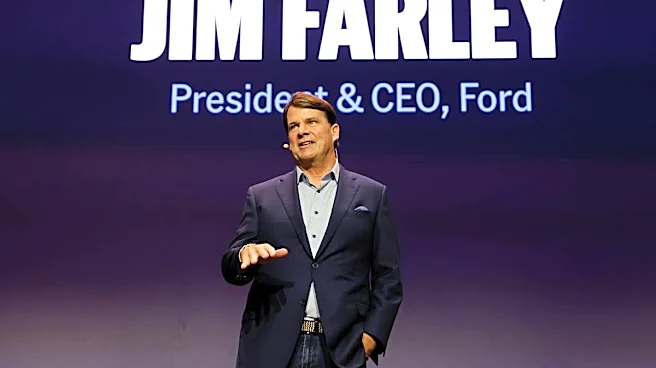
Ford CEO Jim Farley told reporters at an event on Sept. 30 that dispite having to pause F-150 production in September at Dearborn Truck Plant and Kansas City Assembly, production is "back up and running" and the "supplier issue, we have ways to address it."
But he added, "It is impacting our third quarter wholesale, but I'm very optimistic." That's because Ford's supply chain team solved "the problem with that supplier" and "built some resilience around" it to protect future production. Farley added that Ford is "fully recovered" from the Novelis fire shutdown and that it has tested all of the aluminum and got it all certified" and been using it for about four weeks "with all the new aluminum coming out in November."

But according to a posting by UAW Local 249 on social media Oct. 1, Ford canceled F-150 production for its night shift on Oct. 1, 2 and 3 due to a parts shortage.
Ford did boost production in the third quarter of its Super Duty F-Series pickup. Ford said production of its Super Duty trucks reached a 19-year high totaling 110,275 trucks built in the third quarter, up 4.4% from the year ago period. Total F-Series production, including the F-150, increased 4.5% to 266,777 trucks in the quarter.
Pickup sales in Q3
There were some winners and losers during the quarter for Ford.
In the quarter, Ford sold 203,707 F-Series pickups, a 1.9% decline compared with the year-ago quarter. From January through September, total F-Series sales came to 561,508 trucks sold, a 9.5% decline compared with the same period last year.
But, Ford said it still extends the F-Series lead over the Chevrolet Silverado to more than 140,000 trucks from January through September, keeping the F-Series on track for a 50th consecutive year as America’s best-selling truck.
Here are some other highlights by vehicle in the third quarter:
Ford vehicles that saw sales gains in Q3
- Bronco Sport: 34,751 sold, up 12.7%.
- Bronco: 38,020 sold, up 0.4%.
- Mustang: 9,960 sold, up 7.5%.
- Explorer: 62,285 sold, up 11.2%.
- Ranger: 17,561 sold, up 14.8%.
- Maverick: 41,970 sold, up 20.4%.
- Lincoln Nautilus: 9,066 sold, up 17.7%.
- Lincoln Aviator: 4,887 sold, up 11.3%.
- Lincoln Navigator: 5,122 sold, up 3.3%.

Ford vehicles that had sales dips in the quarter
- Expedition: 19,860 sold, down 9.1%.
- Mach-E: 5,574 sold, down 72.4%.
- F-Series: 203,707 sold, down 1.9%.
- Transit van: 40,260 sold, down 5.3%.

In the year-ago period of January through September, Ford sold 114,728 Escapes. This year, in that same time frame, Ford sold just 28,826 of the SUVs after ending its production at Louisville Assembly Plant in Kentucky to retool that facility to build the Fathom and a family of new EVs off of Ford's new Universal Electric Vehicle platform starting next year. Also built at that plant was the Corsair, which has experienced a 57.5% decline in sales from January through September to 8,414 sold as a result of the production ending.
Kaffl said Ford has worked to mitigate some of that sales decline by growing sales in other vehicles such as Bronco, Bronco Sport and Explorer SUVs.
“We’re not going to mitigate all that loss of sales, but the dealers are doing a tremendous job of growing sales in other areas," Kaffle said.
Also ford is investing in a new product refresh that will result in 80% of its lineup being either new or refreshed by 2029.
"We’re not standing still," said Ford spokesman Said Deep on when Q3 numbers were released. "There’s a lot of new product coming."
Jamie L. LaReau is the senior autos writer at USA TODAY Co. who covers Ford Motor Co. for the Detroit Free Press. Contact Jamie at jlareau@freepress.com. Follow her on Twitter @jlareauan. To sign up for our autos newsletter. Become a subscriber.
This article originally appeared on Detroit Free Press: Ford's plan to attack sales challenges ahead depends on key vehicles