








A supplier to Ford Motor Co. expects to permanently close its doors due to the automaker pulling its business.
JG Kern Enterprises in Sterling Heights said it will permanently lay off some 156 employees due to "unforeseeable business circumstances," according to a Worker Adjustment and Retraining Notification (WARN) it filed with the state.
The family-owned supplier, which makes powertrain components, was founded in 1967 with seven employees, according to www.jgkern.com. Today, it occupies nearly 200,000-square feet at its factory in Sterling Heights, where it has employed as many as 250 when in full production.
But a person familiar with the situation said Ford has been its biggest client, so with Ford removing its business, it puts JG Kern out
of business. The person asked to not be identified because they are not authorized to share the information publicly. The business is still making components, the person said, but in a limited capacity to finish its work with Ford. The person expects the supplier to idle its factory and lay the staff off by year-end.
This person said Ford is pulling its work so that it can move component production to other suppliers in India. A different person, who is familiar with Ford's plans, said not all work will be redistributed to India, some will go to suppliers in the states. The person asked to not be named because he is not authorized to share that information publicly.
The average manufacturing wage in India is far less than it is in the United States and JG Kern could not compete with it, the first person said. That person said JG Kern has a solid track record making quality parts, mostly used in Ford's F-150 Lightning electric pickup.
According to Salary Expert, the average factory worker in India this year made about $4,477 for a full-year in salary. In the U.S., the average weekly earnings this year reached about $1,495.26, or $77,000 a year, according to Bureau of Labor Statistics data.
Ford's future plans
When asked about Ford's plans and its relationship with JG Kern, Ford spokesman Dave Tovar told the Detroit Free Press in an emailed statement that Ford does not discuss confidential contracts or relationships with individual suppliers.
"Our sourcing decisions consider quality, delivery, financial stability and operational risk so we can keep our plants operating and delivering vehicles to customers," Tovar said. "Ford is committed to American manufacturing and jobs. Reliable suppliers are essential to protecting production and the thousands of American jobs that depend on our plants operating."
Ford ended production of the Lightning, which it built at the Rouge Electric Vehicle Center in Dearborn, in 2025 after a year of disappointing sales of the truck, especially following the end in September of a government tax incentive of $7,500. In thefourth quarter of 2025, sales of the Lightning plummeted 60% to 4,273 sold compared with the year-ago period. For all of 2025, Ford sold 27,307 Lightning trucks, an 18.5% decline compared with 2024 sales.
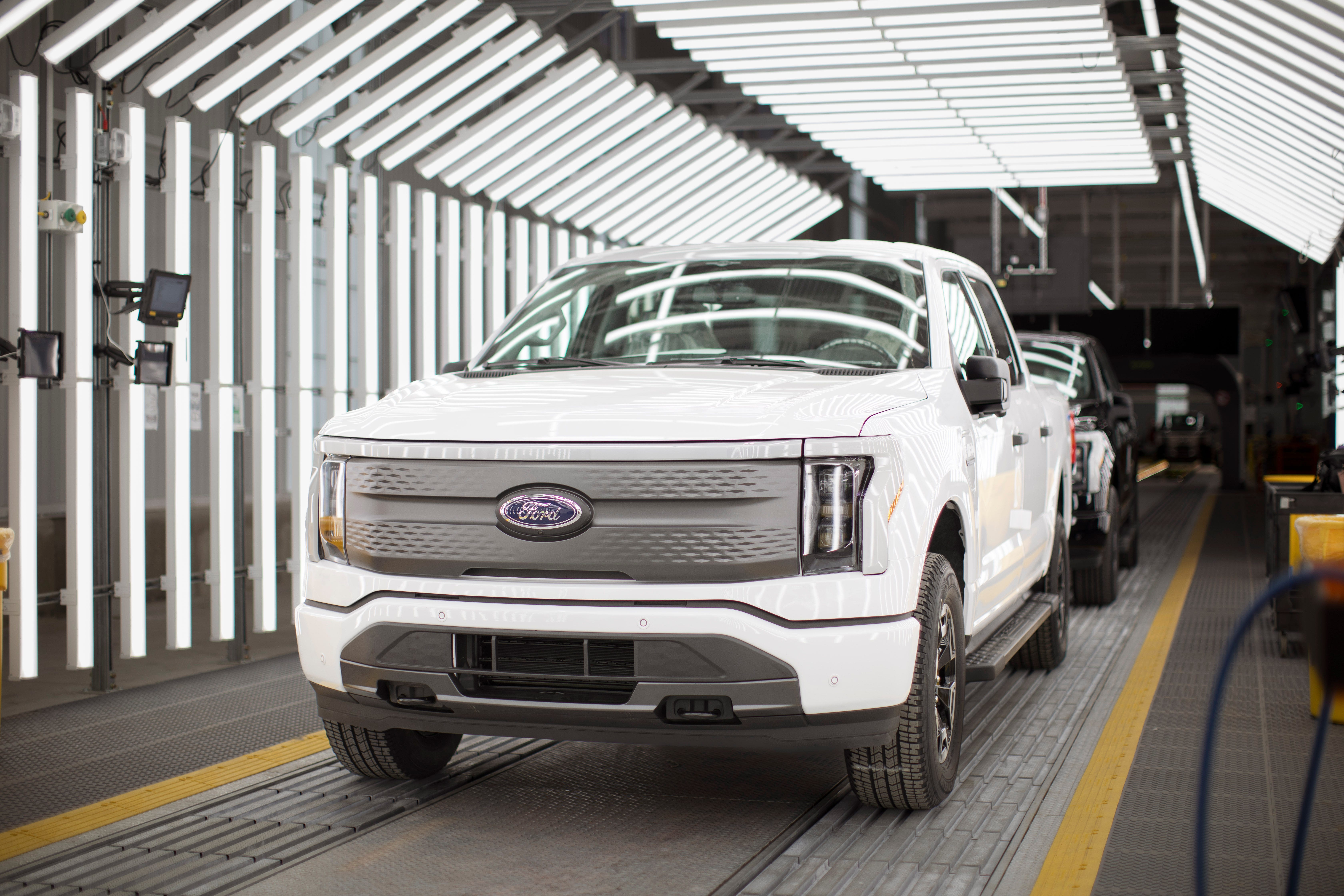
But Ford plans to reintroduce the vehicle next year as an Extended Range Electric Vehicle (EREV). That means the new Lightning will have a generator on it to recharge it, giving it an estimated range of more than 700 miles and added charging capacity.
Since President Donald Trump launched 25% tariffs on imported vehicles and car parts in spring 2025, Ford has repeatedly boasted about being the most American of all the automakers, even launching the "From America, For America" sale that spring in which Ford offered all customers employee prices on most of its vehicles. The sale helped the Ford brand, not including Lincoln, to beat Toyota in sales for the first half of 2025.
In a Ford blog published on April 13, 2026, CEO Jim Farley boasted about Ford's commitment to a strong U.S. manufacturing base. He noted that Ford employs nearly 56,300 hourly manufacturing workers in the United States, the most of any automaker. Of all the vehicles Ford sells in the country, 83% are assembled here, Farley said. Ford also makes vehicles in Mexico, Canada and the Lincoln Nautilus in China for import. But Farley said Ford leads the industry by assembling more than six vehicles in the states for every one it imports.
What it means to lose Ford
JG Kern, which lists on its website suppliers Borg Warner, Dana and Magna as other clients, has had Ford as a client for more than five decades, according to the person familiar with its operations, adding that it is a profitable supplier with annual revenue ranging between $30 million to $50 million. The company's website said automotive manufacturing is "100%" of its focus and, "Higher volume automotive production parts became the major source of our revenue stream," since the 2000s.
The company invested millions of dollars in new equipment to produce components for the Lightning, the person said, with the expectation that Ford would need thousands per month. Instead, the slow sales results in less work than JG Kern expected and now it is losing Ford completely. The person said the company is seeking other business from other automakers, but "when you lose the business of Ford Motor" it creates a challenge to replace it quickly and easily.
Staff writer M.L. Elrick contributed to this report.
Jamie L. LaReau is the senior autos writer for USA Today Co. who covers Ford Motor Co. for the Detroit Free Press. Contact Jamie at jlareau@freepress.com. Follow her on Twitter @jlareauan. To sign up for our autos newsletter. Become a subscriber.
This article originally appeared on Detroit Free Press: Supplier to lay off 150 with loss of Ford business