

On Labor Day, the nation celebrates the worker. And in Detroit, that celebration is especially local.
The skyline, its neighborhoods and its roads were shaped by the automotive industry. So, too, were generations of families who depended on factory paychecks, union benefits and the promise that a job on an assembly line could provide a stable middle-class life. At the center of that story, back then and today, is the United Auto Workers.
Founded in 1935, the UAW grew out of the brutal conditions of Depression-era factories — automotive or otherwise — which led to a broad wave of industrial unionization. And in Michigan, where auto companies held enormous power, the UAW quickly made an impact on the way labor strikes and organizing would be conducted.

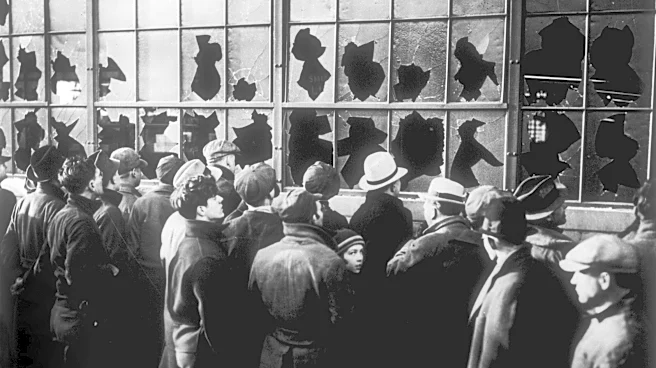
The union's breakthrough came in Flint, where workers occupied General Motors' plants during the 1936-37 sit-down strike. For 44 days, the union members stayed inside the factories, stopping production. According to the U.S. Department of Labor, the occupation began at Fisher Body Plant No. 1 on Dec. 30, 1936, and spread to other key GM facilities, including Chevrolet Plant No. 4, which produced engines. Then-Michigan Governor Frank Murphy called out the National Guard, but refused to use it to forcibly remove the strikers. After 44 days, GM agreed to recognize the UAW as the bargaining representative for the striking workers.
It was a victory that would change American labor.
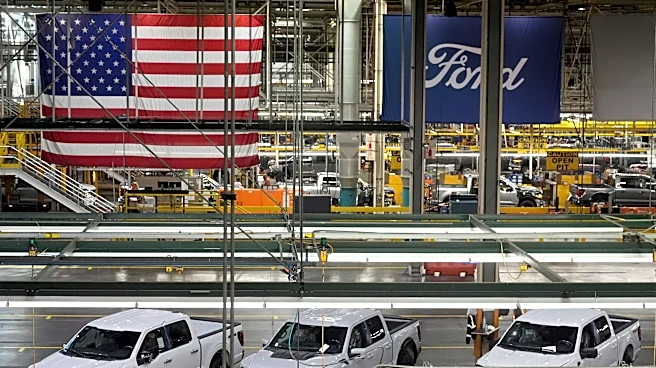
The sit-down strikes intensified efforts for the union to organize workers at Ford Motor Co., which proved harder. In 1937, UAW organizers distributing literature outside the Rouge complex in Dearborn — a historic factory that is still in operation today, building the Ford F-series trucks — were attacked by Ford security guards in what became known as the "Battle of the Overpass."

Walter Reuther, who would later become a long-standing president of the UAW, was beaten along with several other organizers. The photographs of the assault traveled widely and became a symbol of the hostility the union faced.
According to the Walter P. Reuther Library at Wayne State University, the news of the battle became crucial in the UAW's public-relations battle against Ford.
Ford remained hostile to the union for four more years. By 1941, after another organizing confrontation and a strike at the Rouge, Ford signed its first UAW contract on June 20 of that year, according to the Reuther Library.
Reuther went on to lead the union through its most powerful decades. His hard-nosed leadership came with considerable personal risk: In 1948, a shotgun blast fired by a would-be assassin through the window of his Detroit-area home badly wounded him. He survived and returned to the work of building a union that demanded a larger share of the auto industry's prosperity for its workers. The gunman was never identified.

The gains won by the union were extraordinary by the standards of the time.
UAW contracts brought higher wages, health insurance, paid vacations and pensions. A 1949 agreement between the union and Ford helped normalize employer-funded pensions as a major part of the American industrial economy, according to the U.S. Department of Labor. For workers who had known poverty and insecurity, especially during the Great Depression, retirement with a pension represented a profound change.
At its peak in the late 1970s, the UAW had roughly 1.5 million members. Then, as Detroit knows well, the industry changed.
Foreign competition, oil crises, automation and the movement of manufacturing away from the industrial Midwest weakened the union's traditional base. Chrysler's financial crisis in 1979 pushed the UAW into concessions to help save the company — a pattern that would be repeated about 30 years later when the auto industry faced an even greater emergency.
GM and Chrysler entered bankruptcy during the 2008-09 financial crisis, and the UAW accepted painful concessions as part of the restructuring. Some of Detroit's factories survived but the traditional labor model had been profoundly weakened.
Today, the UAW has a little more than 400,000 active members, a fraction of its 1970s peak. Its reach also extends well beyond the traditional Big Three -- into universities, hospitals, museums, public-sector workplaces and other industries.
Presently, the union is under the leadership of Shawn Fain, a former Chrysler electrician turned union reformer who was elected n 2023. Fain is not without controversy, though as a UAW president he led the union through its 2023 "Stand-up Strike" (fashioned after the sit-down strikes in Flint) that was widely publicized and secured major gains from the Detroit Three automakers.
The strikes in 2023 represented, in some ways, a return to the union's more militant roots.
The old factories remain, some transformed and some gone. The neighborhoods built around them remain, too, filled with the descendants of people who once punched a clock and carried a UAW card in their wallets.
The union is smaller now. The auto industry is different. The city itself has changed. But on Labor Day in Detroit, the history of the UAW remains.
Liam Rappleye covers Stellantis and the UAW for the Detroit Free Press. Contact him: LRappleye@freepress.com.
This article originally appeared on Detroit Free Press: On Labor Day 2026, look back at the UAW's labor history in Detroit