
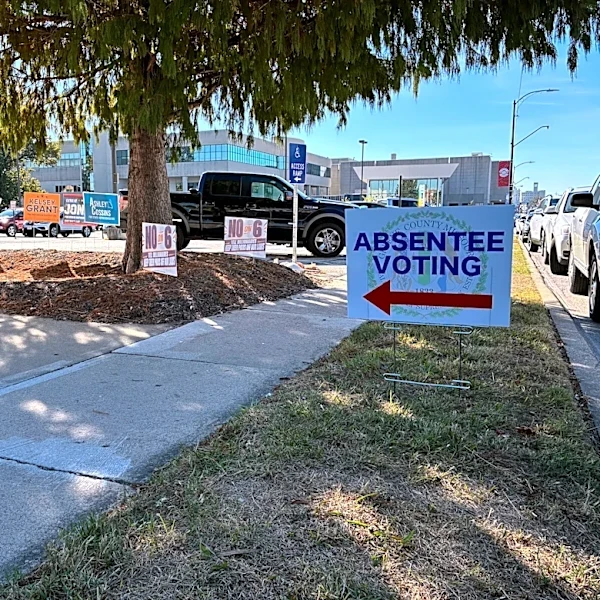






Voters in six Wayne County school districts will weigh in Nov. 3 on proposals to pay for everything from replacement of aging school buildings to the everyday costs of running a classroom.
The largest ask comes from Dearborn Public Schools, where the district is seeking $1.51 billion to build new schools and renovate existing buildings.
The third largest school district in the state with 20,000 students, Dearborn plans for new air conditioning in all schools and STEM labs. It also plans to merge several elementary and middle schools to create new pre-K to eighth grade schools. If approved, the district would stop collecting a separate operating millage, and the city would reduce its millage rate so the proposal would not equate to a tax increase.
The much-smaller Riverview Community Schools is seeking $30 million for school improvements.
Four other proposals involve operating millages. Some would renew existing taxes, while others would allow districts to restore tax rates reduced under Michigan’s Headlee Amendment.
Read more about the Dearborn Public Schools proposal here, and see below for a look at five other education-related proposals on the ballot.
Riverview Community Schools: $30 million bond request
Riverview Community Schools is proposing a $30 million bond to update aging school buildings, improve safety and security, and upgrade classroom technology.
The proposal would not increase the district’s current tax rate, Superintendent J.J. Hatzl said, noting the district is paying off and refinancing existing bond debt.
“It’s a zero-tax-rate increase,” Hatzl said. “The way Michigan schools are funded just doesn't really cover infrastructure needs, and as a small town, our newest building is 55 years old. That’s our most modern one. All of our other buildings are quite historical.”
If the proposal is approved, he said, the district will use the funds to replace outdated heating and cooling systems, modernize boilers and repair roofs.
“We do want to get some things for the students and staff, as well,” Hatzl said. “We’ve got some instructional technology we’re looking at modernizing, and then obviously continuing to be vigilant with safety and security. That’s a modern concern we take seriously to keep kiddos safe here.”
The district estimates the bonds would require a tax rate of 1.21 mills, or $1.21 for every $1,000 of taxable property value in 2027.
If the proposal is not approved, Hatzl said the district would have to find ways to pay for improvements through its general fund, which is already strained by the declining enrollment seen statewide.
About 2,700 students currently attend school in the district.
“We continue to have less to do more,” Hatzl said.
Romulus Community Schools: 'Hold harmless' millage renewal
A property tax that helps pay for school transportation, staffing and other everyday expenses is up for renewal in Romulus Community Schools.
The district is asking voters to renew its existing “hold harmless” millage for another 10 years, through 2036. Unlike most school operating taxes, it applies to homeowners’ primary residences as well as businesses and other properties.
Romulus is one of a limited number of Michigan districts allowed to collect the tax because it received more local funding before the state overhauled school funding in 1994.
If the tax is renewed, it is expected to generate about $745,000 in 2027.
“If we fail to renew it, then there are financial consequences,” Superintendent Benjamin Edmondson said. “To us, that would be $750,000 in loss. Where do we recover that? What do you lose when you lose $750,000 a year?”
Edmondson said losing the revenue could mean cuts to student transportation, staffing and programs, and also make it more difficult to retain employees – and could ultimately affect property values.
“It’s for the sustainability of a community and the sustainability of a school district,” Edmondson said. “They’re interwoven. They both depend on one another to be thriving and to be successful.”
The proposal asks voters to renew up to 2.5 mills, although the district currently collects 1.3115 mills under state law.
Edmondson said the revenue is particularly important as the district, which has fewer than 2,000 students, struggles with declining enrollment, which reduces state per-pupil funding.
Operating millages in Redford Union, Taylor and Wyandotte
Redford Union, Taylor and Wyandotte school districts are asking voters to approve non-homestead operating millages that help pay for everyday expenses like salaries, classroom supplies and transportation.
Unlike the hold harmless millage in Romulus, the taxes apply to businesses, rental properties and vacation homes, but not a homeowner’s primary residence.
Districts can collect up to 18 mills, but Michigan’s Headlee Amendment requires rate reductions when property values go up faster than inflation. Voter approval is needed to restore those rates.
On the ballot:
Redford Union Schools wants to make up for property tax reductions required under the Headlee Amendment with a five-year proposal allowing the district to collect up to 12 additional mills, but only enough to reach the 18-mill limit.
The district expects to bring in about $225,346 in 2026 if voters approve it.
Taylor School District wants to continue collecting an existing operating tax expiring in 2027 and make up for a small reduction under the Headlee Amendment. The 10-year proposal would allow the district to collect up to 18 mills, with an additional 2 mills to offset possible future reductions.
The district estimates the proposal would bring in about $420,661 in 2026.
Wyandotte Public Schools wants to make up for previous property tax reductions under the Headlee Amendment with a nine-year proposal that would allow the district to collect up to 1.6547 additional mills, but only enough to reach the 18-mill limit.
The district expects no additional revenue in 2027 if voters approve it.
Detroit Free Press reporter Niraj Warikoo contributed to this article.
Contact reporter Laura Colvin: lcolvin@freepress.com
This article originally appeared on Detroit Free Press: 6 Wayne County school districts ask voters to approve funding