
Welcome to the 2026 voter guide for Michigan's Aug. 4 primary election. The voter guide ‒ separate from the Detroit Free Press' news coverage and the Detroit Free Press Editorial Board's endorsements ‒ offers
candidates the chance to communicate with voters in their own words. We remove entries that include false or unverifiable statements, personal attacks on other candidates or foul language, but responses are otherwise unedited.
Gilchrist's GOP opponent, Anthony Forlini, did not return the Free Press Voter Guide questionnaire. Use this link to visit our Voter Guide.
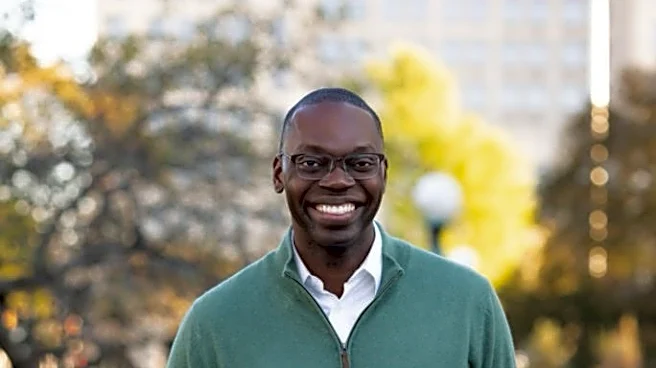
Garlin Gilchrist II
Candidate for secretary of state, Democrat
Age: 44

What is your current occupation? Please share any other work experience relevant to the role you are seeking.
Lieutenant Governor (2019 - Present)
Former roles:
- Founding Director, Center for Social Media, Responsibility, University of Michigan School of Information
- Director of Innovation & Emerging Technology, City of Detroit
- Software Engineer, Microsoft
Do you have previous political experience? If yes, please describe.
Lieutenant Governor (2019 - Present)
What do you see as the three most important responsibilities of the secretary of state, and how would you prioritize them?
1. Michigan's elections belong to Michiganders, not Washington. I will fight every attempt by Trump and MAGA Republicans to interfere with our elections, block federal overreach, and ensure every vote is counted and certified without political interference.
2. The data the SOS office has is some of the most sensitive information Michiganders have, and Trump and Big Tech want it. As America's only statewide elected software developer, I will safeguard that data from unauthorized access and breaches, while making the SOS faster and more accessible with more online services and digital driver's licenses.
3. Voters deserve to know who's buying influence before they vote, not after. I will push for campaign finance reform giving the SOS real authority to hold violators accountable and implement real-time reporting before Election Day that shows who is spending money in our elections.
What is the biggest problem facing the Michigan Department of State today? What specifically would you do to address it?
The biggest problem facing the Department of State today is the threat to our elections from Donald Trump and those who would use federal power to make it harder for Michiganders to vote and easier to overturn results they don't like. Demands for our voter data, new barriers at the ballot box, disinformation, and threats against election workers all endanger the freedoms Michigan voters have chosen to protect.
As Secretary of State, I will Stand TALL against these attacks. I will protect the privacy and integrity of our voter rolls, fight the Trump administration in court alongside the Attorney General against any demand not grounded in law, give local clerks the training and security they need, and meet disinformation head-on with clear, trusted information on how, when, and where to vote. When Michigan voters make their voices heard my job is to make sure they're counted, and I won't back down.
What is your assessment of the security and integrity of Michigan's elections? What, if anything, needs to change?
Michigan's elections are accurate and secure, and Michiganders should have confidence in that. We have paper ballots, post-election audits, and dedicated clerks and election workers across the state who administer our elections with integrity. That system has held up under intense scrutiny in recent cycles, and it worked.
That said, "secure" doesn't mean "static." The threats we face, foreign interference, meddling from the federal government, and disinformation campaigns keep evolving, and our defenses have to evolve with them. As Secretary of State, I will keep investing in cybersecurity infrastructure and support for local clerks, who are often under-resourced. I will also treat public communication as part of election security itself: being proactive and transparent with voters so bad-faith actors don't get to fill the silence with rumors. Protecting our elections isn't just about the systems behind the scenes, it's about making sure people trust what they're seeing.
Secretary of State oversees campaign finance reporting and makes campaign finance information available to the public. How would you improve transparency around money in politics?
My Stand TALL agenda, Transparency, Accountability, Limits, and a Level Playing Field, will improve our campaign finance reporting system and shine a light on the dark money in our politics. Improving transparency around money in politics means two things: getting information to voters before Election Day, and making sure they can actually find it.
First, I'll push to close loopholes that let political spending stay hidden until after an election is over. Michigan already requires many committees to file pre-election reports, but some spending still falls outside that system or surfaces too late to matter. If you put money into Michigan politics, you should have to stand behind it publicly before Michiganders cast their ballots, not after.
Second, I'll rebuild the state's campaign finance portal. The current website has faced real challenges, and as a computer engineer, I know how to fix systems like this one and get them to function.
Third, we also need to give the Secretary of State’s office real investigative authority so the office can act in real time when bad actors run afoul of Michigan’s campaign finance laws. I’m committed to creating an interagency task force between the Secretary of State and the Attorney General's office to strengthen joint enforcement protocols.
The secretary of state oversees a large state department with responsibilities ranging from elections to vehicle services and records management. What is your management philosophy?
My engineering training taught me how to build systems that work for people. As Lieutenant Governor, I've been to all 83 counties at least three times, because the best solutions come from talking directly to the people closest to a problem, not from sitting behind a desk. I'll bring that same approach to the Secretary of State's office, showing up in communities across Michigan and listening to branch staff, clerks, elections administrators, and residents about what's working and what needs fixing. That feedback will shape how my office operates: where we open new branches or add hours, how we modernize systems, and how we train and support staff. Government works best when the people running it stay grounded in what people are actually experiencing, and that's what I'll continue to do. I also believe in using technology to provide convenience for the residents and businesses of Michigan who deserve the best service, and the professionals in the department who provide it.
How would you assess the current customer experience at Michigan Secretary of State offices? What would you do differently?
The customer experience today is greatly improved from where it was eight years ago: wait times are down and online scheduling works well. But I believe there's still more work to do and we can make it an even better experience. Same-day appointments should be the norm. People juggling a busy 9-to-5 don't always know weeks in advance when they'll have a free afternoon, sometimes it's an unexpected day off, a lunch break, or a gap between meetings, and they should be able to walk into a branch and get help right then, not plan a visit around a two-week wait. I'd keep pushing services online so a branch visit becomes the exception and I'd explore digital driver's licenses for Michiganders who want that option, a modern convenience layered on top of, not replacing, the physical card.
Did Joe Biden win the 2020 election?
Yes
In 2018, Michigan voters approved no-reason absentee voting, which is very popular with our state's voters. What is your opinion of mail-in voting?
Mail-in voting works and is safe and secure. It is also incredibly popular. Since Michigan voters approved no-reason absentee voting in 2018, and expanded ballot access further through Proposal 2 in 2022, we've seen record turnout and no evidence of the fraud that critics warned about. Absentee voting lets working parents, seniors, students, and people with disabilities cast a ballot without rearranging their whole day around a polling place. Voters have made clear they want this option, and as Secretary of State I am committed to ensuring it runs smoothly, securely, and transparently every election cycle.
A measure to call a state Constitutional Convention is on this year's ballot. Do you plan to vote in favor of a con-con?
No
Are Michigan's current campaign finance disclosure laws strong enough? If not, what changes would you support?
Michigan's disclosure laws have real gaps, and my Stand TALL agenda would fix them. Political spending can be reported after voters have cast ballots, and dark-money 501(c)(4)s and 527s spend heavily while staying invisible to the public. That's not good enough. As Secretary of State, I'll push to close loopholes that let spending stay hidden until after an election is decided, require C4 and 527 groups active in Michigan elections to register with the state, and back faster disclosure so voters know who's funding the ads and mailers they see before Election Day. Another problem: our outdated campaign finance web portal. It's supposed to show Michiganders who's funding elections, but it's clunky and often fails to give clear, timely answers. When these tools don't work, transparency suffers and trust erodes. As a software engineer, I've built systems that work for the people who need them — I'll bring that same approach to fixing the portal.
How to vote
Local clerks mailed absentee ballots to Michigan voters Sept. 24. Registered voters may cast ballots early, in person, across the state from Oct. 24 to Nov. 1 ‒ check with your local clerk for your city's early voting start date, location of early voting sites and absentee ballot dropboxes. And, of course, you can vote ‒ and register to vote ‒ in person on Nov. 3, Election Day.
This article originally appeared on Detroit Free Press: Where MI SOS candidate Garlin Gilchrist stands on mail-in voting, transparency, and more