



Michigan's U.S. Senate nominees can share a stage and be civil it turns out: They just can't be on it at the same time.
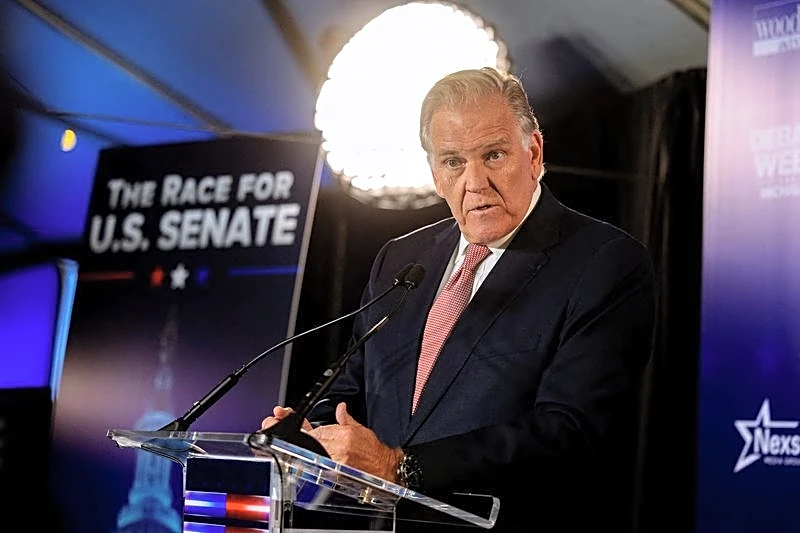
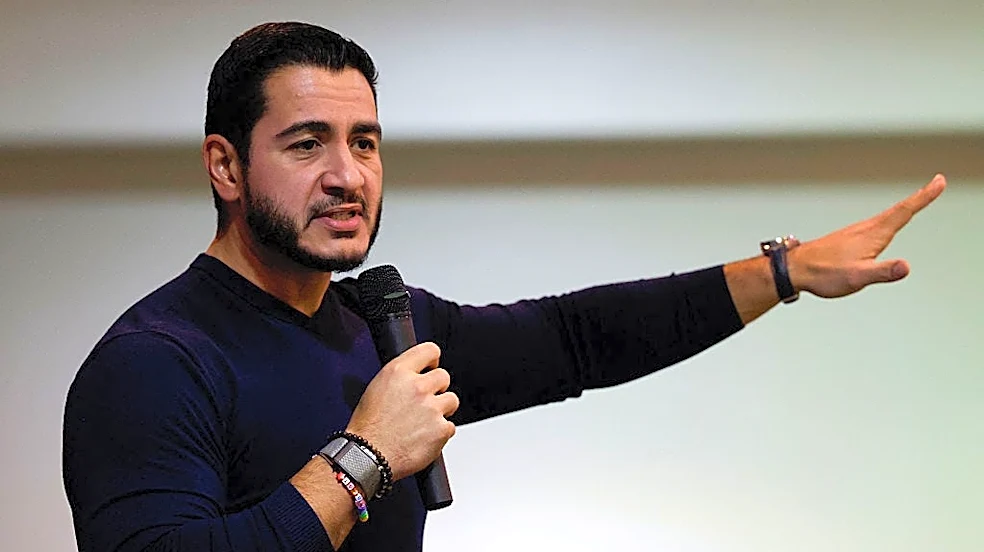
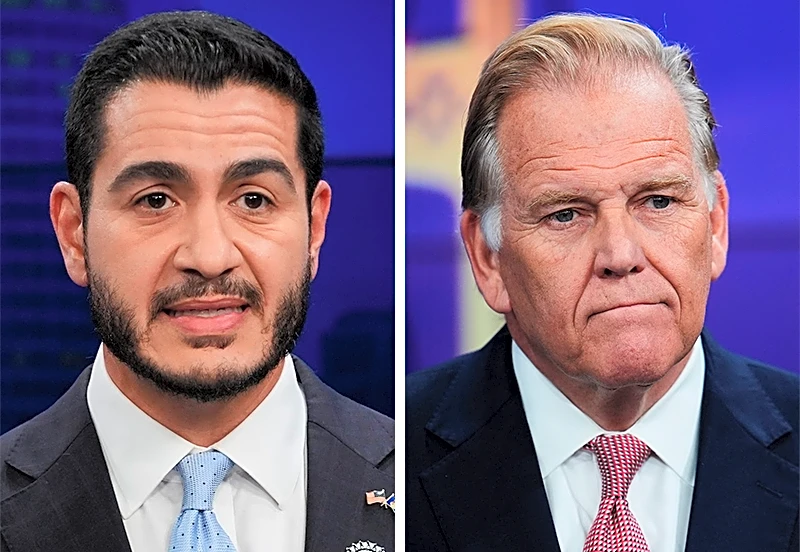
On Tuesday, Oct. 20, WDIV-TV anchor and political reporter Jason Colthorp posed a series of questions for Republican nominee Mike Rogers and then Democratic nominee Abdul El-Sayed in an hour-long forum hosted by the Detroit Economic Club at the Masonic. And unlike their first debate two weeks ago, the candidates never mentioned each other by name, shied away from any pointed personal attacks and even appeared to agree on some policy points.
Rogers and El-Sayed didn't make any news in their responses to the same set of questions asked of each by Colthorp, but with the Nov. 3 election two weeks away, we thought we'd present a snippet
of their answers to each for context.

What would you do to strengthen Michigan's economy?
ROGERS: Talked about the need to make Michigan more business friendly, keeping taxes low and addressing educational shortcomings, saying two-thirds of fourth graders in Detroit can't read at grade level. "If we don't fix this literacy problem, we're all doomed," Rogers said.
EL-SAYED: "I am a capitalist, but I do not think (the existing economic model) is an actual capitalist process." He went on to talk about how huge corporations have largely overwhelmed competition and gained political power, skewing the market forces that might otherwise reduce prices and create jobs. "I think we need to start standing up to monopolies and oligopolies," he said.
Should the U.S. impose tariffs on imports?
ROGERS: Said President Trump's tariffs helped in bringing manufacturing back to the United States, but criticized their use in some cases. "This Canadian tariff war, I don't think it's helpful to us. It's certainly not helpful to our automotive industry." But he said it's better to send someone to Washington who can negotiate with Trump on it. "Sending somebody else back that all they want to do is gouge the president's eyes out is not going to help us."
EL-SAYED: Led off by saying, "I believe in American autos." He described how his father, who was born in Egypt, came to the U.S. to build automobiles with internal combustion engines and that he thinks the U.S. should lead in making those vehicles, but at the same time not "cede the global EV (electric vehicle) market." Tariffs, he added, must be a part of that — as should be subsidies — but tariffs must be applied carefully. "I’m not against tariffs, per se, I’m just not about dumb tariffs," he said.
How do you produce more qualified workers and get them jobs?
ROGERS: Went back to education as a significant factor, saying many employers find prospective employees can't do fractions. "We have a huge education problem we have to fix... In eight grade here in Detroit only 15% (of students) can read at the grade level and only 12% can do math at the 8th grade level." He also spoke about making shop class accessible at every high school so students can learn trades and get jobs that "China cannot steal and ... AI (artificial intelligence) can't replace."
EL-SAYED: Like Rogers, said there is a skills issue that needs to be address. "We do have a literacy crisis," he said. He also said steps must be taken to make paying for higher education far more affordable and address other quality of life issues, like having better schools and more affordable housing stock, to bring people into the state.
What's the biggest change you'd make to health care?
ROGERS: Increase cost transparency. "You need to know what they're charging when you show up. I think transparency is the No. 1 thing you can do to (bring down prices)." He also criticized a government-run single-payer health plan, such as the one El-Sayed has proposed, as driving up costs overall or resulting in a loss of health care options. "This is a huge problem if we do this because people haven't thought about the consequences."
EL-SAYED: Touted his support for a government-run program, or so-called Medicare-for-All system, saying it not only would take the worry about health care away from families, it would remove a huge hurdle from entrepreneurs from opening small businesses, increasing competition. He also argued that claims that it would drive up taxes to pay for such a system ignore that the private costs people and businesses pay for health care amounts to a tax as well. He acknowledged that Medicare-for-All will require political changes beyond this election, however. "We are going to have to have control of Congress and the White House, but you build that by having a broader conversation with the public about what it is that it wants."
How should government oversee artificial intelligence?
ROGERS: "We definitely need guardrails on AI," he said. He said a national security framework has been proposed that he will look over more closely, but also supports a "narrowly crafted exemption" to antitrust provisions that would allow AI companies to share information and cooperate on safety issues.
EL-SAYED: Also called for guardrails, though he advocated for a system whereby government took an even more active role in regulating and overseeing AI developers, including by making them "public interest corporations" and installing elected officials or their appointees in positions to help govern them directly. He likened the AI push to opening "Pandora's box and we have no idea what's going to happen... We're all racing to this... We can go a little bit more slowly."
How would you help Michiganders raise their income?
ROGERS: Said policies need to be put in place to bring manufacturing jobs back to Michigan, looking at areas of potential growth such as building submarine parts or smaller Naval vessels. "Welders are now making over $100 grand a year not too many years out of school... Those are real jobs. I'm going to get Michigan back in the defense industrial base work." Asked if he'd work with a Democratic governor to do that, he said, "I don't care who it is honestly."
EL-SAYED: Directly praised labor unions, saying he'd support laws to make it easier for unions to organize. Meanwhile, he also talked about cutting payroll taxes for businesses as a way to help small business grow.
How would you change tax policy and also address national debt?
ROGERS: Said he'd use technology to go after some $500 billion in government fraud, as well as lower tax rates for businesses and try to provide "certainty" that rates won't bounce up and down with different administrations and congresses. He also said utility rates must be addressed and Democrats' climate change legislation would force costs even higher.
EL-SAYED: Criticized Republicans for cutting taxes for wealthier Americans and going "to wars we don't need to fight." He argued that billionaires should be taxed more than they are, and that money be used not just to draw down the debt but help fund better schools, health care and child care as a way to help people go to work.
How would you address housing affordability?
ROGERS: Said for too long in Detroit, officials have prided themselves for how many houses have been torn down and there are now 122,000 vacant lots in the city. "Let's stop that, let's start talking about how many houses we build." He spoke about a revitalized land bank and tax and regulatory breaks for developers to make sure new homes can be built for a cost people can afford.
EL-SAYED: Also called for more housing to be built and restrictions on short-term rentals that private equity can purchase as businesses, driving up housing prices for others. Also said there's "way too much regulation around building housing projects" and that zoning and licensing issues need to be addressed to make it easier to build. Called for down payment assistance programs for first-time buyers.
In closing....
ROGERS: "There are two very different visions… They (Democrats) are talking about big government, government control."
EL-SAYED: "I'm a capitalist... but we’ve got to ask whether capitalism is working for everybody... The old ideas have not been working."
Contact Todd Spangler: tspangler@freepress.com. Follow him on Twitter @tsspangler.
This article originally appeared on Detroit Free Press: Tariffs, AI, health care: El-Sayed and Rogers field questions in Detroit