
The Detroit Lions set out to get younger on their offensive line when free agency opened in March, and Dan Campbell warned everyone that approach might spill over to the rest of the roster at the end of spring.
Campbell closed Lions minicamp in June by noting there’d “be a learning curve for some guys’ development and how fast they can go.” But, he said at the time, “We’re not going to let anybody hold us hostage.”
The Lions weren’t slaves to experience or familiarity when it came to setting their initial 53-man roster on Sunday, Aug. 30.

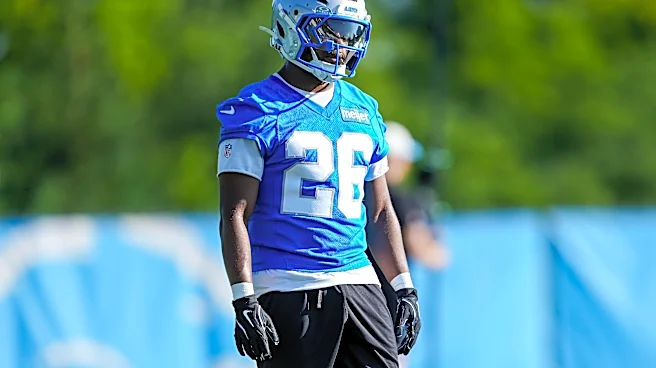
They kept a young tight end who showed promise all summer (Jackson Meeks) over a more veteran one who missed the start of training camp (Tyler Conklin).
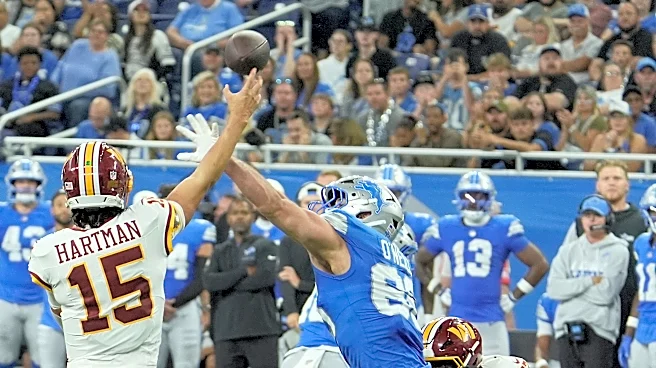
They kept a young, undrafted defensive lineman in Eric O’Neill
who made plays rushing the passer and on special teams over a late-round draft pick in Tyre West.
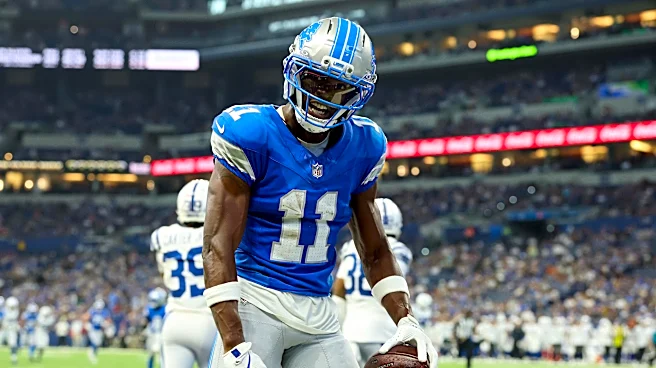
And they let the free-agent receiver who had ties to their new offensive coordinator (Greg Dortch) walk and kept a UFL refugee who excelled on special teams (Tay Martin) instead.
I don’t know if the Lions have the roster to make a run at a Super Bowl, but I know they fashion themselves as Super Bowl contenders, and not all teams who do are willing to roll the dice on the unknown.
Meeks will open the season as the Lions’ No. 3 tight end, which means he’ll have a role on offense and special teams. Martin should start at one gunner spot, and with only four receivers on the roster, he could see time on offense, too (though it seems likely the Lions bring back one or more of the receivers they let go: Dortch, Tom Kennedy or Lucky Jackson). And I wouldn’t expect much from O’Neill out of the gate, but he deserved to be rewarded for his impressive camp, and if he can contribute as a designated pass rusher and on special teams, the Lions don’t need much more.
Campbell said in June the Lions had “a lot of open battles” for roster spots and they were going to give young players with room to grow an opportunity to win jobs.
All three of the young players and others they kept – Skyler Gill-Howard, Jacob Saylors, Ahmed Hassanein – did that, and the Lions were true to Campbell’s word.
Here are five more thoughts on the Lions’ initial 53-man roster:
Finally, 53
It was a running joke of sorts that the Lions kept fewer than 53 players on their initial roster the past two years – they kept 50 last year! – but there was no fuzzy math going on Sunday.
General manager Brad Holmes filled all 53 of his roster spots and only used one slot on injured reserve.

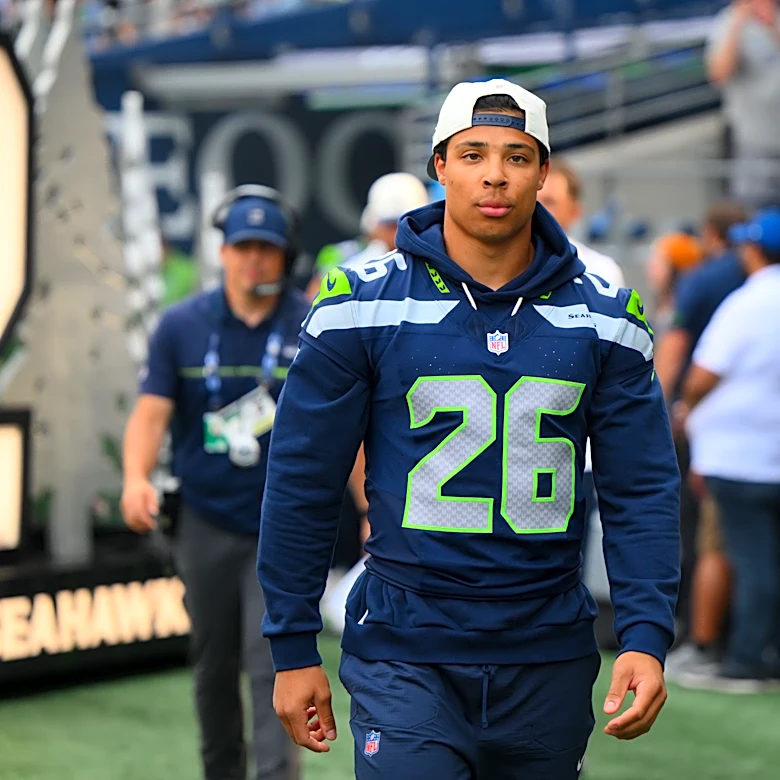
The Lions kept five running backs – Saylors, Jabari Small and Sione Vaki all made it as backups to Jahmyr Gibbs and extra insurance for the injured Isiah Pacheco. And they kept Jimmy Rolder as their sixth linebacker rather than start him on IR and have a more veteran option like Joe Bachie fill the role.
We’ll see how long it takes Rolder to get to the point where he can contribute on defense after missing so much time, but the fact that he’s active means he could be back to practice before the opener Sept. 13 against the New Orleans Saints and maybe playing on special teams.
The Lions still could use the waiver wire to address their lingering needs in the secondary and on the offensive line, and if they do, somebody who made the 53-man roster today won’t be on it tomorrow.
More on O’Neill
There aren’t many better underdog stories than O’Neill, who played his first three college seasons at Long Island – he played in just three games as a true freshman - and spent one year at James Madison before finishing at Rutgers.
O’Neill signed for a $10,000 bonus and $50,000 base salary guarantee as an undrafted rookie – a guarantee that meant he was a long shot to even make the practice squad – but proved to be one of the Lions’ most relentless pass rushers in camp. He had a big hit on Joe Burrow in the preseason opener and was a regular in the backfield the past two weeks.
“He’s a guy that makes plays every day,” Campbell said earlier this month. “He’s pretty sneaky. He's crafty. A little bit of him is, what is he? And we're still trying to answer that a little bit, man. Where does he really fit? What really suits him? It's not stack backer, but yet can it be on the line, kind of an OLB or is it D-end, like a rush D-end? I know this: He's smart, he plays hard, he's pretty crafty. He's got some tools in his toolbox as a rusher, and he just kind of makes plays every day. So, he's another guy, it's hard to ignore him.”
Certainly, the Lions didn’t ignore his strengths on the field.
Center of attention
It’s possible the Lions kept some of their young players out of fear they’d lose them on waivers, something Campbell acknowledged this summer was part of the roster-setting process.
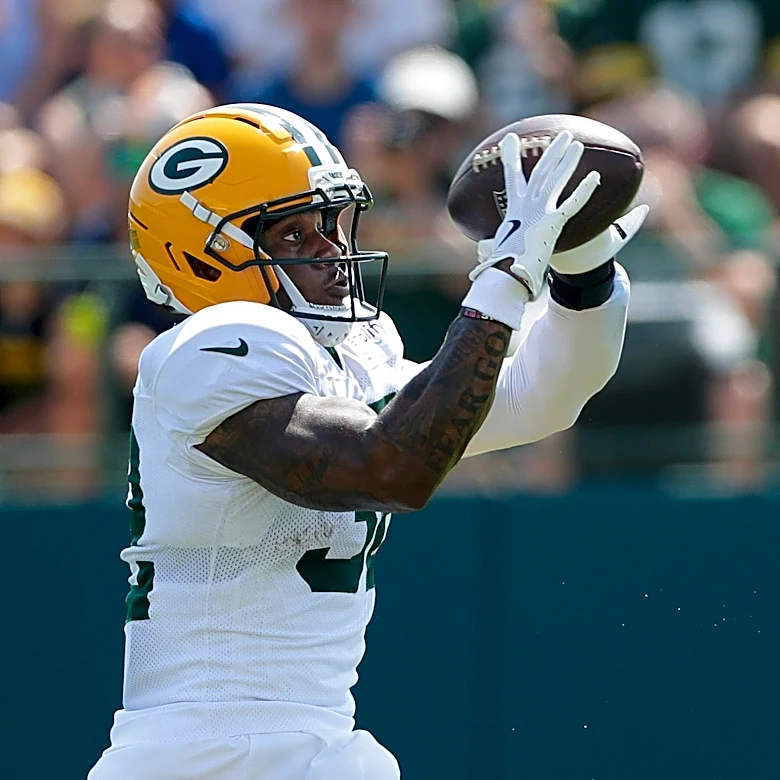
NFL teams made 15 trades Sunday, and it’s notable that two were for tight ends – the Green Bay Packers acquired Mark Redman from the Los Angeles Rams and the Jacksonville Jaguars acquired Hunter Long from the Arizona Cardinals – and three involved centers.

The Lions not only kept their young tight end in Meeks, but also a developmental center in Seth McLaughlin, who missed the Colts game.
Presumably, McLaughlin will serve as the Lions' backup center while Cade Mays is on IR with a wrist injury, but it’s possible he or Meeks would have been claimed off waivers had they not made the 53-man roster. It's also worth noting that the Lions likely would have had to waive McLaughlin with an injury designation had they cut him Sunday.
Similar to McLaughlin, Small left the Colts game with an injury and might have needed to be waived with a designation had the Lions not kept him on the 53-man roster. Teams cannot re-sign players they waive with an injury designation until three weeks after their injury settlement is finished.
Biggest surprise
The move that surprised me most? The Lions’ decision to cut Dortch.
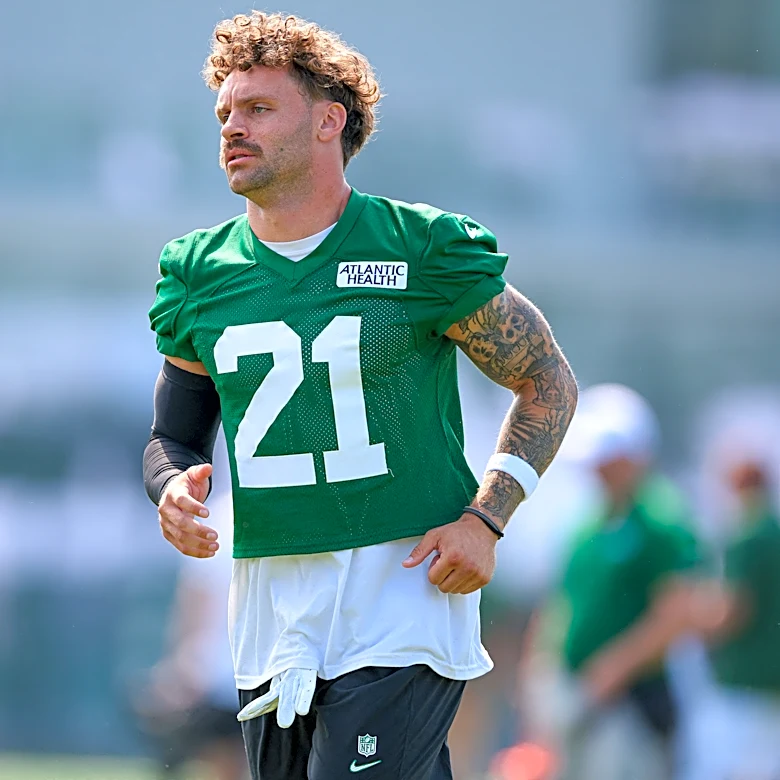
I had Dortch penciled in as the Lions’ punt returner and No. 4 receiver, and I guess it’s possible he still returns in those roles – unlike McLaughlin and Meeks, vested veterans like Dortch, Conklin and Kennedy are not subject to waivers and free to re-sign with the Lions or any other team – but I still didn’t see that one coming.
Dortch doesn't add a ton on offense outside of being a gadget player because of his size, but he's one of the NFL’s better punt returners, and he repped pretty consistently with the second-team offense. With only four receivers on the roster, the Lions aren't done maneuvering at the position.
Biggest weakness
The secondary is still my biggest concern with the Lions roster. Kerby Joseph and Brian Branch will miss at least the first four weeks of the season on the physically unable to perform list, and I don’t see a lot of playmakers in the defensive backfield in general.
I was mildly surprised the Lions cut Nick Whiteside given their numbers at the position, though some of his limitations in coverage were apparent in the second half of camp.
The Lions will open the season with a starting secondary of D.J. Reed and Rock Ya-Sin at cornerback, Chuck Clark and Avonte Maddox at safety, and either Roger McCreary or rookie Keith Abney in the slot. They better hope their pass rush delivers because that's not a group that's going to scare a whole lot of offensive coordinators.
Perhaps the Lions can add some depth on the waiver wire. If not, the NFL trade deadline is still two months away.
Dave Birkett covers the Lions for the Detroit Free Press. Contact him at dbirkett@freepress.com. Follow him on Bluesky, X and Instagram at @davebirkett.
For openers: Saints
Matchup: Lions (9-8 in 2025) vs. New Orleans (6-11); 2026 season opener.
Kickoff: 1 p.m. Sunday, Sept. 13; Ford Field, Detroit.
TV/radio: Fox; WXYT-FM (97.1).
This article originally appeared on Detroit Free Press: Detroit Lions' 53-man roster analysis: Feel-good story makes the cut