



EAST LANSING – Joe Rossi balked at giving an update on injured Michigan State football linebacker Brady Pretzlaff.
Not even when the Big Ten-mandated availability report would be coming out a few hours later Wednesday, Sept. 23, for the first time this season for the Spartans.
That’s simply the culture of secrecy in which football coaches operate when it comes to injuries, schematics, methodology – and especially with each other, fearing espionage from their opponents.
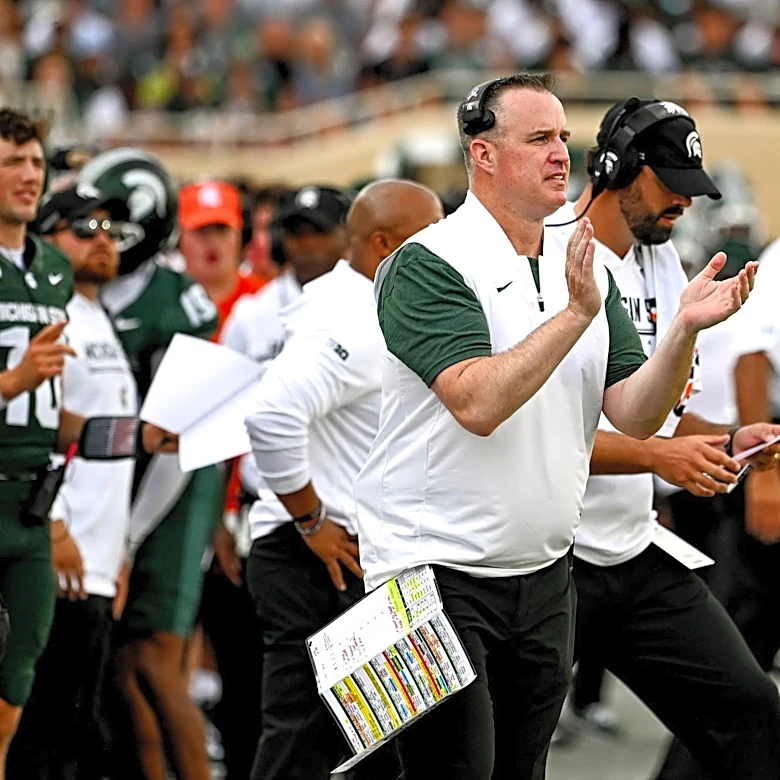
“I don’t trust any of the opposing coaches, just so you know,” MSU’s defensive coordinator Rossi said Wednesday afternoon. “They’re gonna say, ‘Oh, this guy’s questionable.’ I’m saying they’re playing unless it says on (the report) out. And then we’ll see how this thing goes and
how truthful people are. And if they’re not, are they being held accountable for not being truthful?
“Again, that’s all stuff I’m not worried about. So if it says questionable, we’re preparing to play them. If it says out, then that’s where we can say, hey, we’re probably not gonna see the guy.”
When the Big Ten did reveal the first of four availability reports that will lead into Saturday’s conference opener between the Spartans (2-1) and Nebraska (3-0), Prezlaff was listed as out for the 5 p.m. kickoff at Spartan Stadium (BTN).
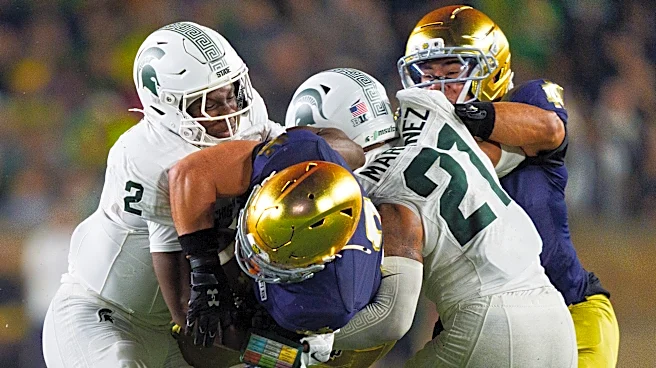
Fullback Jay Coyne also is listed as out, while defensive end Cal Thrush, cornerback Tyran Chappell and wide receiver KK Smith all were listed as questionable. Pretzlaff, Coyne and Thrush all left Saturday’s 27-10 loss at No. 3 Notre Dame with injuries.
In 2023 – announced alongside its partnership with U.S. Integrity to thwart gambling issues – the Big Ten began requiring its teams to submit an availability report two hours before kickoff of every game. Going into this season, the conference changed its policy to eliminate the requirement for nonconference games but beefed up its mandatory reporting for teams during the week they were going to play another in-league opponent.
Schools now submit their first report by 8 p.m. ET three days before the schedule game, update it again two days and one day out, and then post a final report two hours before kickoff on game day. The three midweek updates have status designations of probable, questionable, doubtful, out or out (first half). On game days, the statuses change to game-time decision, out or out (first half). Any player not on the report is considered available for their team.
That injury information is monitored – much like everything – by rival coaches and staff members, along with any other source of potential intel on social media, in the news and opponent interviews.
“Honestly, we don’t overthink it,” Rossi said. “As an assistant coach, whatever is on the report is fine. I know who’s playing, I know who’s not, I know who’s questionable. The sheet’s gonna come out, people can see it – it is what it is.
“Now, what are the conversations with this guy? What are the conversations with the coach? What are the conversations with the trainers? That’s above my pay grade. I’m just, hey, who do we have, who are we not sure we’re gonna have, and put together a plan to go win a game.”
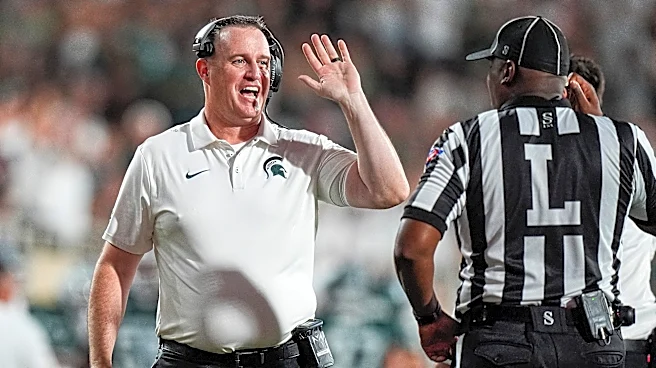
Coach Pat Fitzgerald, during his Monday press conference, was asked about Pretzlaff’s status heading into Saturday’s game with the Cornhuskers. He simply pointed ahead to Wednesday night’s availability report reveal, which came moments after his weekly radio show signed off the air.
“Stay tuned,” he said Monday.
But the veil of secrecy and concern about spying goes well beyond that, particularly for an MSU program that knows first-hand about the lengths to which an opponent will go to try and get a competitive advantage.

Former Michigan staffer Connor Stalions was in disguise on the Spartan Stadium sideline with Central Michigan’s team during its game against MSU in 2023. The Spartans under then-interim coach Harlon Barnett did not learn about it until the week of their game with the Wolverines, and the news of Stalions’ secretly orchestrated scheme and its potential benefits for U-M and CMU sent massive reverberations around the entire college football world that ultimately led to the sport instituting in-helmet communications that the NFL already had been using.
Rossi said those headset comms typically helps offenses more than defenses, but teams still rely on signaling in calls and using ways to deceive those trying to decipher them. And with the explosion of players transferring to other Big Ten schools through the portal, coaches are even more cognizant of keeping their plans closer to the vest. MSU, for example, has Nebraska transfer running back/kick returner Kenneth Williams on its roster, while the Huskers have former Spartan defensive end Anthony Jones Jr., who played 12 games for Rossi in 2024.
“I think the big thing is you just gotta be good with your signals, and you gotta change them every year, which we do. You gotta have multiple signalers, you gotta have multiple people and multiple ways to get calls in, which we do,” said Rossi, who was defensive coordinator at Minnesota while the Stalions/U-M situation was unfolding. “I think that’s what you gotta be able to do. The reality is everyone’s having people change teams, so it isn’t like there’s one team that’s at a disadvantage and another that it’s an advantage.
“You just gotta be careful with your signals and all those things and terminology and kind of be able to recycle. Back in the day, you could maybe keep the same signals for 20 years. But you can’t do that now.”
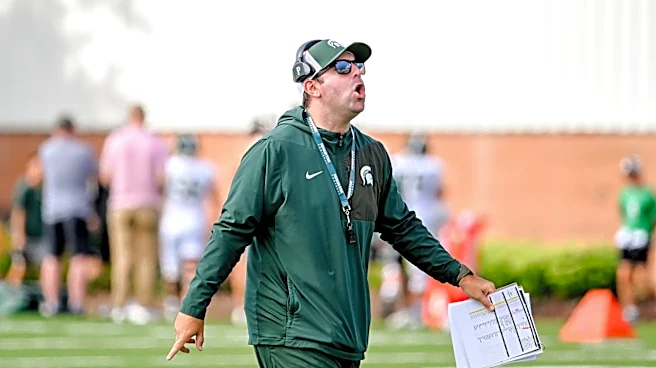
That also trickles down to terminology. Offensive coordinator Nick Sheridan on Tuesday declined to reveal the name of the role offensive lineman Antonio Johnson is playing as an extra tight end in certain sets, and he also would not get into many details about how he deploys backup quarterback Cam Fancher.
“In this setting, I try to be as forthcoming as possible. But I also would imagine our opponents are watching the press conferences of the staff each week,” Sheridan said. “We try to give you guys as much information as we can. But we’re also trying to protect our football (team) and not give the opponent any competitive advantage. …
“Anything that you can gather from anything – you’re always trying to look for information. Knowledge is power.”

Fitzgerald also was asked about how MSU has tried to use Fancher. His attention immediately went elsewhere – the cameras in the back of the room. He was cognizant of them after a few other questions while redirecting his answers away from specificity.
With almost every major program in the country now either broadcasting, streaming or posting full videos of weekly press conferences, Sheridan said there is far more ways for opposing coaches to scout a team away from traditional game film than back when he was playing at Michigan from 2006-09 in the infancy of social media and platforms such as YouTube.
“There’s just more access to information, and a lot of different outlets to gather information,” he said. “I think this is great. This is what’s great about college football. It tells stories of young people, which is awesome. … But we’re also trying to have a competitive advantage in the game.”
Contact Chris Solari: csolari@freepress.com. Follow him @chrissolari.
Subscribe to the "Spartan Speak" podcast for new episodes on Apple Podcasts, Spotify or anywhere you listen to podcasts.
This article originally appeared on Detroit Free Press: Michigan State football handles strategy talk with near CIA intensity