


The National Highway Traffic Safety Administration has escalated one of its investigations into General Motors vehicles for engine failure risks to include newer model years amid continuous consumer complaints.
The federal agency said Aug. 21 that the new probe expands one of two existing recall investigations for the L87 6.2 liter V8 engines that NHTSA first began investigating in January 2025.
The issue stems from manufacturing defects to a vehicle’s connecting rod and crankshaft engine component, which GM attributed to multiple supplier manufacturing and quality issues. Drivers could experience “loss of motive power due to engine failure” as a result.

“The safety and satisfaction of our customers are the highest priorities for the entire GM
team, and we continue to cooperate with NHTSA’s evaluation of this matter,” GM spokesman Bill Grotz said in a statement emailed to the Detroit Free Press on Aug. 21.
NHTSA eyes two additional model years
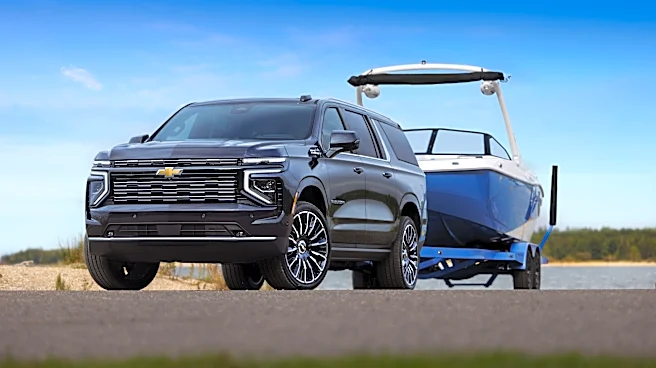
Vehicles equipped with the impacted engines include the Chevrolet Silverado 1500, Chevrolet Tahoe, Chevrolet Suburban and GMC Sierra 1500, GMC Yukon and GMC Yukon XL, Cadillac Escalade and Cadillac Escalade ESV.
NHTSA’s initial investigation looked into 877,710 GM vehicles over reports of engine failures involving vehicles with the V8 engine. After its own investigations, GM voluntarily recalled 597,630 U.S. vehicles from model years 2021 through 2024 equipped with the engine on April 24, 2025, in the United States. GM recalled approximately 721,000 vehicles globally, which includes the U.S. figures.
In October of that year, NHTSA opened an engineering analysis to investigate the success of the recall. The new engineering analysis covered 286,000 vehicles that were part of NHTSA’s original investigation but weren’t covered under a voluntary recall that GM issued earlier that year.
NHTSA’s Office of Defects Investigation opened another recall investigation into the engine fixes on Jan. 16, 2026.
The new Aug. 21, 2026, probe adds 2025 and 2026 model years, ballooning the potentially impacted to a total of 997,743 vehicles in the United States.
GM has not changed its recall, which still stands at 597,630 U.S. vehicles from model years 2021 to 2024.
What to do if your car is impacted
As part of GM’s recall remedy, impacted customers were required to bring their vehicles to franchised GM dealerships for an engine inspection.
If the engine passed muster, the vehicle would receive a higher viscosity oil, which also requires a new oil fill cap and an oil filter replacement. But if the engines failed the diagnostic test, dealerships replaced the entire engine.
Pass or fail, GM implemented a special coverage program for all impacted vehicles that protected the engines in case the engines that passed the test were to fail later. That coverage remains in effect for 10 years from the date the vehicle was originally placed in service or after reaching 150,000 miles.
Despite the two possible fixes, NHTSA has received 499 complaints alleging post-remedy engine failures in those recalls. Of those complaints, 473 customers claimed they received an oil viscosity change and another 26 a complete engine replacement.
On top of that, a further 191 complaints were submitted of L87 engine failures in engines produced after the production period cited in the recall, NHTSA said.
The agency added that GM reported receiving 6,953 complaints of post-remedy engine failure.
Jackie Charniga covers General Motors for the Free Press. Reach her at jcharniga@freepress.com.
This article originally appeared on Detroit Free Press: NHTSA expands GM engine recall to include more model years