

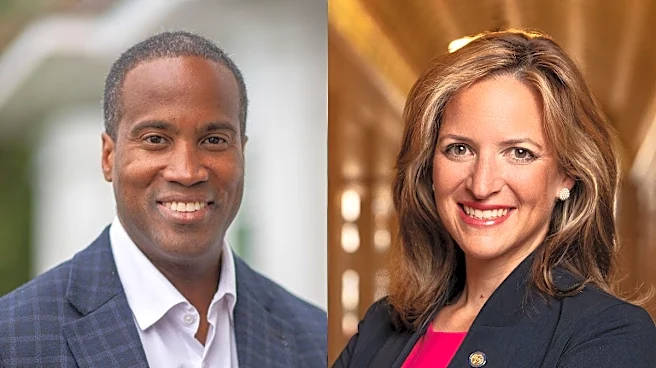
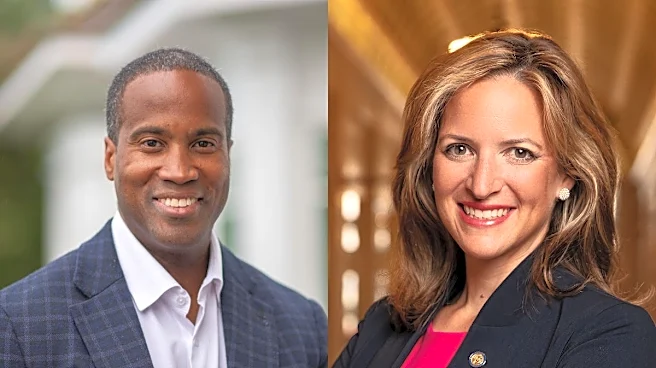
John James doesn't hold the partisan loyalties of most people who look like him. But on the campaign trail, he emphasizes a shared journey, tracing his family's roots from slavery, sharecropping and Jim Crow segregation to Michigan in search of a better life.
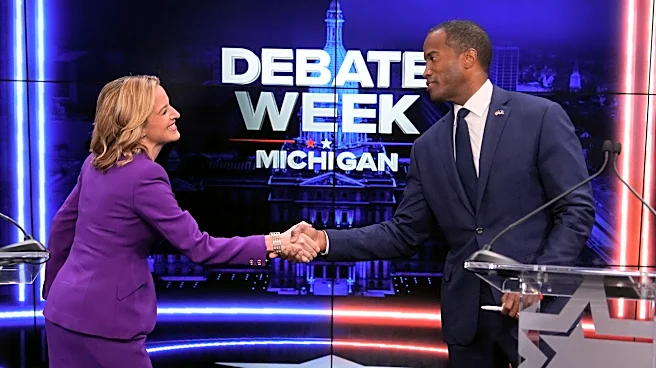
If voters back the Republican congressman over his Democratic rival, Michigan Secretary of State Jocelyn Benson, James will become the state's first Black governor.
But he would likely reach that historic milestone without most Black voters.
While voters in other states have elected Black governors, they have all been Democrats. As a Black Republican, James is a political minority within a racial minority.
For most Black voters, the Republican Party has not been their political home since the Civil
Rights Movement solidified their shift to the Democratic Party. James has argued for Black political realignment, though Black voters have largely opposed his past statewide bids for U.S. Senate in 2018 and 2020. Six years ago in his run against Democratic U.S. Sen. Gary Peters of Bloomfield Township, James received 5% of the vote in Detroit, one of the nation's largest majority-Black cities.

But James has suggested that Republicans have something to offer Black voters.
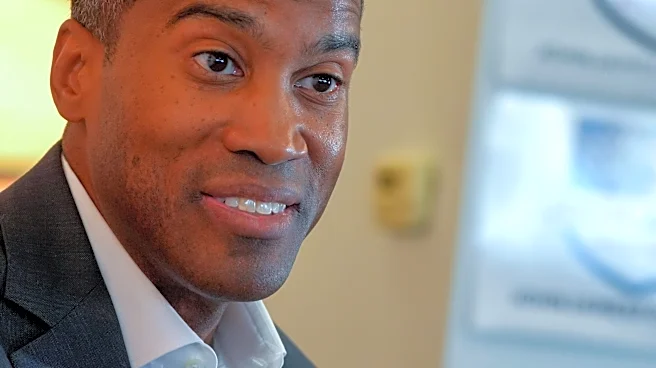
"I'm humbled because I recognize that I did not get here exclusively on my own," he said in a September interview at his campaign office in Sterling Heights, reflecting on the historic potential of his candidacy. James said he celebrates Black history and those who marched before he ran, but is focused on "Black futures."
"I feel like I have a duty now to honor their sacrifices by making sure that I serve everyone and I do truly believe that good, strong, positive conservative leadership will disproportionately benefit those who have been discarded, disrespected and disregarded for the longest period of time," he said.
State Sen. and Michigan GOP Chair Jim Runestad, R-White Lake, celebrated James as a strong candidate with an impressive business and military background Republicans would be proud to see elected. If James becomes Michigan's first Black governor, it would challenge "the narrative that I hear from within the media castigating Republicans as racist and all this nonsense," Runestad said.
James, who lives in Shelby Township, currently represents suburbs in Macomb and Oakland counties. But he has returned to the Motor City — his hometown and a Democratic stronghold where he received 1,518 votes in the primary compared to Benson's 87,873 votes — for his latest campaign pitch. He visited a home on the city's west side where he said contaminated dirt sits on a vacant lot next door. He stopped by the city's east side after a tornado touched down in early September and left many without power. He appeared on stage with Detroit rapper 42 Dugg at a summer concert at The Aretha Franklin Ampitheatre. The pair later drove around the city together and talked about James' Detroit upbringing and vision if elected.
James is courting Detroit votes now but he once applauded the Republicans who scrutinized them. During his last statewide run for U.S. Senate in 2020, James celebrated GOP election officials' initial refusal to certify the election results in Wayne County, alleging problems with the count in Detroit.
"That same Black community that you're now asking to come out and vote for you to be the first Black governor?" Detroit Branch NAACP Executive Director Kamilia Landrum said of James, adding: "I think if anything, it continues to just show the very transactional nature of his view on Black Detroiters."
Former Detroit Police Chief James Craig, a Republican who campaigned for governor in 2022 but was knocked off the ballot, said during his run, he was advised by "state party fathers" (whom he declined to name) that he shouldn’t campaign in Detroit and other places that don’t typically vote for Republicans. "I just thought it was flawed thinking," he said.
But Bishop Corletta Vaughn, the vice president of Detroit Public Schools Community District School Board and the senior pastor at Holy Ghost Cathedral in Detroit, doesn't see James successfully wooing Black voters in the city.
"He's not going to pull Detroit at all," she said. "Because what he stands for is not what we are looking for, even though yes, he could be Black — could be the first Black governor," she said. "But that's not enough to pull us."
Over the years, James has echoed other Republicans who point to predominantly Black cities to argue Democrats have failed them. State Rep. Tyrone Carter, D-Detroit, said it's an empty appeal. "It's like being an absentee father," he said. "You can show up on Easter with a suit. That doesn't mean s--- for the other 364 days."
Nationally prominent Black Republican faces bitter GOP contest
For years, James has been a prominent Black voice within the Republican Party.
During a speech at the 2024 Republican National Convention, he took a dig at the campaign promise former President Barack Obama ran on in 2008 to become the United States' first Black president.
"Black people were sold on hope," he said. But James saw Republicans on the precipice of a major shift in Black voter preferences. "You know, I heard a little bit earlier today, if you don't vote Donald Trump, you ain’t Black," he said to laughter.
The night following his speech, James told the Detroit Free Press, "…Democrats have neglected the Black vote, but Republicans haven't even tried, and right now what I see — particularly at this convention — is Republicans making the effort, and I think that's good."
Between his 2020 and 2024 victories, Trump saw his support among Black voters almost double, according to a Pew Research Center survey, though most Black voters still overwhelmingly backed his Democratic opponent Vice President Kamala Harris. But now, those gains seem to have eroded for Republicans, Pew found.
James faced attacks on race in primary
James sailed through the Republican gubernatorial primary with a 15-point win.
During his primary victory night speech, James described the historic potential of his candidacy as the latest chapter in a story of Black triumph, calling himself "the nominee from the party of Abraham Lincoln 90 days away from becoming Michigan’s first Black governor."
But his win capped what James characterized as a "racially charged" primary. One GOP opponent, businessman Perry Johnson, called the congressman "The DEI Candidate!" in one ad, using the acronym for Diversity, Equity and Inclusion, a framework for tackling inequities that has come under fire by Republicans and the Trump administration.
Johnson denied that it was a racist dog whistle, claiming he only intended to reference that James' family Detroit-based logistics company – James Group – won DEI awards.
Johnson also accused James of "using the race card" after James made a quip about his opponent's age when Johnson criticized him for accepting money from corporate donors. "Perry, I know when you were born, Black people could still be bought and sold in this country," James said during a July debate on WOOD-TV. "But no one owns me."
"There is no question that Perry Johnson ran a racist campaign against John James," said Jimmy Greene, a Saginaw businessman and former Republican who once fundraised for James.
But James called his primary win "an indication that Republicans are rejecting the politics of bile and divisiveness."
'I understand what it's like to be a Black man in this country'
After fending off the attacks on his race from within his own party, James says his racial identity gives him distinct insight as he tries to reach across partisan lines to beat a Democrat.
James, during the September interview said: "I understand what it's like to be a Black man in this country. Better, certainly, than my opponent."
To improve life for Black Michiganders, James said his goal is to expand access to opportunity, zeroing in on education and entrepreneurship.

James has long promoted expanding access to non-public schools. As governor, he would opt Michigan into a federal education tax credit that could be used to pay private school tuition, tutoring, after-school programs and more.
James said he also wants to tackle barriers to starting and growing a business by expanding access to capital through community banking and axing regulations deemed burdensome; moves he said that would boost Black-owned businesses but also benefit everyone.
For her part, Benson, who is White, has campaigned as a civil rights advocate, highlighting her work investigating hate groups as an intern for the Southern Poverty Law Center, research she undertook as a student on White supremacists and a clerkship with federal Judge and civil rights legend Damon Keith. (James has criticized Benson’s work with the SPLC, noting a federal indictment alleging the organization secretly directed donations to the Ku Klux Klan via confidential informants and other violent extremist groups. The SPLC has denied the charges.)
"We know where Jocelyn Benson stands," Benson's Deputy Campaign Manager Alyssa Bradley said in a statement. "She has dedicated her career to advancing civil rights and opportunities for Michiganders. We'll make sure James is a three-time loser come November."
James not first Black Republican nominee for governor
William Webb Ferguson, elected in 1892, was the first Black legislator elected in Michigan. He was a Republican. In Michigan, Black voters formed a prominent part of the coalition that helped elect Democratic Gov. G. Mennen "Soapy" Williams in 1948, who was White and ran on a pro-labor and civil rights platform. The number of Black lawmakers in Lansing — all Democrats — surged during his tenure.
The 137 Black state lawmakers who have served in Lansing include only five Republicans, according to a Detroit Free Press review of the Michigan Legislative Biography Database.
When it comes to governor, Michigan Democrats have never nominated a Black candidate but James is the second Black Republican to receive his party's nomination. In the 1986 election won by Democratic Gov. Jim Blanchard, Republicans chose as their nominee former Wayne County sheriff and executive William Lucas, after he left the Democratic Party.
James has blazed a campaign trail that runs through Detroit, in the hopes of succeeding where his GOP predecessor failed.
In his recent ride along in the city with 42 Dugg, captured in videos shared on Instagram, James pitched himself to the Detroit rapper as a politician who cares more about the city than its longtime leaders. "The fact of the matter is that Democrats have been running the area that you've been living in for sixty years and nothing has changed, and in fact, many people say it's getting worse," he said in the video. The rapper has since removed the post from his account after the video drew negative comments online, but James still has footage of the ride on his social media. 42 Dugg did not respond to a message on Instagram seeking comment.
Trump backs James

In an election year many describe as a referendum on Trump, James may face the same headwinds confronting Republicans everywhere, but as a Black Republican, James could contend with another elephant in the room.
Greene, the former James fundraiser, said the president has a troubling record on race, one that James should take head on. "I don't think that's an unfair expectation that he speaks out on it," said Greene, who is Black, and said he left the Republican Party, in part, because of Trump.
Asked if he thinks Trump has ever said or done anything racist, James noted his past condemnation of the president’s 2018 comments referring to Haiti and African nations as "s---hole countries."
"But his statements are his own, and mine are mine," James said of Trump.
If James wins, he wouldn't just be Michigan's first Black governor. No Trump-endorsed candidate — Black or White — has ever won statewide.
Contact Clara Hendrickson at chendrickson@freepress.com or 313-296-5743.
This article originally appeared on Detroit Free Press: John James, a Republican, could become Michigan's first Black governor