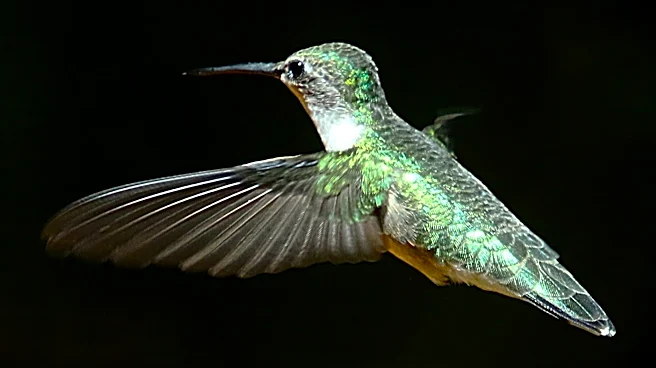








Most of Michigan's hummingbirds have already departed on their flights south for the winter, but don't put your feeders away yet, as some stragglers may still need a boost of energy before leaving.
As you're providing nectar to sustain Michigan's ruby-throated hummingbirds on their journey southward, regular feeder and nectar maintenance are key to protecting the birds' health, said Elliot Nelson, an educator with Michigan Sea Grant Extension and Michigan State University Extension.
"It is one of the tiniest organisms, the tiniest birds in the world we have right here, and it flies all the way from Michigan to Central and South America every year on its own power. That's a feat that I think is worth taking some time to reflect on and be moved
by this incredible little creature," Nelson said.
Nelson also encouraged people to turn off outdoor lights at night that can interfere with migrating birds, use fewer herbicides on your property, keep pet cats indoors and plant native plants in your yard to support seasonal hummingbird migration.
Looking for hummingbird feeders? Shop here
Here's what to know as hummingbirds head south from Michigan.
Have hummingbirds left Michigan yet?
Most hummingbirds have left Michigan on their annual fall migration south, but some linger, Nelson said.
Most ruby-throated hummingbirds from Michigan have flown as far south as Tennessee by now, though southern Michigan communities may continue to observe the birds in early October, he said. The hummingbirds will reach the area around the Gulf of Mexico and further south by late October as they head to their wintering spots in Latin America.
How can you give hummingbirds a proper sendoff?
Consider keeping your hummingbird feeders out later into fall, as birds running behind schedule may continue to fly over the state into November, particularly in the southern part of Michigan, Nelson said.
When is fall hummingbird migration season?
Hummingbirds typically migrate south between August and October in North America, EarthSky says. Hummingbird Central says male hummingbirds begin migrating in mid-July, followed by females and later by young hummingbirds.
Their migration is prompted by changing daylight, cooler weather and fewer flowers, nectar and insects during the season, along with the birds' internal biological calendar, Hummingbird Central said. Nelson said the birds' migration timeline is on a light-based schedule, influenced by daylight hours, rather than temperatures or food sources.
How is climate change affecting hummingbird migration season?
As Michigan experiences changes in seasonal weather patterns while hummingbirds stick to their annual migration schedule, a disconnect is developing between the birds' arrival and departure and the presence of natural food sources, Nelson said, as falls become warmer and spring blooms arrive earlier.
"This is where us feeding them can help alleviate some of that mismatch, along with the loss of a lot of their habitat. By providing supplemental food, you really do help the hummingbirds out, as long as you're keeping that feeder clean and changing the nectar regularly," Nelson said.
How to make nectar for hungry hummingbirds
To make your own hummingbird nectar, the Smithsonian's National Zoo & Conservation Biology Institute provides this recipe:
- Refined white sugar
- Water
- Mix one part sugar and four parts water until sugar is dissolved.
- Fill the mixture into your hummingbird feeder and place the feeder outside.
- The extra mixture can be stored in your refrigerator.
Nelson said you should avoid adding dyes or alternative sweeteners like honey, syrups, brown sugar or non-refined organic sugars, which could lead to indigestion, posing a risk to hummingbirds.
Several Michigan hardware, grocery, bird and pet stores sell hummingbird nectar and you can also purchase it from companies online. When shopping, stick to nectar made with simple table sugar and no additives, Nelson said.
How often should you clean your feeder?
Just as important for hummingbirds is routine feeder maintenance to provide a clean, hygienic food source. Feeders should be cleaned once per week and you'll want to change the nectar every couple days, though it can be slightly less often in fall's cooler weather, Nelson said.
"A hummingbird feeder can be quite a threat to hummingbirds if not properly cleaned and if not given the proper nectar," Nelson said.
Be sure to change the nectar as soon as it appears cloudy or shows mold growth, Nelson advised.
What danger can unclean feeders pose to hummingbirds?
While data on the health of ruby-throated hummingbirds is not widely tracked, life-threatening illness can develop in the birds from fungus growth — two types of fungi, on unclean feeders and in old nectar, Nelson said.
Warm weather poses a greater risk for fungus development, raising the need for greater vigilance amid the trend of warming falls, Nelson said.
If hummingbirds feed off the contaminated feeder and/or nectar, the fungi can cause swelling in their tongues, preventing them from eating further, Nelson warned.
How fast do hummingbirds fly during fall migration?
A hummingbird's heart beats up to 1,260 times a minute and its wings flap 15 to 80 times per second as they migrate south, Hummingbird Central says.
Hummingbirds prepare for this by gaining 25% to 40% of their body weight in the leadup to migration season, according to Hummingbird Central.
Where do hummingbirds migrate in fall?
During fall migration, hummingbirds fly south to destinations in Mexico and Central America and South America, Hummingbird Central and Nelson say.
When will hummingbirds be back?
Hummingbirds will return to Michigan in spring 2027, based on typical migration patterns. Expect the birds in the first couple weeks of May or in late April, Nelson said.
BirdWatching recommends putting out your hummingbird feeders by early April, while Nelson says to put them out by May 1, 2027.
Contact Jenna Prestininzi: jprestininzi@freepress.com.
This article originally appeared on Detroit Free Press: Putting away your hummingbird feeder? Why you shouldn't rush this fall
Our editors independently choose our recommendations. Some content is produced with paid support from a third party, however our editorial decisions remain independent. If you buy through our links, the USA TODAY Network may earn a commission. Prices and availability may change.