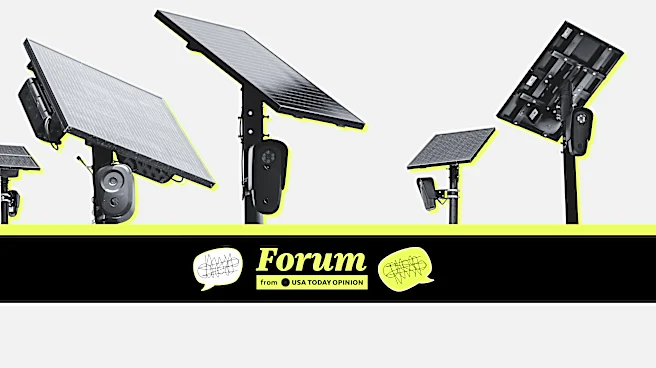





Some of the technology behind Flock cameras may trace its roots to a gathering of police and computer programmers in Oakland County almost 20 years ago.
So says a patent infringement federal lawsuit filed earlier this month in Delaware against Flock Group, one of several companies that provide license plate reader cameras installed at intersections across the country.

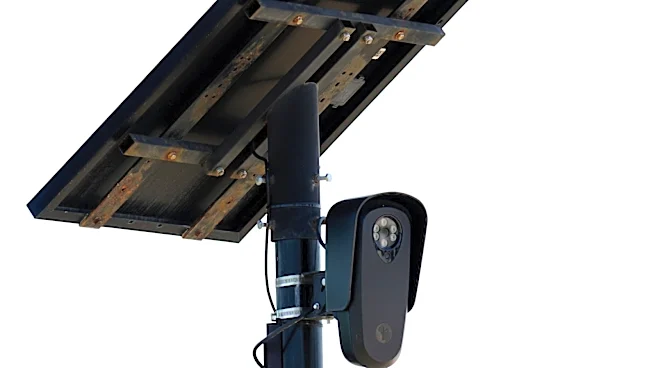
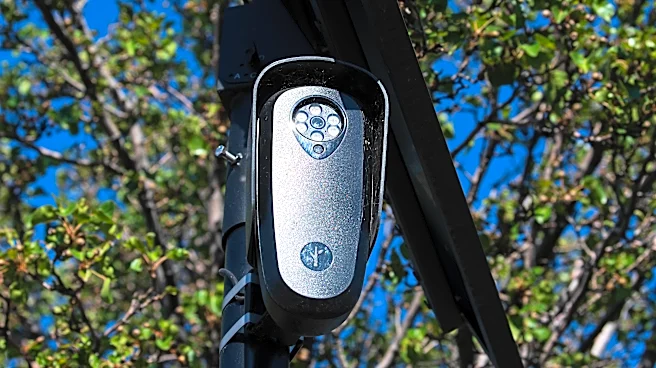
The cameras have sparked a controversy in Michigan and beyond. Police insist they help prevent and solve crimes. Critics say they are part of a government surveillance state prone to abuse. Communities across metro Detroit are debating their use, including some which have canceled their contracts with Flock. Opposition runs so deep in some areas that protesters have taken to vandalizing
the cameras.
Florida-based SecureNet Solutions Group claims it developed some of the technology that powers Flock cameras, which it accuses Flock of using it without permission. In its complaint, the company says police in metro Detroit helped identify the problem of pulling data from disparate sources like video cameras, police reports and dispatch logs, and melding it into a format that could be used in real time.
“The inventors conceived the inventions after a three-day workshop with CLEMIS, the IT Department for the Oakland County, Michigan confederation of police departments, the largest confederation of police departments in the country,” lawyers for SecureNet Solutions Group wrote in their complaint against Flock.
“During the workshop, the police identified major problems with known police IT systems. In 2007, the priority date for the asserted patents, smart surveillance systems were gaining commercial adoption and replacing traditional security systems, creating challenges in … large-scale data analysis and … data management.”
In a statement to the Free Press, Flock called the lawsuit meritless and said it developed its own technology.
"The plaintiff in this suit provides neither security nor solutions of any kind," the Flock statement said. "It is a patent aggregator that seeks to enrich itself by filing meritless lawsuits like this one. Flock's technologies, which were invented and developed by Flock, help make communities safer across the country. We intend to defend this case vigorously."
The court case will determine who owns what technology, but records provided by SecureNet show a meeting in Oakland County did happen. It appears to have been in 2007, when a former MIT Professor John J. Donovan and others from a company called KD Secure visited with CLEMIS leaders in a conference room on the second floor of the county's IT building. Photos and a brief video from the event show CLEMIS employees, police chiefs and county IT personnel were in attendance.
The lawsuit says that Donovan and a co-inventor were credited with inventing technology that integrates and analyzes data from disparate sources, like video feeds with different degrees of resolution as well as other sources like the logs of security card swipes at doors to buildings. The patent is now assigned to SecureNet.
Oakland County connection
CLEMIS is an acronym for Courts and Law Enforcement Management Information System. It started more than 50 years ago as a way for police departments in Oakland County to share data, including mugshots and fingerprints. It has since grown to more than 250 police agencies across southeast Michigan.
Oakland County's IT department oversaw it, but earlier this year it transitioned to a stand-alone authority comprised, funded and governed by its member communities.
CLEMIS is considered an innovator because it was among the first large scale collaborations of police departments in the country. Investigators researching a crime always had the ability to search their own records for previous contacts with people, vehicles and locations, but they couldn't see records held by neighboring departments.
By digitizing records from various sources and connecting them electronically, one police department could quickly learn far more than their own records alone would show.
"In those days integrating databases was much more difficult than it is today," said former Troy Police Chief Charles Craft, who chaired a CLEMIS advisory board around 2007. "It was a daunting undertaking because just to get every police agency to agree upon a standard report form was a major undertaking at that time."
Lots of conferences
Craft said he attended a lot of meetings with IT vendors and others in that era. He said he may have attended the meeting SecureNet described, though he has no specific recollection of it.
As Craft recalls that time period, CLEMIS was focused on creating a centralized depository of police records and making it easily accessible to officers on the road through mobile data terminals and other means. They did work with cameras, but not the kind that Flock now installs at intersections.
"Our goal would never have been to put them in stationary locations," he said. "We would have been more interested in a vehicle mounted (cameras) because it generates a police record and we're interested in collecting police records."
The lawsuit makes no claim that CLEMIS is currently using the technology Flock is accused of infringing on, only that CLEMIS identified the problems of integrating various police data sources into a searchable format.
Former Deputy Oakland County Executive Robert Daddow oversaw the county's IT department at the time. He said he didn't attend the conference but he recalls it happening.
Daddow said CLEMIS had received large federal grants to build out their technology because the consortium was so large and well integrated.
"The big problem that came out of it, that I was aware of, was just that the license plate readers weren't accurate enough at the time," Daddow said.
He said license plate reading technology from that era struggled to distinguish between a zero and an uppercase O, or between the number 1 and the letter l.
"That was one of the big shortfalls that they had at the time was," Daddow said.
Data storage and analysis
The SecureNet Solution lawsuit claims that technology from that era was beginning to extract data from video feeds on security cameras and process it through a computer. That marked a dramatic improvement on systems that previously relied on a human watching the video and cross referencing it with paper records.
"Then-existing smart-surveillance software, however, could not handle the resulting volume of information," the suit claims. "Too many inputs arrived too quickly and in incompatible formats to distinguish routine from suspicious activity, producing false alarms and missed detections that undermined reliability."
That's where SecureNet claims, its technology comes in.
"SecureNet’s inventions address the volume of data produced by proliferating cameras, sensors, and networked monitoring devices," the lawsuits says. "They do not merely add computing power or speed, which was already present in the prior art smart surveillance systems. Nor do they merely automate what a security guard could accomplish with pen and paper."
Instead, the lawsuit says, the company's technology analyzes different data, assigns weight to it and correlates it across time and space, among other things.
That's the technology that the lawsuit accuses of Flock of using without permission.
Contact John Wisely: jwisely@freepress.com. On X: @jwisely
This article originally appeared on Detroit Free Press: Lawsuit claims some Flock camera technology was born in Oakland County