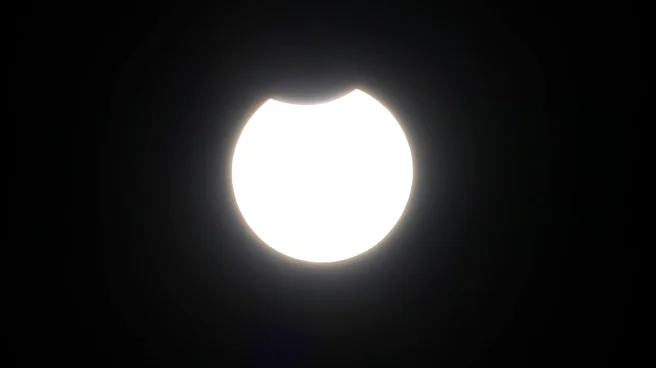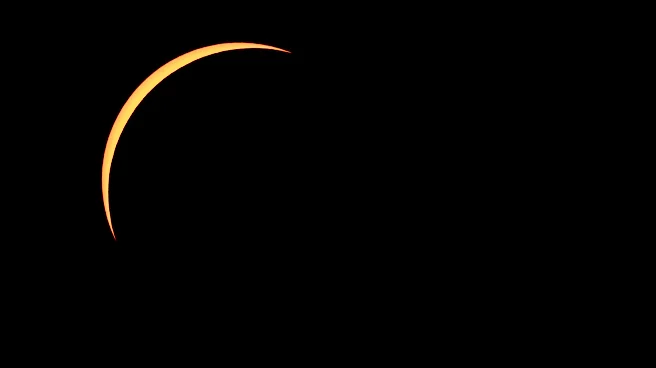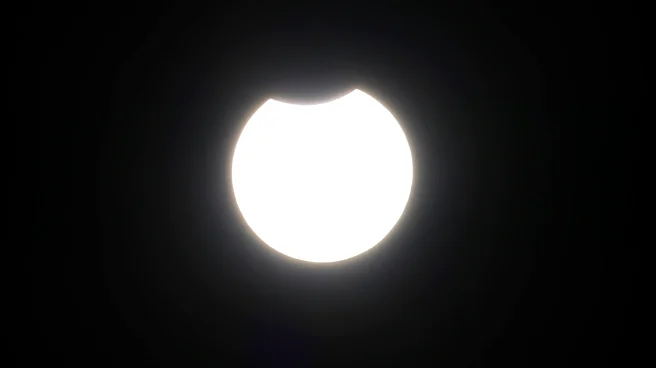

A partial solar eclipse will appear over Michigan skies early Wednesday afternoon, Aug. 12, but don't get too excited, Michigan will experience only limited visibility.
Expect up to 7% coverage of the sun
in Sault Ste. Marie and 3% in Detroit, as if the moon took small "bite" out of the sun; skies will remain bright, according to NASA and Michigan State University.
If you choose to watch the eclipse, be sure to wear a pair of eclipse glasses to safely view the sun. You can also opt for streaming NASA's live eclipse programming online.
A total solar eclipse usually only happens about once every 18 months, according to Time and Date. The last total solar eclipse was on April 8, 2024.
Here's what to know about Michigan's view of the solar eclipse.
When is the solar eclipse?
The solar eclipse will occur the early afternoon of Aug. 12, appearing as a partial eclipse in Michigan, according to NASA. Michigan will only see a small portion of the sun covered by the moon during the eclipse.
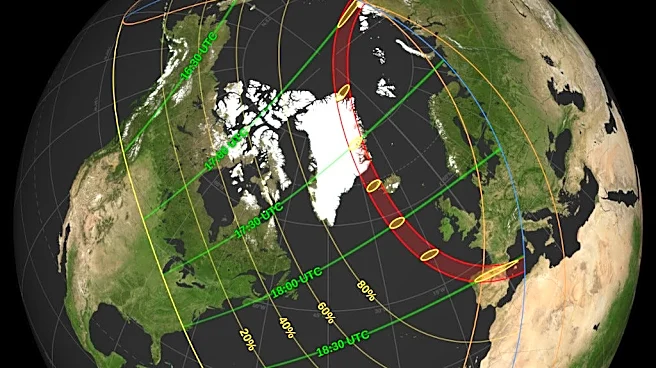
The eclipse will appear partial in other parts of the northern U.S., most of Canada, Europe and northwestern Africa, NASA said. The eclipse will be a total solar eclipse in Greenland, Iceland, northern Russia, the Atlantic Ocean, Spain and a small part of Portugal.
Do you need any special equipment to view the partial solar eclipse?
Yes! People who wish to see the partial solar eclipse should never look at the sun with the naked eye and should use eclipse glasses, which are different from typical sunglasses, to view the sun during the celestial event, according to NASA.
The only time it is safe to look at the sun during a solar eclipse is during totality, which will not occur in the U.S., according to NASA.
Need eclipse glasses? Shop here
When will the eclipse take place where I live?
Here's a look at when the eclipse will begin and end, as well as peak and how much of the sun will be covered.
Detroit:
- 3% coverage, per NASA
- Visible from 1:03 p.m. to 2:08 p.m. on Aug. 12
- Maximum coverage at 1:36 p.m.
Lansing:
- Visible from 1:02 p.m. to 2:03 p.m. on Aug. 12
- Maximum coverage at 1:32 p.m.
Grand Rapids:
- Visible from 1:01 p.m. to 1:58 p.m. on Aug. 12
- Maximum coverage at 1:30 p.m.
Ironwood:
- Visible from 11:42 a.m. to 12:52 p.m. on Aug. 12
- Maximum coverage at 12:17 p.m.
Marquette:
- Visible from 12:42 p.m. to 2:01 p.m. on Aug. 12
- Maximum coverage at 1:22 p.m.
Alpena:
- Visible from 12:49 p.m. to 2:12 p.m. on Aug. 12
- Maximum coverage at 1:31 p.m.
Traverse City:
- Visible from 12:51 p.m. to 2:04 p.m. on Aug. 12
- Maximum coverage at 1:27 p.m.
How can you watch the solar eclipse?
NASA will host a live broadcast of the eclipse beginning at 1:15 p.m. ET on Aug. 12 on Amazon Prime, Facebook, Instagram, NASA+, Twitch, X and YouTube.
When is the next solar eclipse?
There will be an annular solar eclipse on Feb. 6, 2027.
Detroit Free Press reporter Jalen Williams and USA TODAY contributed.
Contact Jenna Prestininzi: jprestininzi@freepress.com.
This article originally appeared on Detroit Free Press: Partial solar eclipse in Michigan today. How much the sun will dim