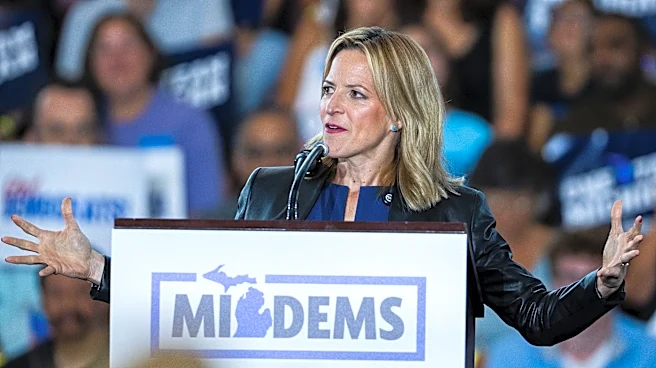





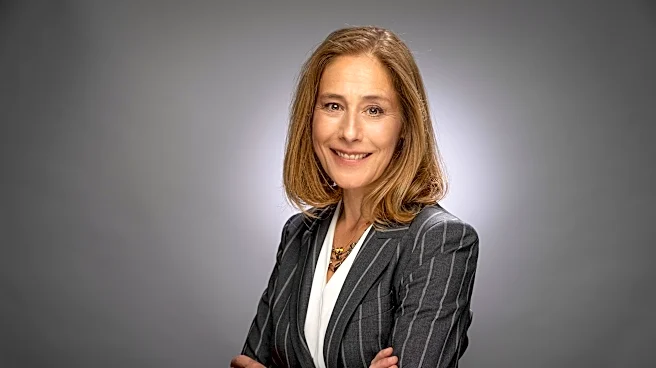

If you’re happy with the way Michigan’s government has been run, have I got the ticket for you: Democratic gubernatorial nominee Jocelyn Benson, and her newly announced running mate, Democratic Senate Majority Leader Winnie Brinks.
For the last eight years, Democrats have dominated state government, from the governor’s office to the Michigan Supreme Court.
Gov. Gretchen Whitmer, Lt. Gov. Garlin Gilchrist II, Attorney General Dana Nessel, Michigan Supreme Court Chief Justice Megan Cavanagh – and Benson and Brinks – have led the State of Michigan’s policy, budget and legal environment over much of the last decade. Benson won the office of Michigan Secretary of State in 2018. Brinks was elected to represent Grand Rapids in the state Senate the same
year, and became Senate Majority Leader in 2023.
Each of these Democrats have picked their own battles, but they are aligned on liberal fundamentals of governing.
They have also been at least somewhat responsible for creating the political ecosystem we have in Lansing, shaped by the same priorities, and responsible for many of the same decisions that have brought Michigan to where it is today.
Fix the damn government

We can give President Donald Trump and state legislative Republicans credit for a portion of the dysfunction, but the Democrats have put a healthy slice of messy pie on their dessert plate as well.
Our last two budgets have missed their statutory deadline, our per capita income is falling and our kids (and many adults) can’t read.
Our highways are getting better, but surface streets are still bumpy, thanks to a broken revenue sharing system. During the Democratic trifecta, from 2022-2024, the Democrat-led Legislature and governor didn’t even repeal the portion of the state Constitution that would keep same-sex marriage legal should the Supreme Court overturn Obergefell v. Hodges. In fact, there wasn’t even a resolution introduced.
These aren’t things you can blame on Washington. These are homegrown problems.
With a majority of the Democratic ticket for 2028 part of the list above, voters should ask a simple question: What would these candidates do differently from the government they previously helped lead?
That question is particularly important for Benson and Brinks.
Benson has spent eight years running the secretary of state’s office, and she’s had a front-row seat to observe outgoing Whitmer, and calculate what she would maintain and what she would change.
She has watched what worked, what didn't and which problems remained unsolved. If she wants voters to promote her from secretary of state to governor, she should be able to explain not only what she would continue, but where she believes the current administration got it wrong.
Brinks has an even more direct connection to the decisions made in Lansing. As senate majority leader, she hasn't simply observed state government, she has helped decide what it does.
Since Democrats took control of the Senate in 2023, Brinks has been one of the most powerful people in Lansing. She has helped determine which bills receive hearings and votes, which priorities make it through the Legislature, where Democrats compromise and where they hold the line. She has also been one of the key players at the negotiating table on state budgets and major policy decisions.
That means Brinks has a record to run on, but also, a record she has to answer for.
A gift and a curse
If Michigan's economy isn't growing fast enough, if local governments don't have the resources they need, if schools aren't producing the results taxpayers expect, or if Lansing repeatedly struggles to accomplish basic responsibilities like completing the state budget on time, a Senate majority leader can't credibly present herself as an outsider arriving to fix someone else's problems.
That doesn't mean Brinks deserves all the blame. Michigan had divided government from 2019 to 2023, and does again since 2025. The Republicans who’ve controlled the House have their own responsibility for what does and doesn't happen in Lansing. But divided government doesn't erase accountability. It makes leadership, negotiation and the ability to find agreement more important.
So I’d ask Brinks: After leading one chamber of the Legislature, what would you change about the government you helped run?
Running as the successor to a popular governor of your own party has obvious advantages. But succession also comes with ownership. You don't get to take credit for the accomplishments of an administration and political movement while treating its shortcomings as someone else's responsibility.
Free Press contributing columnist Andrea Bitely is the founder and principal of Bitely Communications, a Lansing-based public affairs firm specializing in political, corporate and crisis communications. From September 2025 through May 2026, she served as director of communications for former Detroit Mayor Mike Duggan's now-ended independent gubernatorial campaign.
Submit a letter to the editor at freep.com/letters, and we may publish it online or in print.
This article originally appeared on Detroit Free Press: The toughest question for Benson and Brinks is Lansing | Opinion