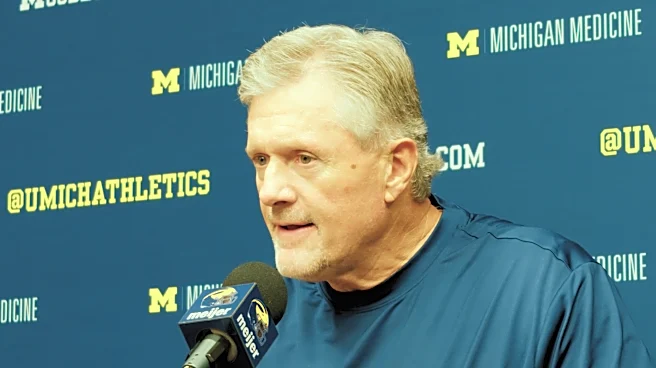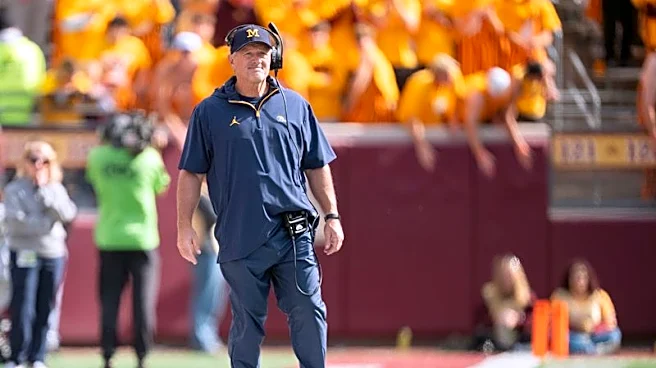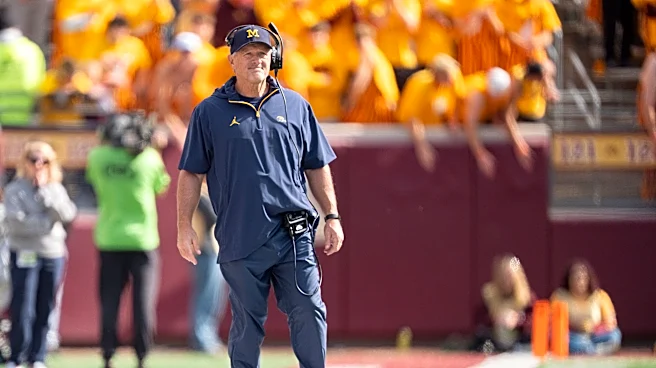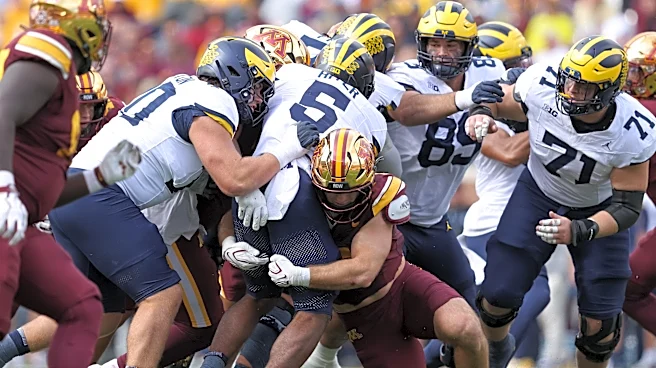


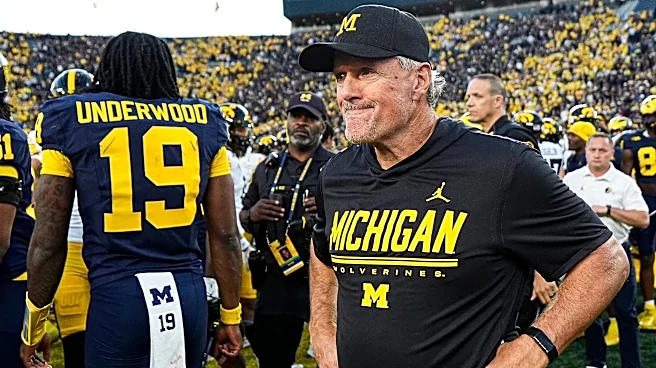


In the immediate aftermath of Michigan football’s 20-14 loss to Minnesota, when emotions were still running high, Kyle Whittingham appeared eager to do something different.
His team had just suffered its second consecutive defeat because its offense continued to hiccup and cough as it had throughout the first month of the season. For the fourth time in the first five games, the Wolverines were held under 20 points.
“We might have to make some tough decisions here,” Whittingham said in one breath.
“The results are unacceptable right now,” he added in another.
With a bye week coming up, Whittingham was afforded some extra runway to shift course if he so desired. A vocal segment of Michigan’s disgruntled fan base clamored for him to do just that by making
a big move or two. Some called for him to dump Jason Beck as the play-caller. Others demanded he bench quarterback Bryce Underwood. He did neither. After assessing his team, he chose to stand pat.
[ MUST LISTEN: Make "Hail Yes!" your go-to Wolverines podcast, available anywhere you listen to podcasts (Apple, Spotify) or watch live on YouTube . ]
“It’s only natural when you hit a tough spot to question everything you’re doing and take a hard, in-depth look, but if you believe in what you’re doing, which we do … then you can’t panic,” he said.
With 22 years of experience as a head coach, Whittingham knew it was impractical to make wholesale changes in the middle of the season. Overhauling a playbook implemented during the offseason certainly wasn’t feasible. Besides, there was proof of concept with Beck’s scheme.
“I saw it first-hand at Utah,” Whittingham said at Big Ten media days in July.
Before his final season at the Big 12 school, Whittingham hired Beck to revive an offense that was listless the year before. Beck did just that. The Utes transformed into a juggernaut almost overnight. They finished second in rushing and fourth in scoring. In a span of 12 months, they climbed from No. 119 to No. 6 in BCF Toys’ efficiency ratings. It was a remarkable transformation. So, it came as little surprise that when Whittingham took over Michigan last December, he brought Beck along with him.
“He’s a guy that I have a ton of faith in,” Whittingham told reporters this past summer.
But since coming to Ann Arbor, Beck hasn’t come close to reproducing the results he helped manufacture in Salt Lake City. Michigan’s ground attack has been surprisingly weak, gaining just 3.84 yards per attempt – an average that is the 106th-best in the country. A year after Utah topped the FBS in red-zone touchdown percentage, the Wolverines rank 79th in the same category. The subpar success rate within that critical area of the field, in part, explains why they are averaging fewer points – 23 per game – than 100 teams.
The discrepancy in performance between the high-powered offense Beck oversaw at Utah and the feckless one he directs at Michigan seems mystifying at first glance. The Wolverines possess playmakers at key spots, including running back and receiver.
Beck agreed Wednesday and said, “We’ve got some good players, good talent.”
But 2025 Utah was superior to 2026 Michigan at the positions that have the greatest influence over the functionality of Beck’s offense – quarterback and offensive line. Soon after Beck joined forces with Whittingham in Salt Lake City, he brought Devon Dampier with him from New Mexico. Dampier, an athletic, dual-threat QB, was adept at running the run-pass option – a staple of Beck’s spread system. Dampier’s prior experience with Beck allowed him to hit the ground running upon transferring to Utah. So did the presence of an accomplished offensive line that had already been assembled before Beck and Dampier arrived there.
“All five of those guys were returning starters,” Beck said.
Among them were two tackles, Caleb Lomu and Spencer Fanu, who would be picked in the first round of the 2026 NFL Draft.
“The O-Line was the strength of the deal,” Beck said.
At Michigan, it is arguably one of its greatest weaknesses. The unit, with its revolving cast of players, has generally failed to push around opposing defenses and impose its physicality.
The run-blocking has been inadequate, as evidenced by the fact that a U-M player has yet to surpass 100 rushing yards in a single game. The pass protection has also been iffy. Bryce Underwood has been sacked eight times and pressured on 27.7% of his 136 dropbacks.
“We just have to execute better,” tackle Blake Frazier said last week.
Underwood does, too.
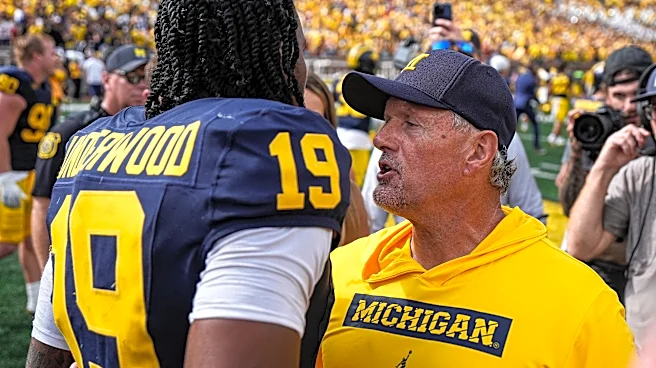
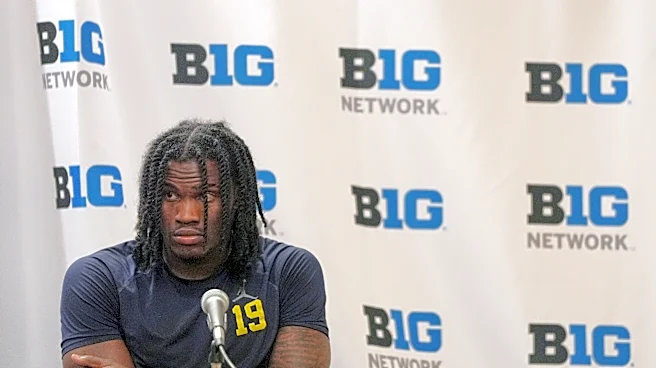
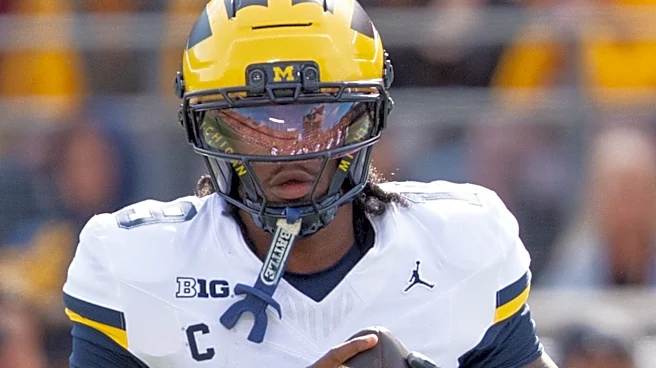
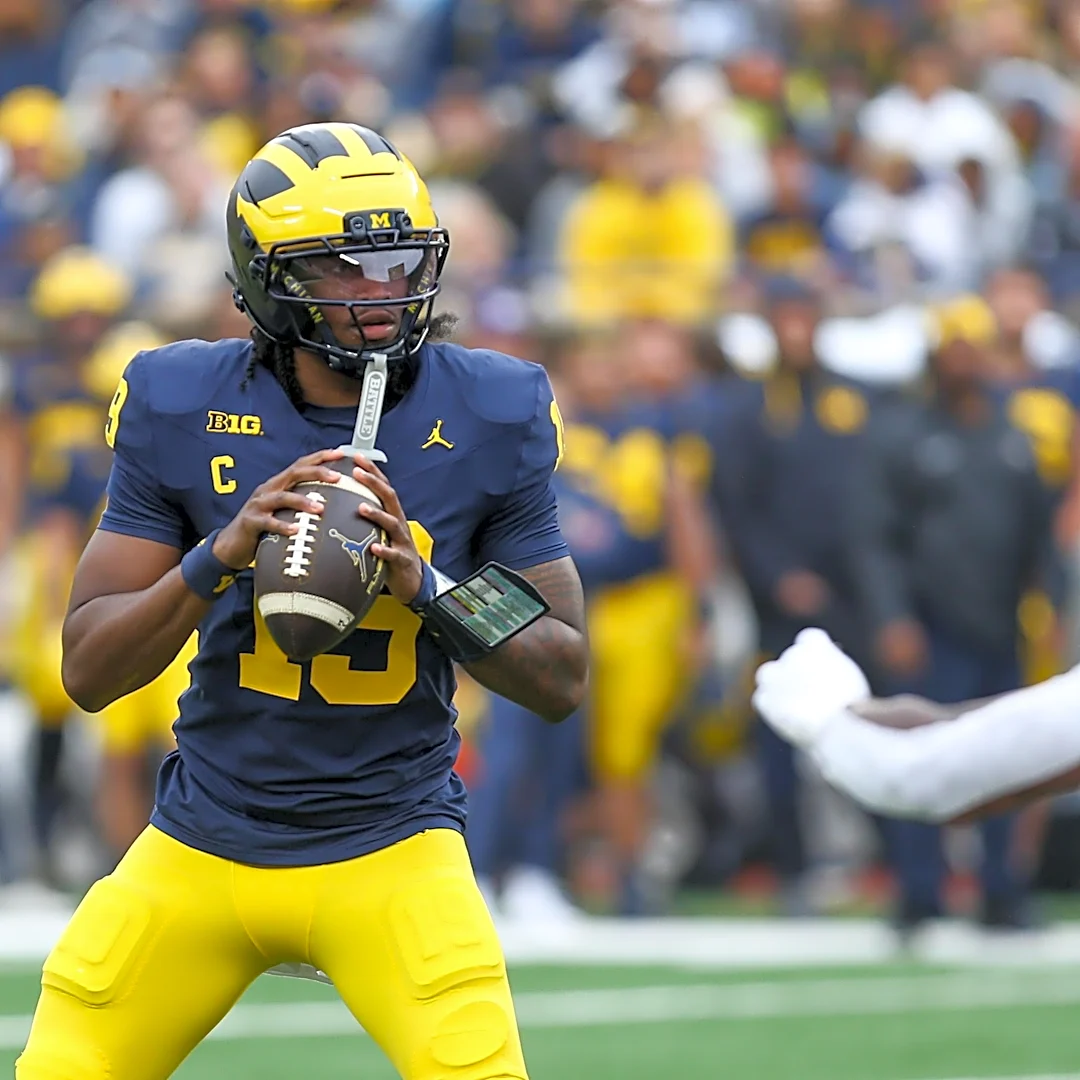
Among Big Ten starters, he ranks in the bottom half of the conference in passing yards, completion percentage and efficiency rating. Through the first 18 games of his college career, the former five-star recruit with the multi-million dollar NIL deal has yet to play up to his perceived potential. He has committed six of Michigan’s nine turnovers and has exhibited questionable decision-making while running point in Beck’s system. That’s a problem.

As Whittingham said in an interview with WXYZ-TV (Channel 7), “There’s a lot of reads that need to be made in this offense, a lot of RPO aspect to it, which means there is not only going to be reads in the throw game but in the run game. Those reads are critical to the success of the offense.”
Beck insists that Underwood has made the correct ones most of the time. But overall, Beck gave a lukewarm assessment of the quarterback’s performance to this point. When asked if it met his expectations, Beck hesitated.
“Nothing’s ever good enough let alone when it’s not going great,” he said. “There’s always things to improve.”
Beck and Whittingham have tried to tailor the offense to Underwood’s strengths, moving him outside the pocket with designed rollouts that give him clear throwing windows. As Whittingham said, “It’s all about players and particularly your quarterback.”
Based on his physical attributes, it seemed possible Underwood could flourish in Beck’s versatile scheme.
“6-4, 230, runs like the wind, cannon arm, can make every throw and then some,” Whittingham said of the sophomore from Belleville.
The tantalizing athletic profile may be obvious. But it has yet to translate into high-level production on a game-to-game basis. His current stat line, in fact, looks strikingly similar to the one he compiled his freshman year, when he experienced his share of struggles operating Chip Lindsey’s offense. Despite Underwood’s underwhelming body of work across two different regimes, Whittingham is sticking with him as the starter. He is also moving forward with Beck as his play-caller. Both of those decisions are sure to invite scrutiny. But one of them has a far better chance of working out than the other.
After all, Beck has at least proved to Whittingham that he can get job done. Underwood, to this point, has not, which is why the man running Michigan’s offense should bear more responsibility for it faltering than the one who designed it and already shown it can work.
Contact Rainer Sabin at rsabin@freepress.com. Follow him @RainerSabin on X.
This article originally appeared on Detroit Free Press: It's hard to blame OC Jason Beck for Michigan's offensive struggles