



A grief-stricken mom is claiming in a lawsuit fil----------------ed last week that the 2023 crash that killed her 19-year-old son was improperly cleaned up and parts of her boy were left behind.
The federal court lawsuit against Wayne County, the City of Inkster and various officials said Jessica Ostrowski of Canton was "horrified to discover" that her son’s remains, including "large pieces" of his "brain and scalp," were "found in a common garbage bin."
Ostrowski, who referred questions from the Free Press to her attorney, is seeking unspecified damages.

But more than that, the case also raises questions about what the law says — or doesn’t say — about how to handle what was once part of a person’s body, what expectations people should have after
a messy death, and what officials and communities should do to help comfort a heartbroken parent.
If Ostrowski were to win her case, would that be enough to assuage her sorrow?
"I see the pain in her face," Joseph Xuereb, Ostrowski’s attorney, told the Free Press on Tuesday, July 28, adding that not only has she been bereaved, but the way officials left the scene was insensitive. And some of their responses to her, he added, "have been obtuse."
Wayne County Communications Director Matt Allen said on Wednesday that the legal department had not yet been served with the lawsuit and therefore could not review it to offer a comment. The Free Press also left messages with Inkster officials.
At the same time, people who have worked in the cleanup business pointed out in interviews this week with the Free Press that some fatal crash and crime scenes are so gruesome or have to be cleaned up under such difficult conditions that it can be challenging to do so in a dignified way.
On top of that, they suggested that no matter what they end up doing, it would upset someone.
In this case, Ostrowski’s 16-page lawsuit filed in U.S. District Court for the Eastern District of Michigan names the county, city and specific officials, including the Wayne County chief medical examiner, Inkster police chief, Inkster fire chief and an unnamed investigator.
It alleges that parts of Ethan Bennett’s body were treated with "callous indifference."
Anguish, unanswered questions
Xuereb — who is looking into whether something similar has happened to other families — added that while the case ultimately seeks to hold officials accountable, it also could, perhaps, change the way they handle what once was part of a person’s body.
Bennett’s remains, the attorney said, were cremated.
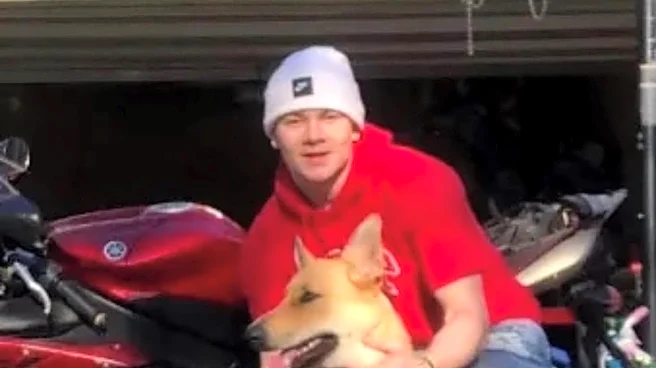
His online obituary included a photo of Bennett in jeans and a hoodie with his emotional support dog, Athena, and a motorcycle behind them. It said he "was passionate about football, riding his motorcycle, gaming online with friends, YouTube, TikTok, and so much more." It also noted "his amazing personality."
But on July 28, 2023, he was riding his 2004 Yamaha motorcycle when, just before 4 p.m., the Canton resident collided with a 2010 Chevy HHR at one of Inkster’s busier intersections, Michigan Avenue and Harrison Street, the Detroit News reported.
The recently filed lawsuit said that when Inkster police arrived at the crash, they found Bennett’s body — including hair and parts of his skull — in a parking lot and on the pavement. His skull had been fractured, but his brain was no longer inside it.
Ostrowski sought answers to her questions about how her son died. Her request for reports, photographs, 911 recordings and related videos was rebuffed, although police, according to news accounts, did provide her with a brief report that said Bennett was doing a street stunt in which a motorcycle’s front wheel lifts off the ground.
Xuereb confirmed to the Free Press that Bennett did pop a wheelie and may have been speeding.
The News account said the law enforcement report went even further: The Chevy HHR "went to change lanes" to get out of Bennett’s way. The vehicle swerved and struck the SUV. Investigators suggested Bennett had been driving recklessly.
To force officials to hand over more documents and video, Ostrowski sued officials in Wayne County Circuit Court.
By 2025, Ostrowski had received many — but not all — of the documents she wanted, and the case had been dropped, but the mother said she was unsatisfied with her then-attorney and fired him because, she claimed, she hadn’t given him permission to stop pursuing the lawsuit.
And in October, Ostrowski turned to social media to express her thoughts.
In a 33-minute video, she recounted in candid language much of what had been reported, but she also blamed another driver for her son’s death. She also said more should be done to hold someone accountable, noting that in two years "not one charge has been filed against the man responsible."
A largely unregulated industry
When it comes to handling human remains at a scene where a body has been damaged, experts told the Free Press it can be challenging to determine what parts need to be saved. Each scene is unique. And often, different people have different views and beliefs about what to do with a dead body.
In some deaths, police, fire and private workers are faced with horrific circumstances. Bodies are burned, blown apart — and mangled so badly in the crush of a high-speed, high-impact crash that those at the scene find they are no longer recognizable.
Brandon Stone, the owner of Bio-Trauma 911 in Indianapolis, pointed out that in his experience remains are rarely left behind by authorities; but when they are, workers contact the investigators. And laws do give some guidance, he said; the cleanup industry is largely unregulated.
Chris Davis — the owner of Bio-One Detroit West based in Farmington Hills — said that he, too, has rarely dealt with scenes in which human remains were left behind, but in the few instances in which he has, the remains have been tiny bone — usually skull — fragments.
"In those situations," he said, the company tried to dispose of them in the most dignified way it could.
Still, Davis said, in most cases the company doesn't notify relatives. Loved ones, he explained, have already gone through enough trauma, and the news that part of them was left behind only compounds their grief. It’s also, he said, unclear who the company should contact.
Do they talk to the investigators, to the funeral home or someone else?
Besides, Davis added, investigators often don’t seem interested anyway. In the past, Davis said, workers cleaning up crime scenes have found bullets embedded in walls, but after calls to police, the detectives responded that they didn't need them.
Could first responders and private companies benefit from more guidelines to determine what to do?
In his view: probably not.
"But a grieving mother’s heart is a whole different calculus that I cannot address," Davis added. "I don’t know if there would ever be satisfaction" for a mother whose son’s body ended up dead on a street and her concern that it was not treated with the reverence she believed he deserved.
Contact Frank Witsil: 313-222-5022 or fwitsil@freepress.com
This article originally appeared on Detroit Free Press: After fatal crash, mom claims son's remains were left in 'garbage bin'