
FLINT ― General Motors unveiled the sixth generation of its small block V-8 engines – destined for its most profitable and popular trucks – that it says increase the power, torque and efficiency of its internal
combustion engines, according to the company.
The Detroit automaker said Sept. 17 that the new 6.6 liter V-8, one of four new engine versions GM unveiled, is capable of generating 481 horsepower, which the company says makes it “the most powerful naturally aspirated V-8 in the segment.”
GM intends the new L76 5.7 liter and L78 6.6 liter V-8 engines for its 2027 Chevrolet Silverado and 2027 GMC Sierra light-duty trucks, joining the ranks of the next generation LS6 6.7 liter V-8 inside the 2027 Corvette Stingray, Grand Sport and Grand Sport X.
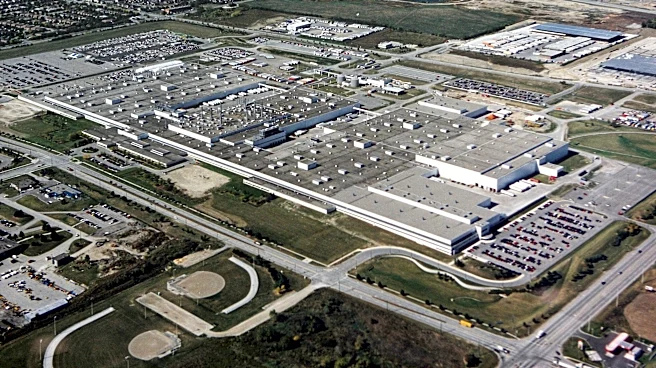
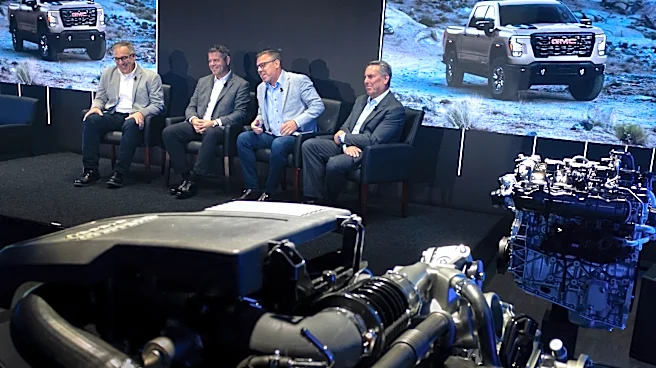
GM hosted members of the media Sept. 16 at its Flint Engine Operations facility, where the company primarily builds the engines, for a tour of the plant floor. On site, company leaders said advanced modeling and simulation toolsets played a major role in developing the new engines, as did “proven hardware efficiency and durability testing.”

GM President Mark Reuss noted that Sept. 16 marked the 118th anniversary of the company, founded in Flint on that day in 1908.
“The small block V-8 has been a great story for GM for seven decades,” Reuss said. “The next chapter is being written right here.”
Engine recalls, investigations
Increased consumer confidence in GM’s engine technology featured heavily at the event, which comes amid an industry-wide spate of engine recalls.
Across five automakers – General Motors, Ford Motor Co., Toyota North America, Hyundai and Honda – nearly 5 million vehicles in the United States face open investigations and recalls.
An Automotive News investigation found that the pursuit of cleaner, more fuel-efficient engines resulted in engines less tolerant of manufacturing imperfections than prior generations, is largely to blame.

Investigations into GM vehicles, the largest automaker in America, make up about one-fifth of those vehicles in question. The National Highway Traffic Safety Administration recently escalated one of two ongoing investigations into GM’s engines for the L87 6.2 liter V-8 engines that the agency first began investigating in January 2025.
About 997,743 vehicles in the United States are believed to be impacted, though GM has not changed its recall, which still stands at 597,630 U.S. vehicles from model years 2021 to 2024.
The issues, described as manufacturing defects to a vehicle’s connecting rod and crankshaft engine component that GM attributed to multiple supplier manufacturing and quality concerns, result in “loss of motive power due to engine failure” for drivers.
GM is still cooperating with NHTSA regarding the investigation into its engines, according to Norman Peralta, executive chief engineer, global electrical propulsion systems at GM. He noted during the Flint tour that the latest generation of engines is entirely distinct from the preceding one.
“This new architecture is a brand new engine architecture. It’s a lubrication system, new fuel system, new heads, I could go on and on,” he said. “Speed of manufacturing excellence and quality controls are in place.”
The company leveraged more data and advanced analytics in its quality control procedures when deploying the sixth generation engine, Peralta added, which means that “before an engine leaves the assembly line or plant, we have great data and a health check on that engine.”

Flint Engine Operations can produce 1,800 V-8 engines per day, GM said.
Supplemental V-8 manufacturing is also planned for GM’s Tonawanda Propulsion in New York and at St. Catharines Propulsion plant in Ontario, Canada. GM committed $888 million to the New York facility – which GM said in May 2025 was its largest ever investment in an engine plant – and $691 million Canadian dollars to St. Catharines for this latest engine generation.

What’s so great about the new V-8?
In Flint, GM unveiled four different engine types:
- The enhanced TurboMax engine
- Duramax 3.0 liter Turbo-Diesel
- L76 5.7 liter sixth-generation V-8
- L78 6.6 liter sixth-generation V-8
Each engine in GM’s 2027 light-duty truck lineup is paired with a 10-speed automatic transmission, GM said.
Improvements to the new engines include:
- Increased displacement from 5.3 liter and 6.2 liter to 5.7 liter (350 cubic inches) and 6.6 liter (400 cubic inches), respectively, after engineers increased the piston stroke 6 millimeters.
- Higher compression ratio for more efficient combustion.
- Increased airflow from expanding the throttle diameters.
- New intake manifolds with tuned runners to manage that additional airflow.
GM began product planning for the engines in 2018, yet some of the technology used in these latest engines actually dates back to 1955. GM said the layout of the new engines space the cylinder bore centers at 4.4-inch intervals, the same way it has been done on more than 100 million small block engines.
The cylinder bore is the machined cylindrical chamber where the piston travels. That space is responsible for determining the volume available for the combustion process that generates power in an internal combustion engine.
A new fuel tank, measuring 34 gallons, or 129 liters, is available for the 5.7 liter and 6.6 liter V-8s. When paired with the Duramax 3.0 liter Turbo-Diesel, GM said drivers could achieve a driving range of over 900 miles on the highway, at a range and fuel efficiency that Reuss called “remarkable.”
“If we focus on the fundamentals of efficiency and value for our customers, that’s what people want. We can deliver more of what customers want and at an affordable price, which is what we’re doing with these engines,” he said. “We produce things that are efficient and can compete with and beat, in this case on the trucks, hybrids. And we’re going to do that.”
Jackie Charniga covers General Motors for the Free Press. Reach her at jcharniga@freepress.com.
This article originally appeared on Detroit Free Press: What GM says its next-gen V-8 engines, slated for 2027 pickups, can do