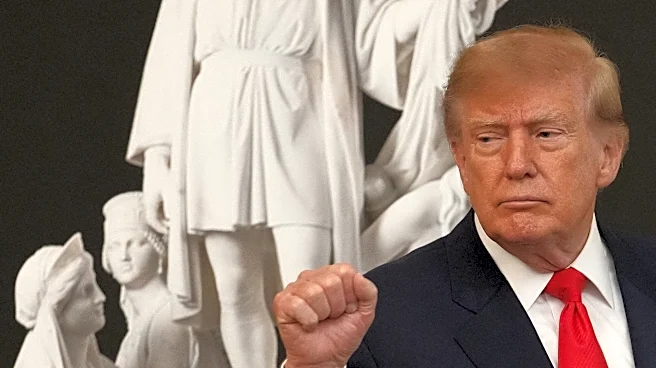
President Donald Trump’s latest attempt to bring down gasoline prices by buying diesel from Russia is facing criticism worldwide and by members of his own party, including Michigan Senate candidate Mike
Rogers.
Late last week, Trump announced on social media
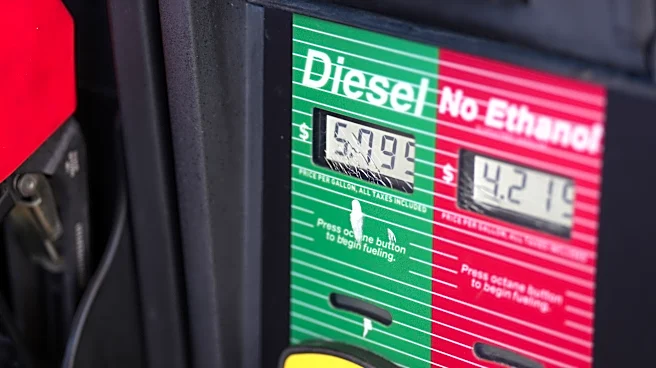
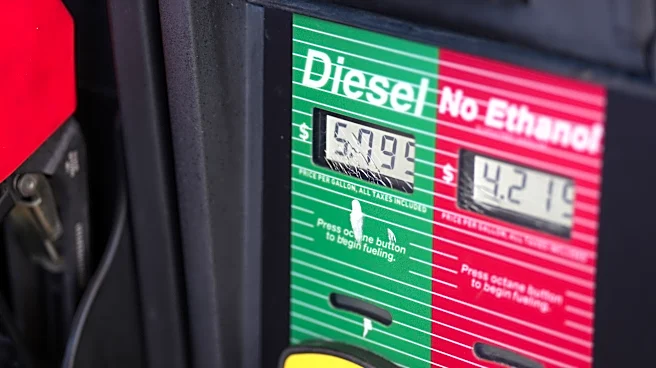
that the United States was temporarily lifting sanctions against Russian fuel, a move that seeks to bring down near-record diesel prices ahead of the midterm elections.On Monday, Oct. 12, diesel in Michigan was $6.49 a gallon, down 13 cents from a week ago. Regular gasoline prices were up an average of 20 cents from a week ago in Michigan, with drivers paying an average of $4.66 a gallon, according to AAA. That’s up 35 cents from last month and $1.74 more than this time last year.
"Drivers across Michigan are seeing a sharp jump in gas prices, with the statewide average climbing 19 cents in just one week," said Adrienne Woodland, a spokeswoman for AAA, calling it a "reminder that fuel prices remain highly sensitive to volatility in the global oil market."
But economists and petroleum analysts point out prices at the pump are complex and have questioned whether Trump’s deal with Russian counterpart Vladimir Putin will do much to bring down the price of diesel, which, just last month in Michigan, reached an all-time high price of nearly $7 a gallon.
On Friday, Rogers said while on the campaign trail with Louisiana Sen. John Kennedy that he did not support importing the fuel from Russia, adding a jab at Putin: "You just don't want to give that guy an inch." And Kennedy said he, too, was against importing fuel from Putin.
By Sunday, a handful of Republicans and Democrats in the Senate had even issued a statement noting that Trump’s deal with Russia "runs counter" to U.S. law and demanded the administration "immediately reverse course."
'Deal with the devil'
The high price of fuel is increasingly a problem for Trump, especially as Americans head to the polls for the midterm elections. Trump — when running for a second term after losing to Joe Biden in 2020 — campaigned on addressing economic concerns.
But news outlets have been questioning Trump’s claims about the economy.
The Associated Press called the president’s latest deal with Russia "shocking," and in "stark contrast" to a sanctions law he just signed, and Business Insider noted his "quest to bring down gas prices ahead of the midterms" was "not going great."
In recent weeks, Republican candidates, like Rogers, have been distancing themselves from the president the closer it gets to the midterm elections next month. Rogers, for instance, has called for an end to both the trade war with Canada and the military war with Iran.
But Trump’s announcement that he had made a deal with Putin contradicts the president’s own position, which, until recently, was that buying oil from Russia was enabling European aggression.
Last month, for instance, he offered sharp remarks at the United Nations in New York aimed at NATO allies, whom he called upon to cut dependence on Russian oil, mocking them by saying they were "funding the war against themselves." He also said China and India were funding the war by purchasing Russian oil.
The deal has also prompted many lawmakers to raise concerns.
Sen. Chuck Schumer even suggested on social media Trump was "doing a deal with the devil."
'A small price to pay'
By lifting sanctions, Trump also undercuts the rationale he has repeatedly offered to Americans for breaking his promises to lower gasoline prices and not start a new war: higher fuel prices are "a small price to pay for keeping the world safe" and thwarting threats to international security.
The president also faces criticism that not only will his decision help fund Russia’s war with Ukraine, but it also benefits Russia, which reportedly has provided Iran with military intelligence against the United States. Just last week, the Pentagon also quietly raised the number of Americans killed and wounded to 21, with 865 injured.
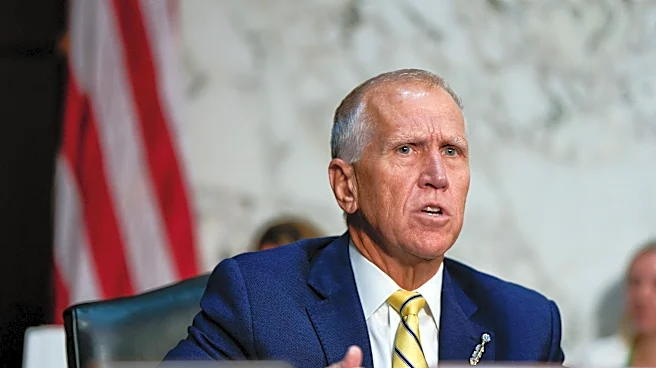
And Sunday, seven U.S. senators, including four Republicans — Susan Collins of Maine, Lisa Murkowski of Alaska, John Curtis of Utah, and Thom Tillis of North Carolina — criticized the president’s deal.
"Congress explicitly banned Russian energy imports in 2022 to prevent American dollars from financing Putin’s brutal war against Ukraine," they said. "Congress was clear: the U.S. should not import oil from Russia until it ends its aggression against Ukraine and ceases threats against our NATO Allies."
The statement went on to imply the deal was illegal and note the administration "failed to consult with Congress" or to "submit any explanation" and demanded that the administration reverse it.
Other Republicans also expressed discontent with the deal on social media. Rep. Don Bacon from Nebraska called it "morally wrong." Rep. Adam Kinzinger from Illinois urged Ukraine to double down on Russian oil refineries.
And Mike Pence, Trump’s vice president from his first term, said the deal "makes no sense" and warned in a social media post that if Russia "overruns Ukraine, it will only be a matter of time until Russia’s military crosses a border that our troops will have to deal with."
Deal 'gives Putin money'
Condemnation of the deal came from Ukrainian President Volodymyr Zelenskyy, who on ABC’s "This Week" on Sunday said Ukraine had a right to defend itself, explaining that the diesel deal with Russia "gives Putin money" that he will spend on the war to "kill us" and "our children."
Still, some Republicans, like Rep. Tom Emmer of Minnesota, the House majority whip, are sticking with Trump. Emmer even praised his deal on the show, calling the president "the best negotiator on the face of the planet" and then made a gas price comparison from 2022.
He said that gasoline prices hit an all-time high at the pump nationally and in Michigan of more than $5 a gallon while Biden was president. Emmer’s assertion was that the news media, particularly ABC, was deliberately omitting that information, the implication being that compared to that, gasoline prices don’t seem so bad now.
In Michigan, though, diesel prices under Trump have been higher, and gasoline prices have gotten relatively close to the 2022 record. On Sunday, the highest gas price averages by community were in Saginaw, $4.74 a gallon; Grand Rapids, $4.73; and Lansing, $4.73; the least, in Marquette, $4.34; metro Detroit, $4.60; and Ann Arbor, $4.67.
What Emmer also left out is that gas prices spiked in 2022 as a result of the end of the pandemic, which started during Trump’s first term in office, and the international sanctions against Russia imposed after that country had invaded Ukraine.
On top of that, more recently, governments worldwide and oil companies have been tapping their emergency oil reserves, which have fallen to low levels. The U.S. Strategic Petroleum Reserve is down to the lowest level since 1982, which some analysts have warned eventually poses an even more serious problem.
Contact Frank Witsil: 313-222-5022 or fwitsil@freepress.com
This article originally appeared on Detroit Free Press: Republicans criticize Donald Trump's Russia deal to cut fuel prices