







Nicki Hassan scurries in between colleagues also adorned in green aprons, a metal tray full of pie slices in her arms. During her 31 years with Sign of the Beefcarver, she's done a bit of everything: manager, waitress, odds and ends.
On this morning, as hungry customers line up for hours and peer through the glass as they prepare to pay their respects to a Royal Oak institution, she's feeling a little poetic. She and the others organizing the last supper traversed through dense fog hanging over Metro Detroit roadways to make it to work that morning.
"With the fog you can't see too far ahead of you. You can't see your destination. But somehow, you know you're going to make it there," the diminutive Hassan says, reflecting on a career that started
when she was 14 years old.

She wasn't the only one enduring a bit of a haze on Sunday, Oct. 25.
Ashley Burke, 40, started working at Sign of the Beefcarver 23 years ago. And for the past 11 years, so has her mother, Paula Heim. The pair both said they were on the verge of tears.
"It feels like I had a house fire and everything is just gone," Burke said. "It's going to feel really weird to wake up tomorrow and not see everyone."

After Sunday, there will be no more lines. The tip jar will be emptied, wood tables and heating lamps sold to the highest bidder. And, of course, no more beef.
Truth be told, the iconic roast beefery had to scramble to find any of its trademark steamship round roasts for its final week. By Friday, owner Jay Joliat said they'd purchased every one of the relatively rare beef cuts they could find in Michigan, going as far as Chicago to source the roast with the Flintstone-esque bone protruding from the middle.
Sunday morning, about 30 minutes before unlocking the front door for the last time, Joliat and his son bounced between staff and a few lucky customers who got inside ahead of the formal opening. They exchanged smiles and sighs, hugs and laughs. A television crew nabbed the Joliats for a minute before Jay ambled back toward the cash register.
He pointed to staff who, like Hassan, spent much of their lives at the restaurant or one of its previous locations. Their chef Earl already left for the day − for 55 years, he arrived before the crack of dawn to load hundreds of pounds of meet into cartoonishly large ovens.
When he wakes up this week, Joliat joked, Earl won't know what to do with himself.
Up until the end, the eatery offered a varied menu, with staples like roast beef and baked scod − an encrusted white fish − but also liver and onions, beef chop suey, chicken ala king and shrimp creole. And gravy. So much gravy.
Regulars had not only favorite dishes but locations: at one point, the Beefcarver empire included more than a dozen locations and 1,000 employees spread throughout Metro Detroit. Joliat said any Sunday or holiday, lines of people would wrap around the block.
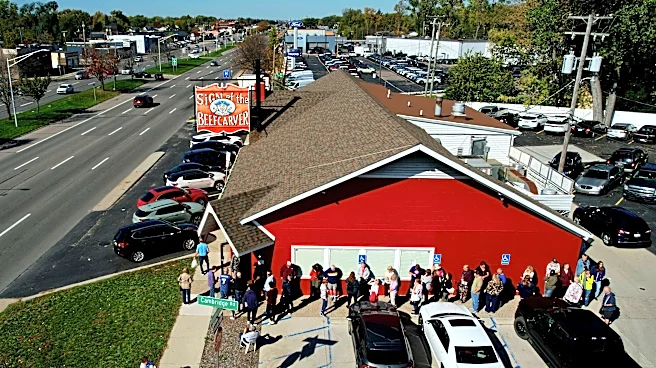
The first customers this Sunday arrived at 5:30 a.m. By 10, more than 100 people waited outside. Some wore Detroit Lions gear, but many sported hats, hoodies and t-shirts adorned with the tri-fold hat wearing, bib and cutlery wielding man displayed on the building's sign for decades.

But Aiden Hamilton didn't wait outside. He, his grandmother Robyn Hamilton and her brother Ron Ledford were some of the first to receive food Sunday morning, before the doors opened at 11 a.m. Aiden, 10 years old, has come to the restaurant so often that he has a nickname with the staff: "the mayor."
When he stood in line for his meal, the men behind the counter joked with him before plopping cottage cheese, beef and mashed potatoes on his tray. His relatives beamed.
They chatted with staff they'd known for years, with whom they'd exchanged stories about surgeries and vacations. They swapped phone numbers with some and promises of job prospects with others.
It felt like the least they could do.
"People want to hold onto history," Ron said, pointing to the line of people through the window next to their table.
"Everything is so corporate... we're sad to see it go."
Joliat doesn't want to blame any one thing. Gradually, it became increasingly hard to offset a changing world.
It wasn't just the cost, although beef prices are up both recently and over time: in January 2000, federal data indicates the average retail shopper couldfind an uncooked beef roast for about $2.75 per pound. This September, costs topped $9 per pound for the same cut, almost double the overall rate of inflation over that timespan. Restaurants endured similar price jumps.
It wasn't just the pandemic, although the international catastrophe harmed nearly every sit-down restaurant across the country. The business did receive about $300,000 in loans that were ultimately forgiven; some online commenters pointed to this money and the years since lockdowns ended in criticizing Joliat for noting the impact of the pandemic in a social media post explaining the closure of the restaurant.
The federal money was enough to keep the doors open longer than other places perhaps, but not enough to salvage a future.
"It was death by 1,000 cuts," Joliat said, noting there came a time where they just didn't feel right raising prices any more.
"We can solve one or two problems. We can't solve 20 at the same time."
In the end, the downfall of a relatively small Royal Oak restaurant was simple: Capitalism, a fickle force that often takes more than it gives to small businesses.
A 2023 study from Tulane University foundonly 12% of the U.S. population consumes roughly half of all beef eaten on a given day. These "disproportionate beef consumers" tend to be men or people between the ages of 50 and 65. Any change in consumption, even small, can have a huge impact on an industry where margins tend to be slim.
While beef industry analysts noted 2025 was a banner year for sales and point to increasing health trends that herald high-protein diets, a historic decline in beef availability this year did not help.
Since the 1970s, Americans have eaten less beef. Chicken is cheaper and more readily available. Doctors recommend carefully controlling the amount of red meat in a diet. And the number of vegetarians, while still relatively small nationally, continues to grow.
Change is inevitable and unavoidable. Tastes change, cities change, people change.
Not the food at the Beefcarver, though. In a 2024 video, a staff member notes the restaurant still used original recipes. Nothing has changed, he notes proudly, ascribing the consistency to nearly 70 years of continuous beef slicing and mashed potato plopping.
Once the last customers left Sunday, Joliat said he planned a surprise for staff. He said they gave their workforce a week's notice they would be closing, expecting some if not all to jolt for a new job.
But they all stayed, he said. After decades on the job, Burke, Hassan and the others had to see it through to the end. They had to tell their family goodbye.
"I was everyone's granddaughter," Burke said, echoing many others who said regular customers and longtime colleagues made the job worthwhile. "I don't want my friends to disappear."
The Beefcarver proudly tried to stay the same. Until it couldn't.
Dave Boucher is an investigative reporter with the Detroit Free Press. You can reach him at dboucher@freepress.com.
This article originally appeared on Detroit Free Press: Sign of the Beefcarver tried to stave off an inevitable force - change