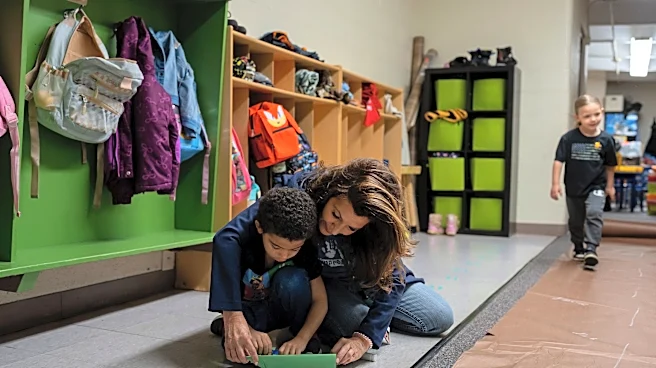



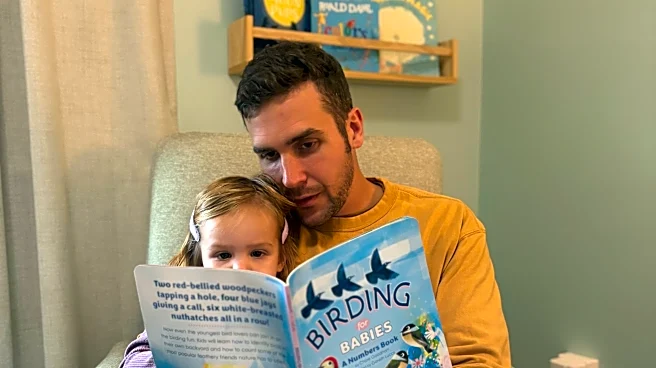
The littlest Michiganders come with some of the biggest bills. Even though they won't vote this fall, the cost of caring for them is on the ballot in the race to decide the state's next leader.
The candidates for governor – Democratic Secretary of State Jocelyn Benson and Republican U.S. Rep. John James – have identified cost-of-living challenges as a key issue in the election. For families with children under five years old, childcare stands out as one of the most expensive items in a family's budget.
Gov. Gretchen Whitmer made childcare a focus during her time in office but experts still see a deep challenge that stifles Michigan's economy, constrains household finances and holds back children at a critical time for brain development.
Statewide,
the average monthly cost of full-time childcare stood at $824 in 2024, with higher expenses in some communities, according to the research organization Michigan League of Public Policy's 2025 Kids Count in Michigan data. As businesses contend with turnover and the state loses tax revenue when workers exit the job market due to a lack of accessible and affordable child care, Michigan takes a massive hit – nearly $3 billion in lost economic activity annually, according to a 2023 report from the U.S. Chamber of Commerce Foundation.
"The workforce participation rate continues to hurt us. Michigan is lagging in this respect," said Wendy Block, executive vice president of business advocacy for the Michigan Chamber of Commerce, which partnered with the foundation on the report.
Michigan's labor force participation stood at 59% in July, making it 40th in the United States, according to Bureau of Labor Statistics data. The Michigan Department of Labor and Economic Opportunity has identified childcare as one of the biggest impediments to increasing labor force participation, especially for women.
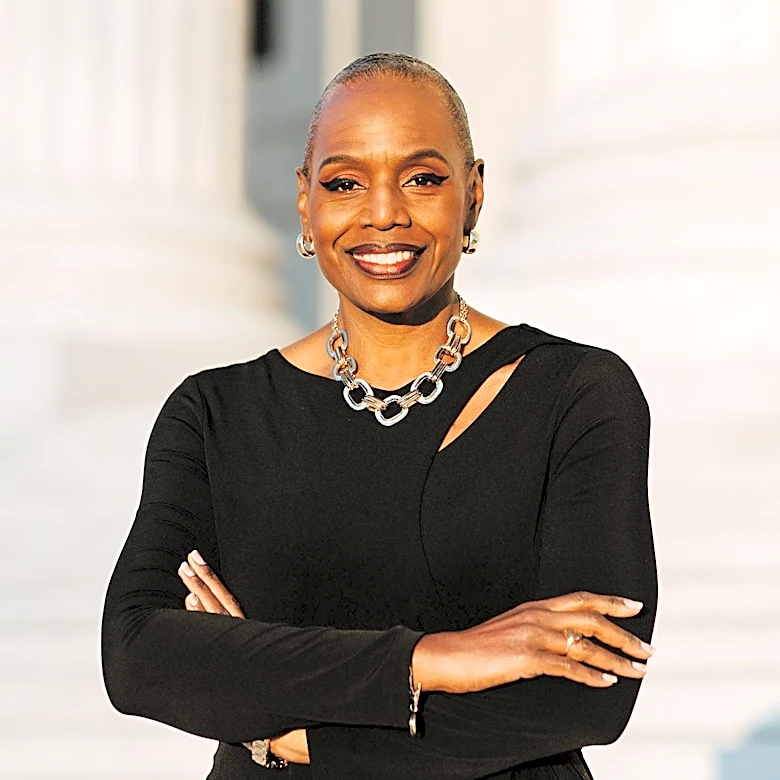
Benson sees a childcare "crisis" in Michigan and wants to make childcare free if elected, according to her campaign website, but she has not outlined proposals to achieve that goal for babies and toddlers. When asked about her aspiration for free childcare, her campaign shared a statement from Benson promising "affordable childcare." She hasn't specified how she would pay for her proposed pre-K expansion to three-year-olds and her other plans to help parents with young children.
James, unlike Benson, hasn't made tackling childcare costs a centerpiece of his campaign, which promises to make life more affordable.
Symone Wilkes, 35, is a Detroit mother of a 9-year-old and 4-year-old. There are many things she hopes the next governor will do for parents with young kids, like expanding pre-K and providing funding to increase parent childcare options. But most importantly, she said the next governor needs to expand state support for childcare to all families, regardless of income.
"A lot of parents are suffering," said Wilkes.
What has Whitmer done and what's next?
The COVID-19 pandemic put childcare issues front and center.
In response, Whitmer's administration launched the Tri-Share pilot in 2021, a novel model that splits childcare costs equally between an employer, employee and the state, which other states and the federal government have sought to replicate. It recently became permanent in Michigan. The expansion of free pre-K to all families regardless of income starting in 2024 stands as one of her marquee policies. Funding for the Great Start Readiness Program (GSRP) – Michigan's free pre-K – has more than doubled during Whitmer's time in office.

Policy experts don't think it's likely a new governor would cut funding for GSRP or add back income restrictions.
"It's an expectation throughout the state that pre-K is a program available to 4-year-old’s...moving backwards on pre-K is going to be challenging politically," said Matt Gillard, president and CEO of Michigan's Children, a policy and advocacy organization.
Though some experts say even keeping funding constant would pose a challenge to Michigan's universal pre-K push, since more investment is needed to continue boosting enrollment.
Benson has called for extending free pre-K to 3-year-olds, which the state is currently piloting through its Strong Beginnings program, though Benson's campaign declined to comment on whether GSRP would be the vehicle for this extension.
But experts say any plan to extend free pre-K would need to robustly invest in the entire birth to five ecosystem – which they say Whitmer's pre-K expansion did not – or risk further destabilizing an already struggling industry. Many childcare businesses, some of which can't opt in to offer publicly funded pre-K classrooms, lose revenue when families take kids out of their programs to put them into free pre-K classrooms. As businesses lose revenue and close down, parents lose options.
Where Benson and James stand on childcare
Benson has also called for expanding statewide a program known as Rx Kids that currently provides $1,500 during pregnancy and then $500 a month for up to the first year of the baby's life to new moms in some Michigan communities. Benson's campaign said her statewide expansion would cover the first six months of a child's life and beyond if there is room in the state budget.
To increase childcare access, Benson has vowed to make regulatory changes and investments to open new centers and increase pay for childcare workers.
Experts say Benson's campaign correctly identifies systemic issues crippling the broader childcare system, including low pay for childcare providers. But they're waiting for details on where the money would come from, citing the need for new revenue streams to address these issues.
"Otherwise, they're just great ideas," said Mina Hong, vice president of strategic impact at the Early Childhood Investment Corporation, a Michigan-based nonprofit.
It's unclear how much Benson's proposals would cost and what budget cuts elsewhere she would make.
"As Secretary of State, I was able to transform branch offices and our department, cut inefficiencies, and redirect the funds we freed up to make the investments we needed. That's the type of creative, efficient budgeting we need to lower costs," Benson said in a statement.
James has indicated that childcare could see greater investment under his plan to slash state spending he deems unnecessary and direct it elsewhere, though he hasn't named specific childcare programs that might benefit.
James' press secretary Alyvia Bailey, in a statement, said: "Early childhood education can give kids a stronger start while giving Michigan parents critical support, and if programs are delivering results, we should continue to build on that success. John James will invest in what works without raising taxes by cutting waste and putting existing resources where they belong: helping Michigan kids and families."
Neither candidate has taken up a "working parents tax cut" proposal championed by Michigan Future Inc., a research organization focused on boosting economic prosperity. The proposal supported by a coalition that includes business groups would give low-income workers who received the Earned Income Tax Credit a refundable tax credit of $5,000 per child under three years old and $2,500 credit per child between the ages of three and six – funds that could be used on expenses like childcare. While the tax cut is a key pillar in some Democratic lawmakers' plans to make raising a child in Michigan more affordable, current legislation has stalled.
Contact Clara Hendrickson at chendrickson@freepress.com or 313-296-5743.
Beki San Martin is a fellow at the Detroit Free Press who covers childcare, early childhood education and other issues that affect the lives of children ages 5 and under and their families in metro Detroit and across Michigan. Contact her at rsanmartin@freepress.com.
This fellowship is supported by the Bainum Family Foundation. The Free Press retains editorial control of this work.
This article originally appeared on Detroit Free Press: Michigan parents can't afford childcare. The governor's race could change that.