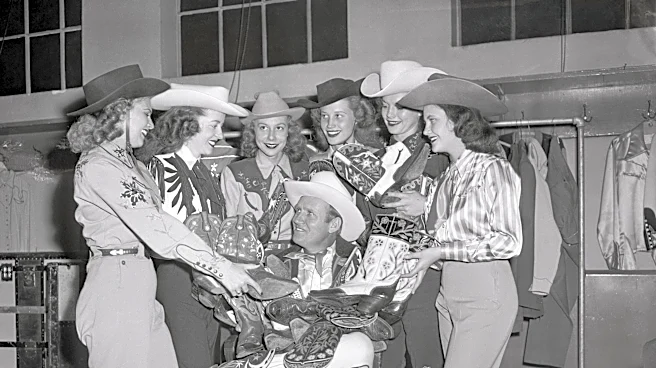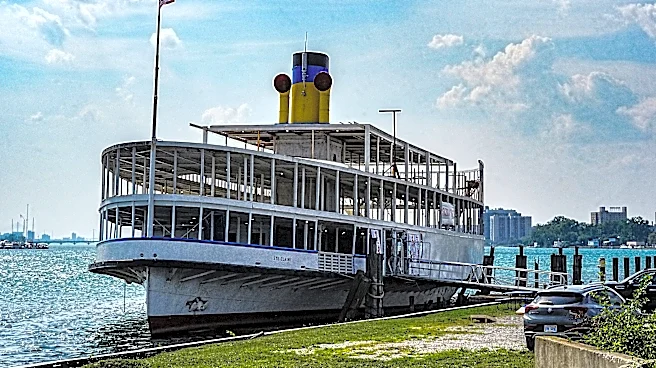







The part you left completely out in the Boblo boat reopening story is that it had a dinner cruise in the evening with a live band and dancing on weekends. (“Boblo boat on Detroit River reopens to the public as floating museum,” Detroit Free Press, Sept. 3.) It was a great date night. My husband and I went when I was 17. There was a polka band all dressed up, and dancers dressed in Polish attire that encouraged others to join. Everyone was dancing, and it was a lot of fun for a dinner date.
Donna Lowe
Madison Heights
Boblo boats brought people together
When I read about the reopening of the SS Ste Claire Boblo boat, a strong sense of nostalgia, pride, and shame hit me all at once.
That ferry and its sister ferry, the SS Columbia, were the floating crown jewels of a city that had a difficult
time keeping its sparkle. The Boblo Island and boat experience was also a bridge to bringing people together from very diverse backgrounds, and provided a platform to learn to navigate race relations better.
In the summers of 1983 and 1984, I got to experience the Boblo boats at a deeper level. Before my experiences there, I understood white people to be the characters we watched on TV, the history we read about in our school books, the people we were to watch out for, and, as I wrote in my book, “one big blob of hate and oppression.”
As a customer service crew member with the varying roles of ticket-taker, commission stand worker and bartender, I got to experience them daily, up close and personal.
In my book, "50 Years of Assimilation, From the Midwest to the “Woke” West and All the Blackness & Whiteness In Between," I wrote:
“At the risk, or safety, of sounding like Malcolm X after his trip to Mecca, I began to see each of those white people as individuals, instead of a giant white blob of hate and oppression. Their physical features of eye color, hair color, texture, freckles, skin hues of olive tones, alabaster, tan, and blush were unfolding and suddenly distinguishable. Their cultural heritages and ethnicities were more apparent, and the various European countries became more recognizable than the maps in school, and more understandable than when my former business professor exalted them. I learned that they had their own pride and prejudices against their fellow continental cohorts, and that it had nothing to do with Africa. And they didn’t necessarily hold the Irish, Polish, and Jewish people (from any country) in the highest regard. It was eye-opening to hear them battle politics and tout loyalties, but mostly reciting what they memorized of their parents’ logic for loving JFK, or hating Ronald Reagan, or vice-versa, and all feeling unabashedly ashamed of Jimmy Carter. That was most interesting. This was better than any history books I had read.
"I was also surprised (understatement) to learn that they did not necessarily like each other — did not prefer the company of each other over people like me. It did not occur to me that they would call one another a jerk, idiot ... and in the same breath point out endearing qualities about me. I thought there was a code of solidarity that they all had to uphold the way we Black people felt we did. So to hear them speak ill of their own kind in the presence of someone not white was bizarre, yet selfishly encouraging and relieving. I did not feel like I had to pretend to like any of them I didn’t, simply because they were white and because I was seemingly a part of their inner circle. I could call a spade a spade — or whatever the white equivalent to that expression is …”
Although that second summer did not end on a high note for me personally, it did anchor me in some very profound lessons that would ferry my life through its waves in the decades to come. That experience taught me to look beyond the perceptions you were fed. It taught me to treat people as individuals first, and then examine the systems and structures that we all live in and operate from within, and to work together to make the changes and differences we want to see. It also taught me to own up to my mistakes (seen and unseen), to sit with the uncomfortableness, and to do better next time.
Something we can all take a note from today at a time when our country is once again openly engaging in divisive, discriminating politics and racial segregation.
Wanda Lee Florestine
Hercules, California
Submit a letter to the editor at freep.com/letters, and we may publish it in print or online.
This article originally appeared on Detroit Free Press: Boblo boats were more than transportation. They were connection. | Letters