





It was a big night, and a big morning, for the progressive movement in America, with all eyes on battleground Michigan.
As the results of the state's Democratic primary races were called late Aug. 4 and into the morning the next day, the movement led by U.S. Sen. Bernie Sanders, of Vermont, a Democratic Socialist, and his allies, was able to point to a key victory in Michigan's marquee Democratic primary for an open U.S. Senate seat and a pair of congressional races where candidates calling for an end to corporate spending in politics and halting U.S. military support to Israel pulled off notable victories over the party's establishment-backed candidates. While the races were close, progressives claimed they show a political shift is underway.
"What we saw last night in the congressional elections is consistent with what we've seen all over the country," Sanders told reporters on a call Aug. 5. "And that is that ordinary people understand that the current economy is rigged. ... People want change. They want real change."
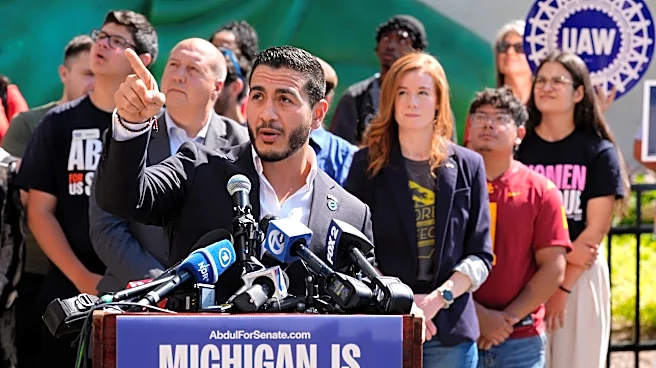
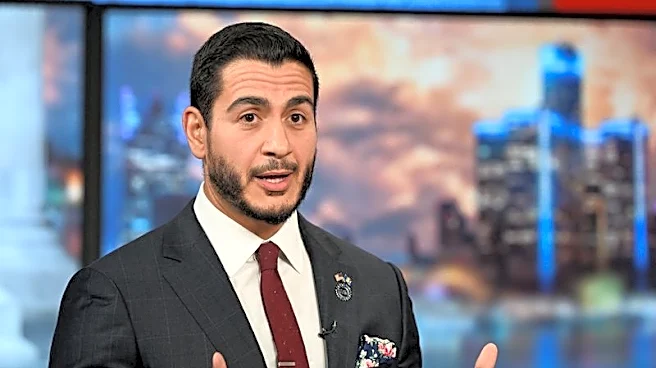
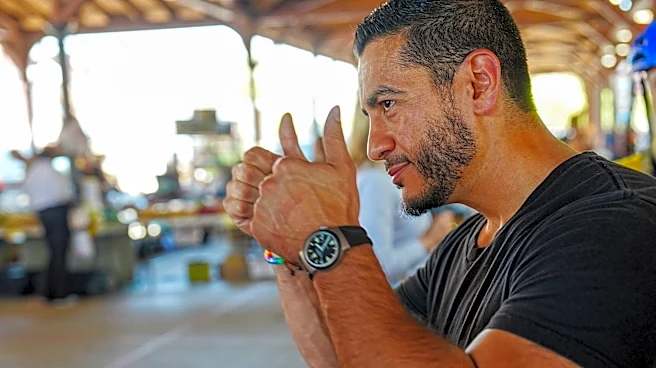
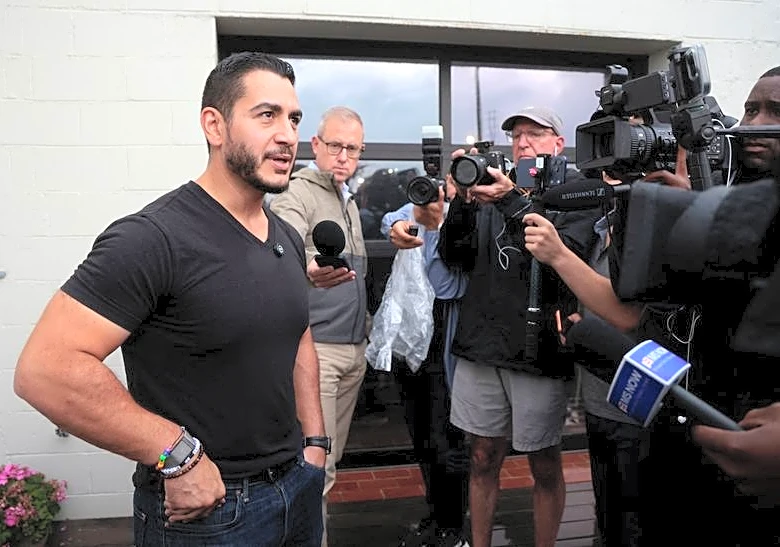
Most significantly in Michigan, in the Democratic nomination for a U.S. Senate seat, former public health official Abdul El-Sayed, of Ann Arbor, was projected the winner of a narrow victory over four-term U.S. Rep. Haley Stevens, of Birmingham, riding a staunchly progressive message to beat a congresswoman who touted her manufacturing wins in Congress, an endorsement by Gov. Gretchen Whitmer and her previous work for (and earlier support by) none other than former President Barack Obama. El-Sayed will now face Republican former U.S. Rep. Mike Rogers, of White Lake. No Republican has won a U.S. Senate race in Michigan since 1994.
The race served as a kind of litmus test for the strength of the left flank of the Democratic Party in a critical swing state as progressives sought to prove that their movement had power outside of blue states. While El-Sayed does not consider himself a Democratic Socialist, many of his viewpoints overlap with the organization's ideology, such as guaranteed universal health care and taxing wealthy people.
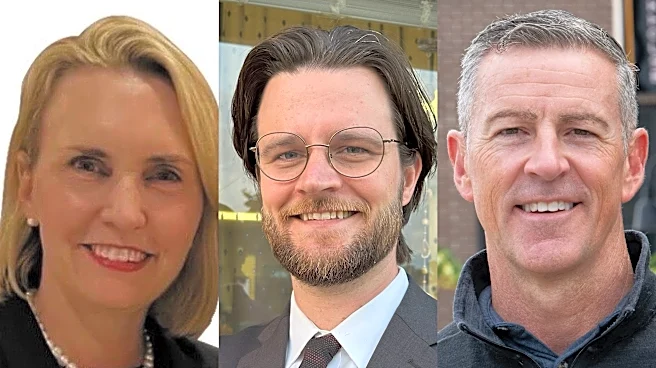
In the 7th Congressional District in mid-Michigan, Lansing activist Will Lawrence beat two better-funded centrists with lengthy resumes of public service to face U.S. Rep. Tom Barrett, R-Charlotte, in a November race in a toss-up area. Lawrence is the co-founder of the Sunrise Movement, which advocates for policies to fight climate change.
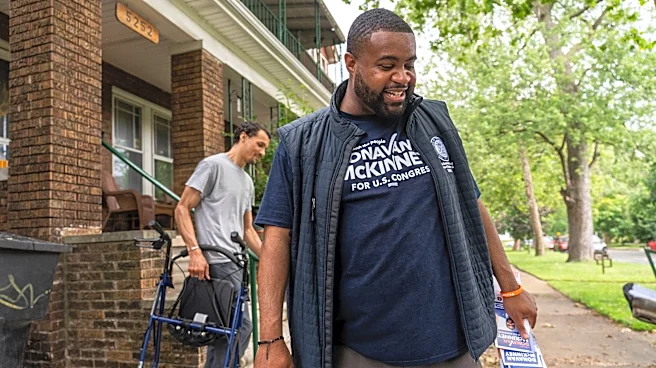
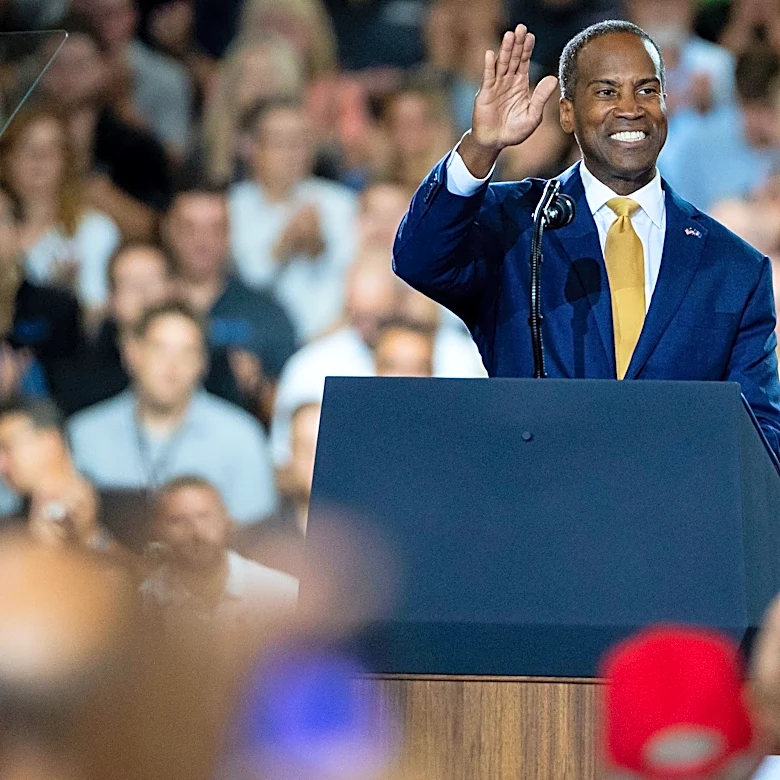
In the 13th Congressional District, state Rep. Donavan McKinney, of Detroit, eked out a win over two-term U.S. Rep. Shri Thanedar, also of Detroit, in a predominately Democratic seat. McKinney's victory, along with others in solidly Democratic districts such as those in Philadelphia and Denver, are set to increase the ranks of Democratic Socialists serving in Washington, DC. Michigan's U.S. Rep. Rashida Tlaib, D-Detroit, who won reelection, was part of one of the first waves of progressive Democrats who ousted incumbents in 2018, and was very much part of the effort to extend the movement's sway in this year's primaries.
"Michigan voters saw through the lies and smears and delivered incredible victories for unbought and unbossed representatives who they are entrusting to fight to make their lives better," said Tlaib, adding that voters "are done with corporate-funded politicians who sell our communities out."
"These results are an obvious wake-up call for the Democratic establishment and I’d suggest they listen, but these victories also show that we’re moving forward with or without them," said Tlaib.
U.S. Rep. Debbie Dingell, D-Ann Arbor, an astute observer of Michigan politics for decades, said, "It was a night for working men and women," adding that, in each case, the Democratic nominees capitalized on individual nuances in each of their races. "They were fighting for issues that people care about."
Restrictions against data centers, for instance, in the case of Lawrence. Access to health care in each case.
At an election eve rally in Detroit, McKinney fired up volunteers from across the United States, including many from New York City's Democratic Socialists of America, before a final round of voter outreach. He predicted progressives would emerge victorious from the Democratic primaries.
"They are counting on this to be a coastal movement," he said. "But they don't know anything about Michigan, y'all, because Michigan is ready for a change, they're ready for a fight, they're ready champions who are going to lead us into the next generation of leadership," he said.
Now, the question is where those victories, and others by the left wing of the Democratic Party, put them in terms of winning general elections in November over Republicans. Certainly, historical trends are on the Democrat's side − the party out of power in the White House and Congress tends to accrue wins in midterm elections. And Republicans face further headwinds with President Donald Trump's approval ratings low, the United States in an unpopular war with Iran and inflation, especially with energy prices, high.
But in the aftermath of the primary results, Republicans were bullish on their chances that they can make gains in Michigan by painting the winners as too extreme for the state's more moderate electorate.
On the news of El-Sayed's victory, Trump declared it, "Great news for the Republican Party," calling El-Sayed "a Communist loser." Rogers framed El-Sayed as too radical for Michigan. The National Republican Congressional Committee called Lawrence "a liberal lunatic," saying voters in the toss-up 7th District will reject him this fall.
Prominent national Democratic Socialists Sanders and U.S. Rep. Alexandria Ocasio-Cortez, came to Michigan to stump for El-Sayed, where Lawrence and McKinney also shared the stage before the primary.
Ahead of the rally in Detroit, Democratic Socialist of America's metro Detroit chapter co-chair, Lila Brickner, celebrated DSA victories across the United States as she hoped to repeat the success in Michigan.
"It's cool to be in DSA," she said. Now Michigan's primary shows its campaign strategy works, too, she said the day after the Aug. 4 election.
"I mean it just proves that the canvass operation that we have is really effective and really efficient," she said. According to Brickner, Metro Detroit DSA knocked on over 50,000 doors to support McKinney and Michigan House candidate Chris Gilmer-Hill, who was leading in the unofficial tally against incumbent state Rep. Helena Scott, D-Detroit.
"I see us being a major powerhouse in the Midwest," she said.
State Rep. Dylan Wegela, of Garden City, cast DSA as the political home that has emerged for working-class voters. "You know there’s a very clear place where working-class people have been getting organized into and where the energy is and it’s DSA," said Wegela, a metro Detroit DSA member.
Wegela touted a key pillar of DSA to reject corporate spending, which the organizations casts as a corrupting influence in politics. "If the Democratic Party doesn’t reject corporate money at any point, they will never be a party of the working class. That's just the reality," he said.
While the Michigan Democratic Party has cast the upcoming election as a referendum on Trump's presidency, progressive candidates argue that the party needs to give voters a clearer vision of Democratic policy priorities.
Contact Todd Spangler: tspangler@freepress.com. Follow him on X @tsspangler.
Contact Clara Hendrickson at chendrickson@freepress.com or 313-296-5743.
This article originally appeared on Detroit Free Press: Michigan primary gives progressives a breakthrough — and Democrats a test